Deferred Compensation Plan In Retirement In California
Description

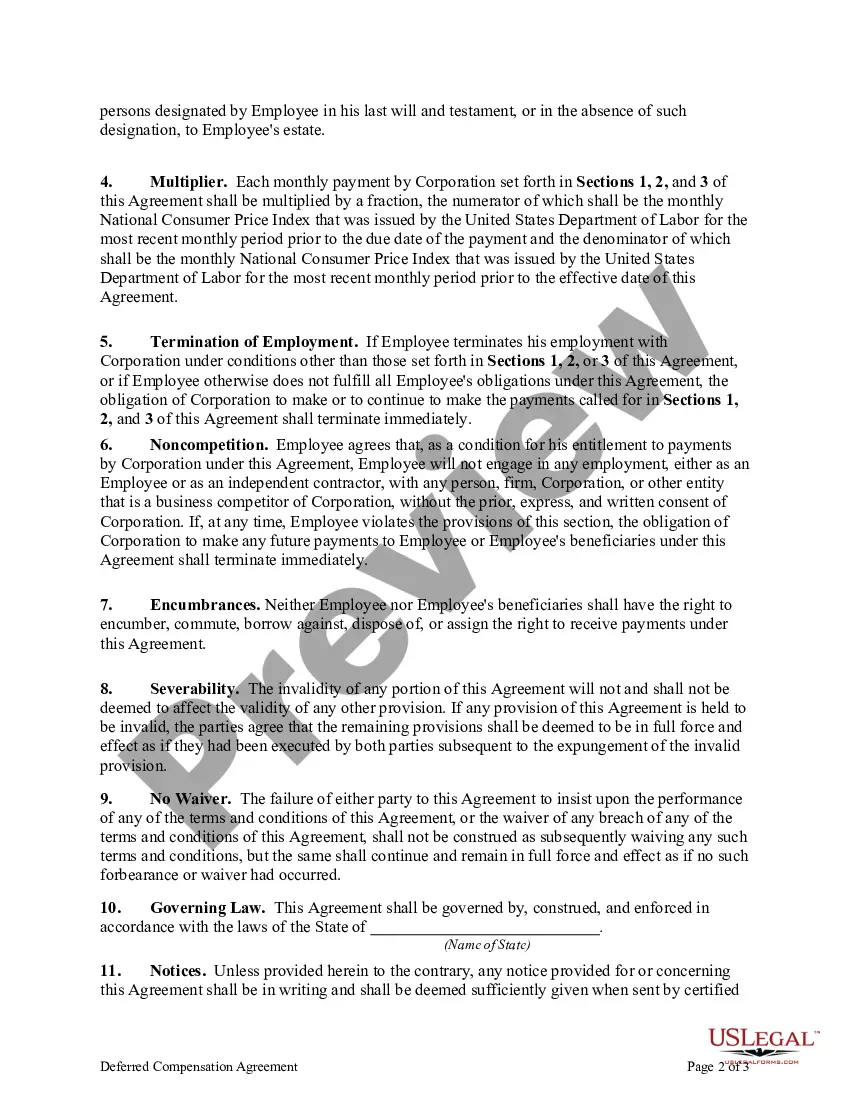
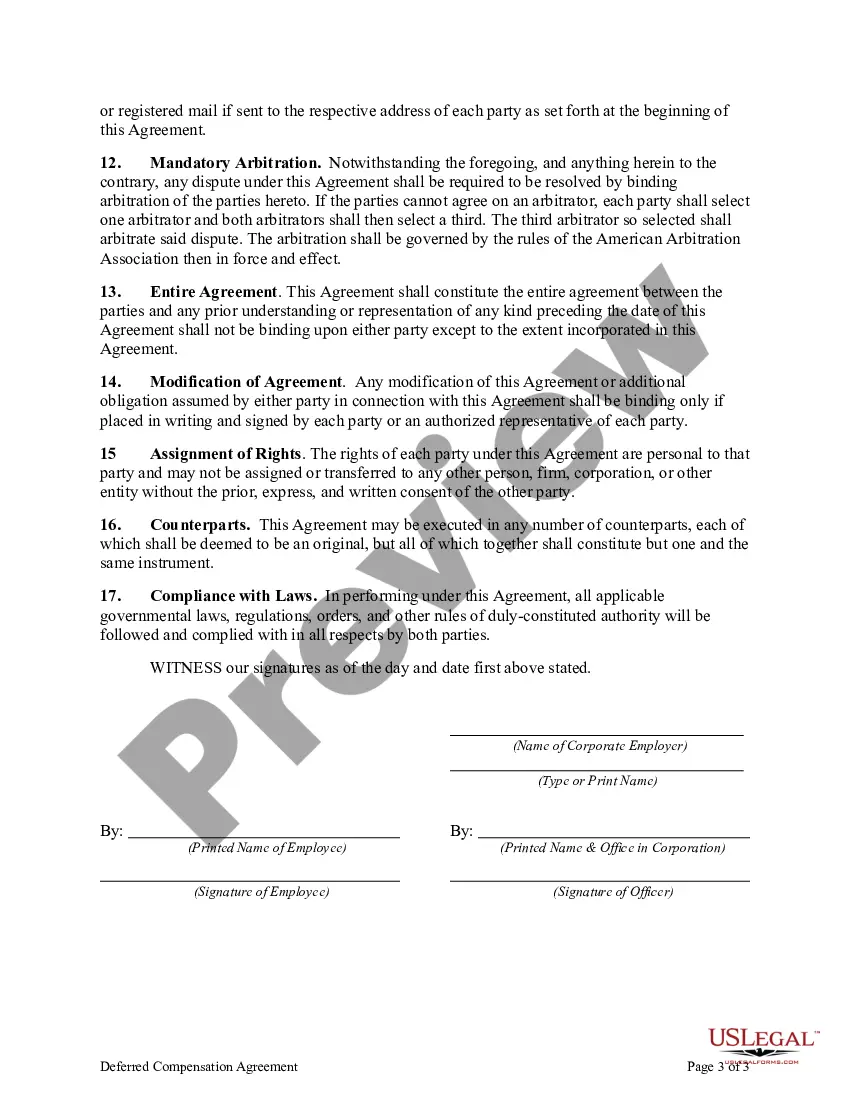

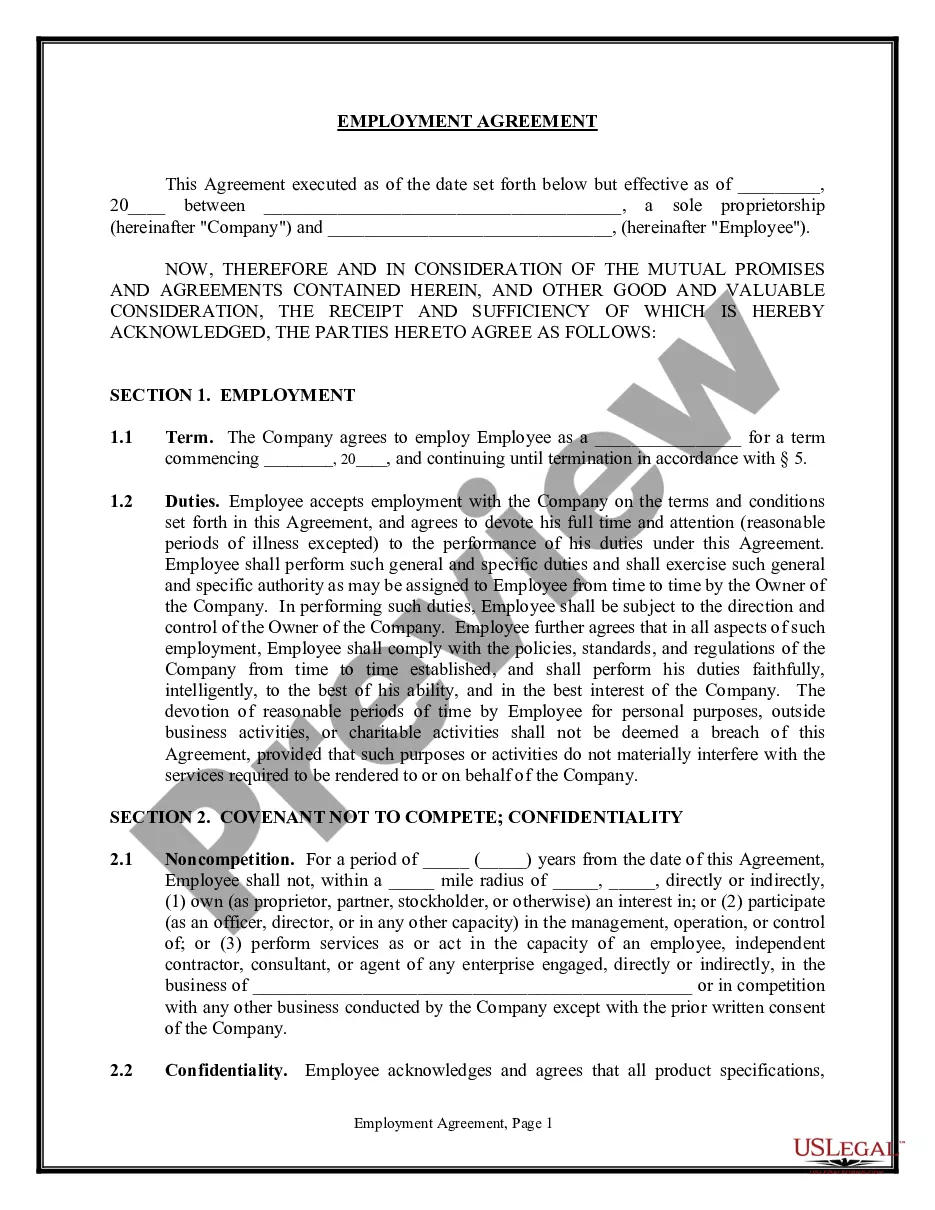
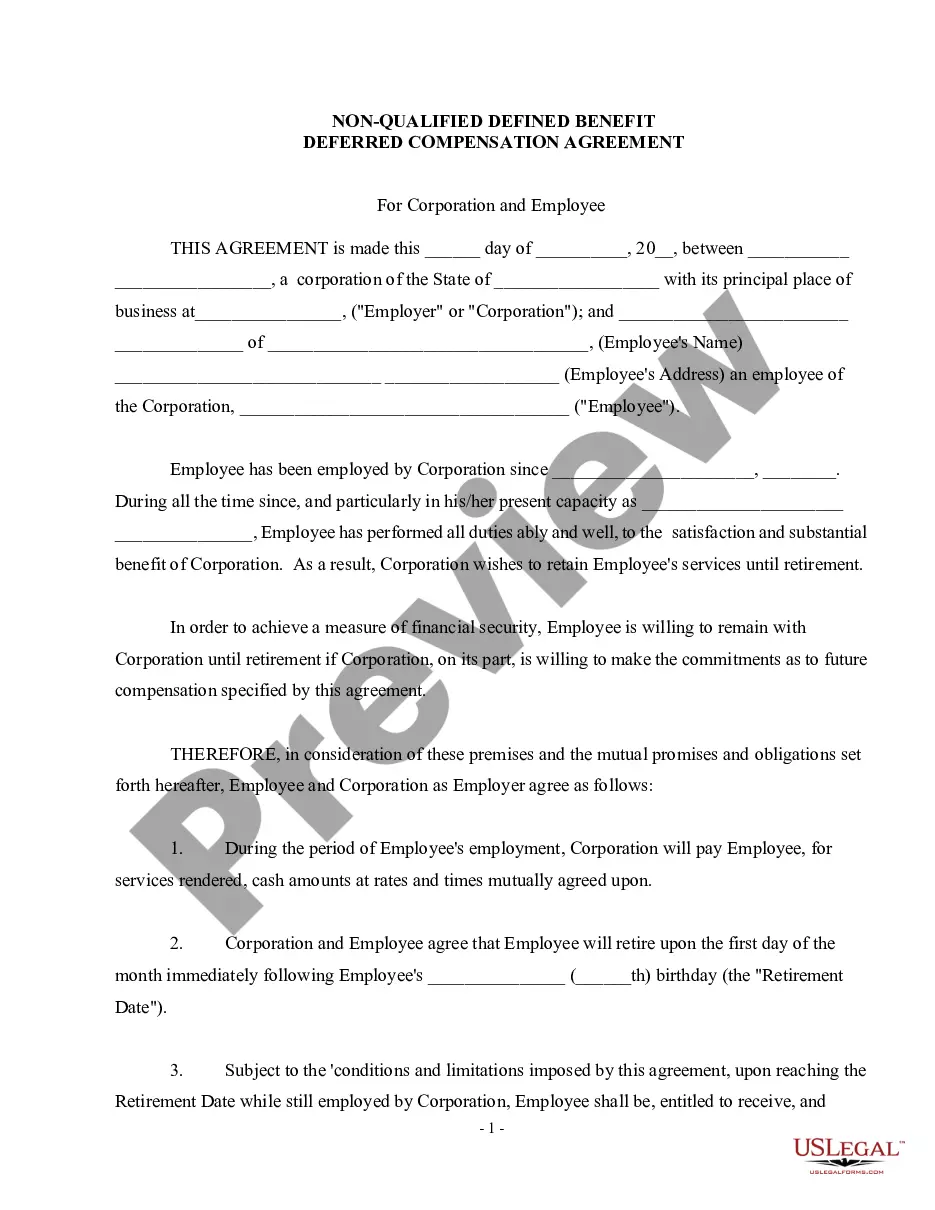
Get your form ready online
Our built-in tools help you complete, sign, share, and store your documents in one place.
Make edits, fill in missing information, and update formatting in US Legal Forms—just like you would in MS Word.
Download a copy, print it, send it by email, or mail it via USPS—whatever works best for your next step.
Sign and collect signatures with our SignNow integration. Send to multiple recipients, set reminders, and more. Go Premium to unlock E-Sign.
If this form requires notarization, complete it online through a secure video call—no need to meet a notary in person or wait for an appointment.
We protect your documents and personal data by following strict security and privacy standards.

Make edits, fill in missing information, and update formatting in US Legal Forms—just like you would in MS Word.

Download a copy, print it, send it by email, or mail it via USPS—whatever works best for your next step.

Sign and collect signatures with our SignNow integration. Send to multiple recipients, set reminders, and more. Go Premium to unlock E-Sign.

If this form requires notarization, complete it online through a secure video call—no need to meet a notary in person or wait for an appointment.

We protect your documents and personal data by following strict security and privacy standards.
Looking for another form?




Form popularity
FAQ
Receiving your deferred compensation in installments over several years can reduce your tax bill, because the smaller installment payments will typically be taxed at a lower rate than a larger lump-sum payment will be.
Though contribution limits can change every year, the annual maximum participant contribution for a 401(a) is typically much higher than that of a 401(k). There are also no catch-up options on a 401(a) plan, whereas a 401(k) has an Age 50 catch-up limit and a catch-up for participants aged 60, 61, 62 and 63.
To be eligible for service retirement, you must have at least five years of CalPERS-credited service and be at least age 50, 52, or 55 depending on your retirement formula . If you have a combination of classic and PEPRA service, you may be eligible to retire at age 50 . (See page 12 for more about PEPRA .)
401(k) plans and 403(b) plans offer very similar benefits. As such, one isn't really better than the other. The main difference is that each plan is offered to employees of different types of companies. Another key difference between the plans is that 403(b) plans also offer a $15,000 catch-up.
California Public Employees' Retirement System.
The California Public Employees Retirement System (CalPERS) offers a defined benefit retirement plan. It provides benefits based on members years of service, age, and final compensation. In addition, benefits are provided for disability death, and payments to survivors or beneficiaries of eligible members.
