Difference Between Asset Sale And Stock Sale For Tax Purposes In Wayne
Description



Get your form ready online
Our built-in tools help you complete, sign, share, and store your documents in one place.
Make edits, fill in missing information, and update formatting in US Legal Forms—just like you would in MS Word.
Download a copy, print it, send it by email, or mail it via USPS—whatever works best for your next step.
Sign and collect signatures with our SignNow integration. Send to multiple recipients, set reminders, and more. Go Premium to unlock E-Sign.
If this form requires notarization, complete it online through a secure video call—no need to meet a notary in person or wait for an appointment.
We protect your documents and personal data by following strict security and privacy standards.

Make edits, fill in missing information, and update formatting in US Legal Forms—just like you would in MS Word.

Download a copy, print it, send it by email, or mail it via USPS—whatever works best for your next step.

Sign and collect signatures with our SignNow integration. Send to multiple recipients, set reminders, and more. Go Premium to unlock E-Sign.

If this form requires notarization, complete it online through a secure video call—no need to meet a notary in person or wait for an appointment.

We protect your documents and personal data by following strict security and privacy standards.
Looking for another form?










Form popularity
FAQ
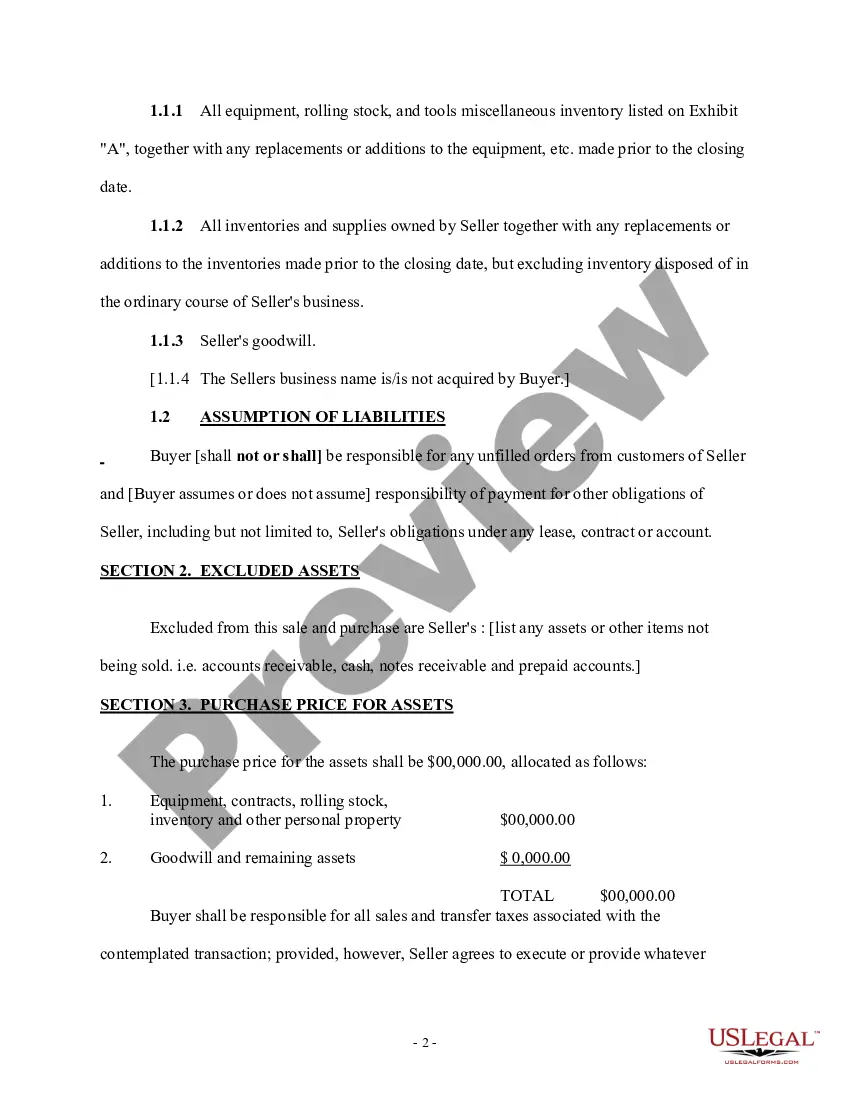
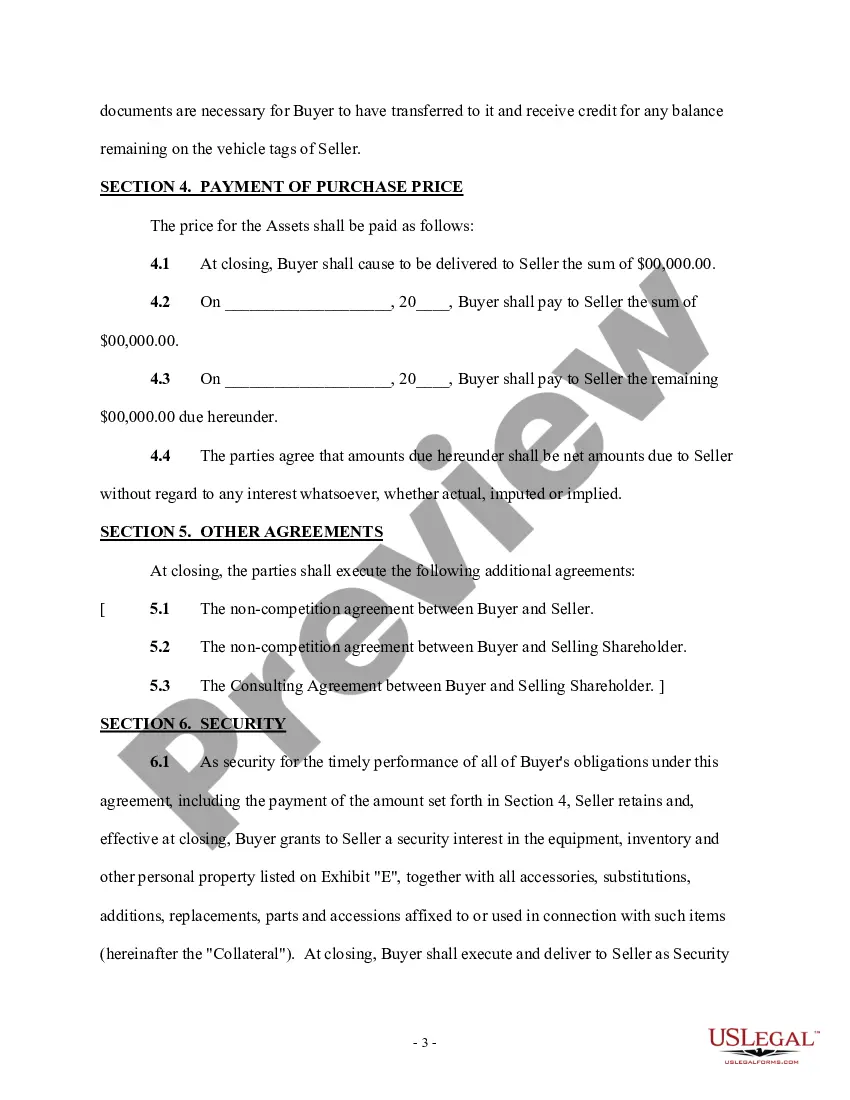
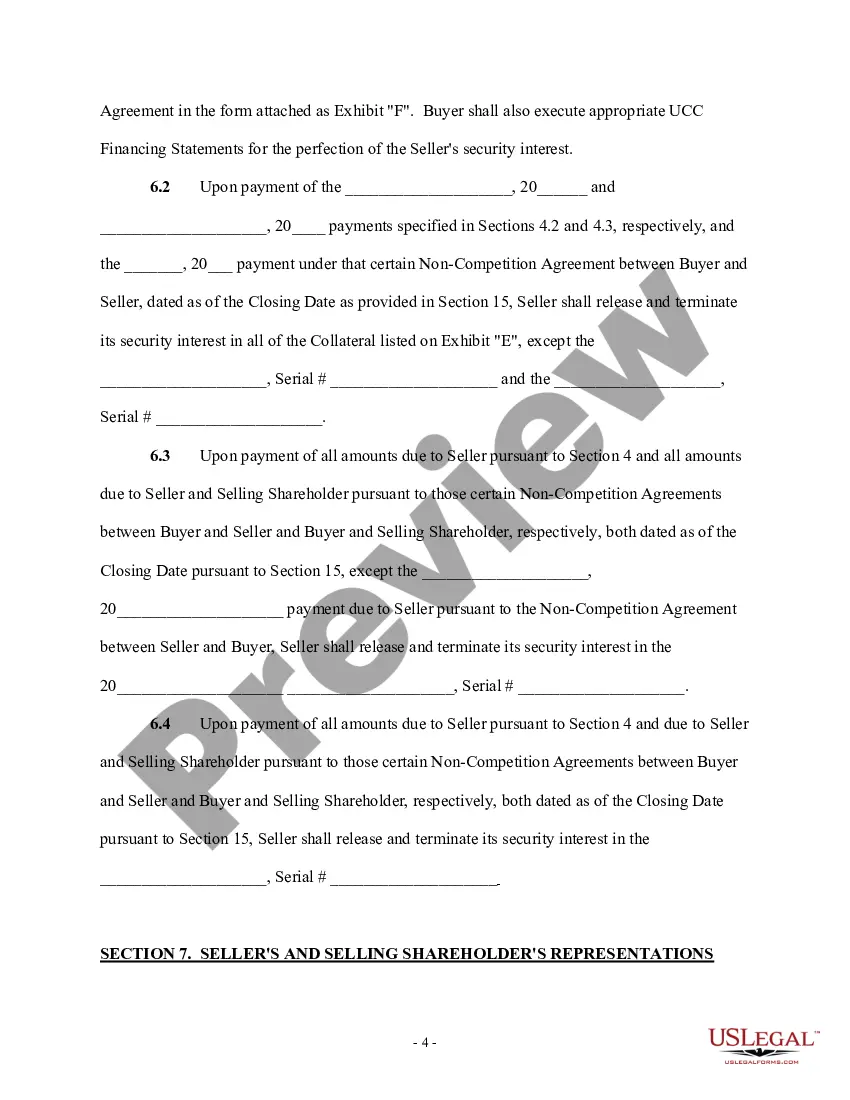
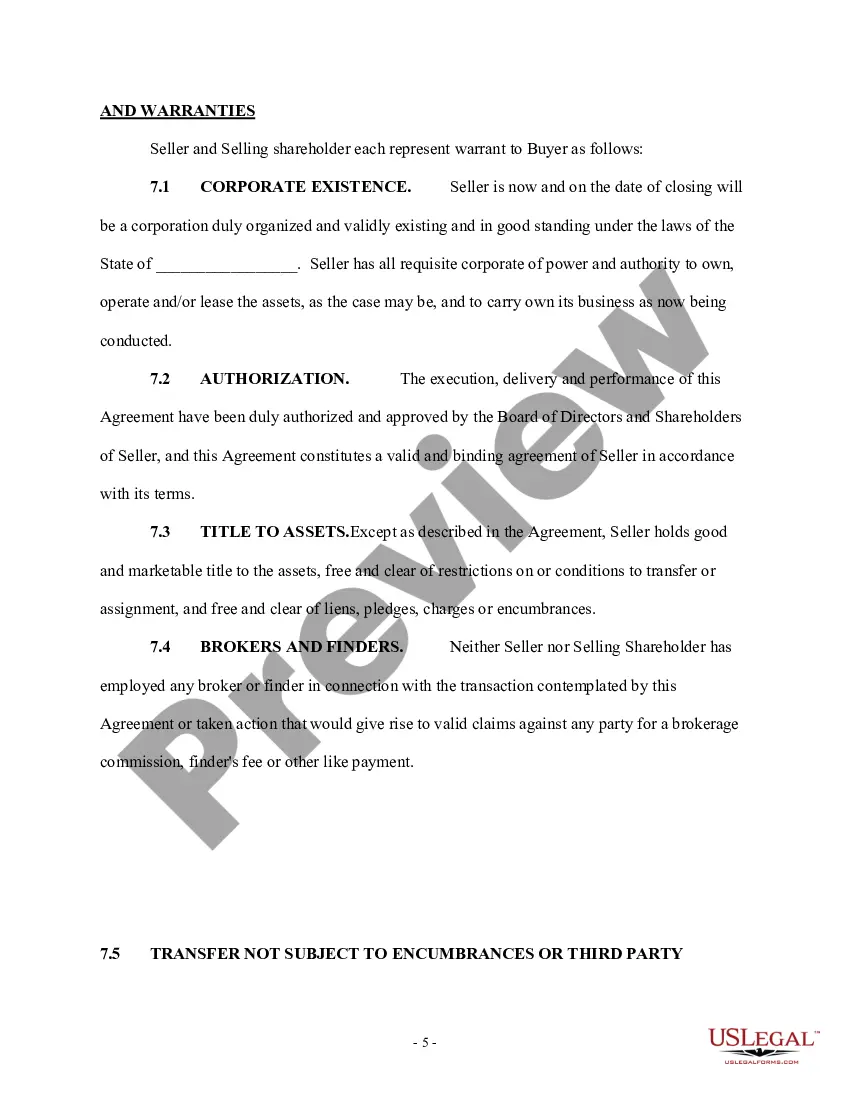
The sale of the assets to the purchaser may result in corporate tax. Personal taxes may occur when the funds are withdrawn from the corporation. The business owner will have an ongoing obligation to file corporate tax returns unless the corporation is wound-up.
The benefit of an asset sale, from the buyer's perspective, is that it can select which assets and liabilities to acquire in the deal, compared to a stock sale or merger, where the buyer acquires all the assets and liabilities of the target.
What is an asset sale? An asset sale happens when you sell or transfer the assets of your company, rather than shares or stock. These assets can be tangible (eg machinery and inventory) or intangible (eg intellectual property).
The short answer is that a stock sale is better for you, the seller, while the buyer benefits from an asset sale. But, since we're talking about the IRS, there are infinite variations and complications. As such, you will want to get professional tax and legal advice before proceeding.
The benefit of an asset sale, from the buyer's perspective, is that it can select which assets and liabilities to acquire in the deal, compared to a stock sale or merger, where the buyer acquires all the assets and liabilities of the target.
Unlike an asset sale, stock sales do not require numerous separate conveyances of each individual asset because the title of each asset lies within the corporation. With stock sales, buyers lose the ability to gain a stepped up basis in the assets and thus do not get to re-depreciate certain assets.
An asset sale occurs when a business sells all or a portion of its assets. The seller, or target company, in this type of deal, is still legally the owner of the company, but no longer owns the assets sold. In a stock sale, the buyer acquires equity from the target company's shareholders.
