Joint Tenants Force Sale In Suffolk
Description

Get your form ready online
Our built-in tools help you complete, sign, share, and store your documents in one place.
Make edits, fill in missing information, and update formatting in US Legal Forms—just like you would in MS Word.
Download a copy, print it, send it by email, or mail it via USPS—whatever works best for your next step.
Sign and collect signatures with our SignNow integration. Send to multiple recipients, set reminders, and more. Go Premium to unlock E-Sign.
If this form requires notarization, complete it online through a secure video call—no need to meet a notary in person or wait for an appointment.
We protect your documents and personal data by following strict security and privacy standards.

Make edits, fill in missing information, and update formatting in US Legal Forms—just like you would in MS Word.

Download a copy, print it, send it by email, or mail it via USPS—whatever works best for your next step.

Sign and collect signatures with our SignNow integration. Send to multiple recipients, set reminders, and more. Go Premium to unlock E-Sign.

If this form requires notarization, complete it online through a secure video call—no need to meet a notary in person or wait for an appointment.

We protect your documents and personal data by following strict security and privacy standards.
Looking for another form?




Form popularity
FAQ
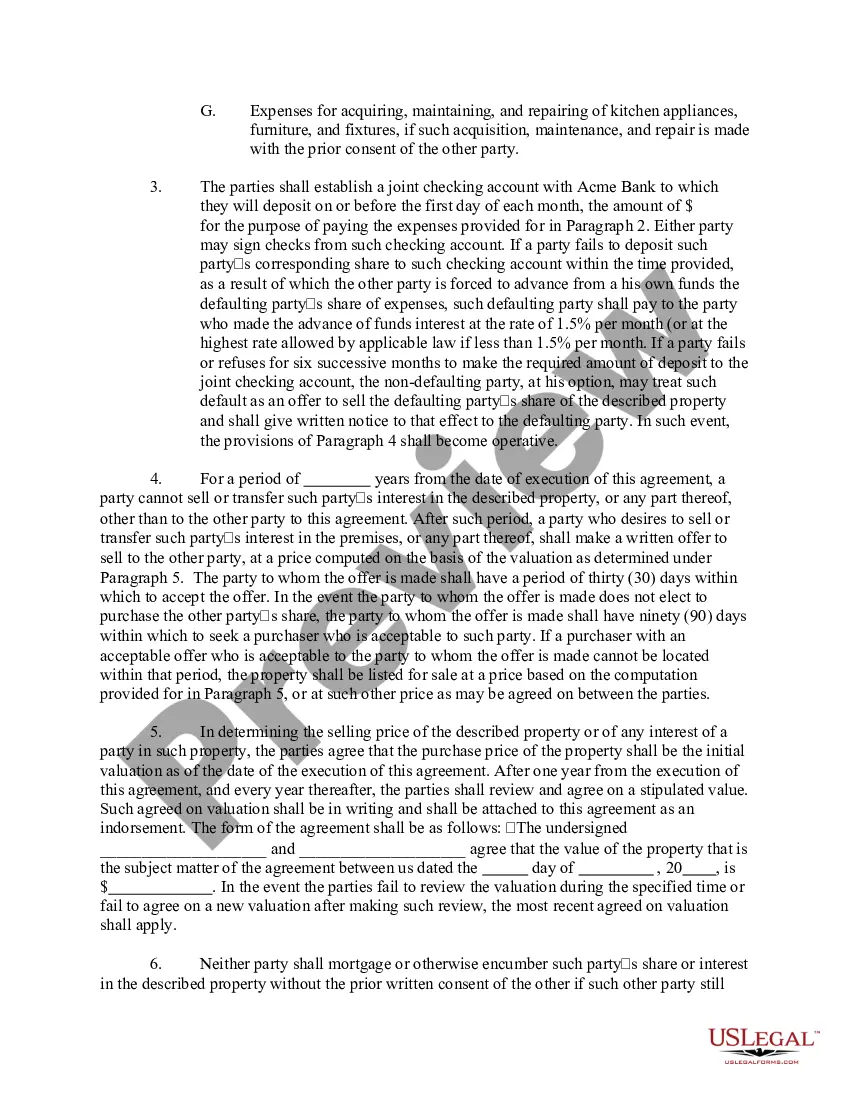
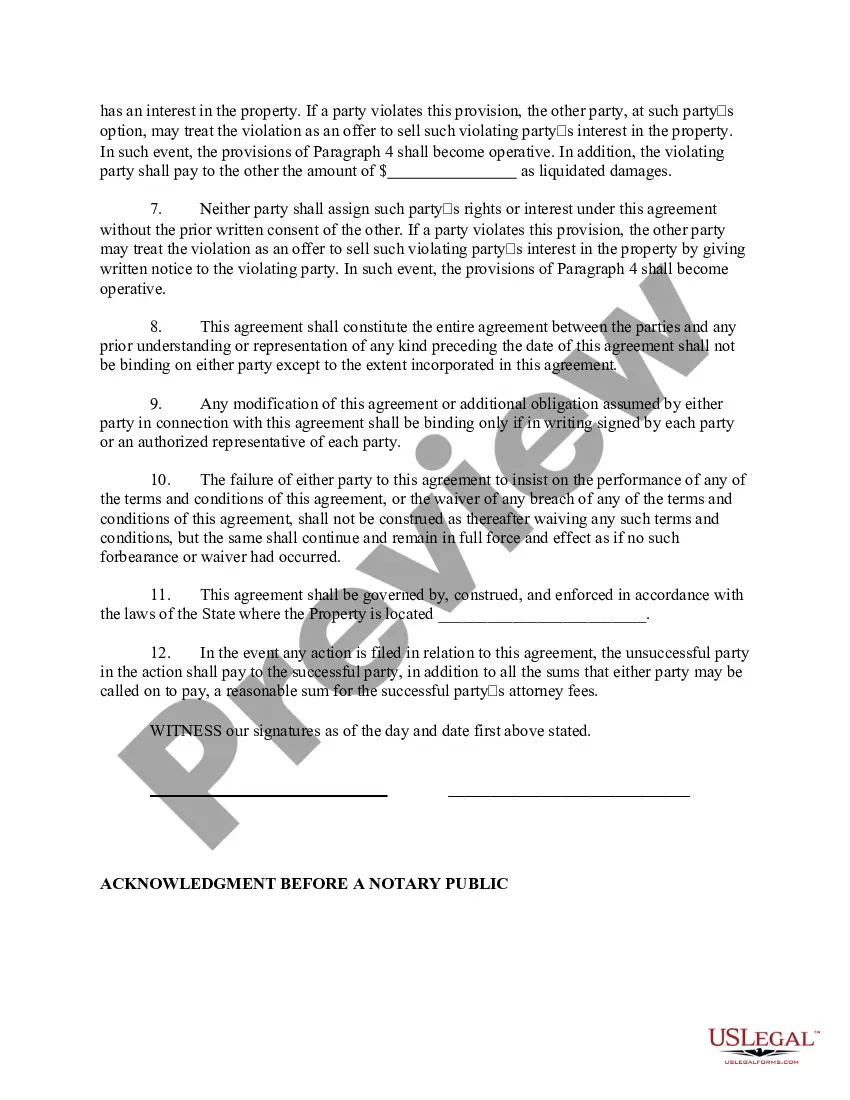
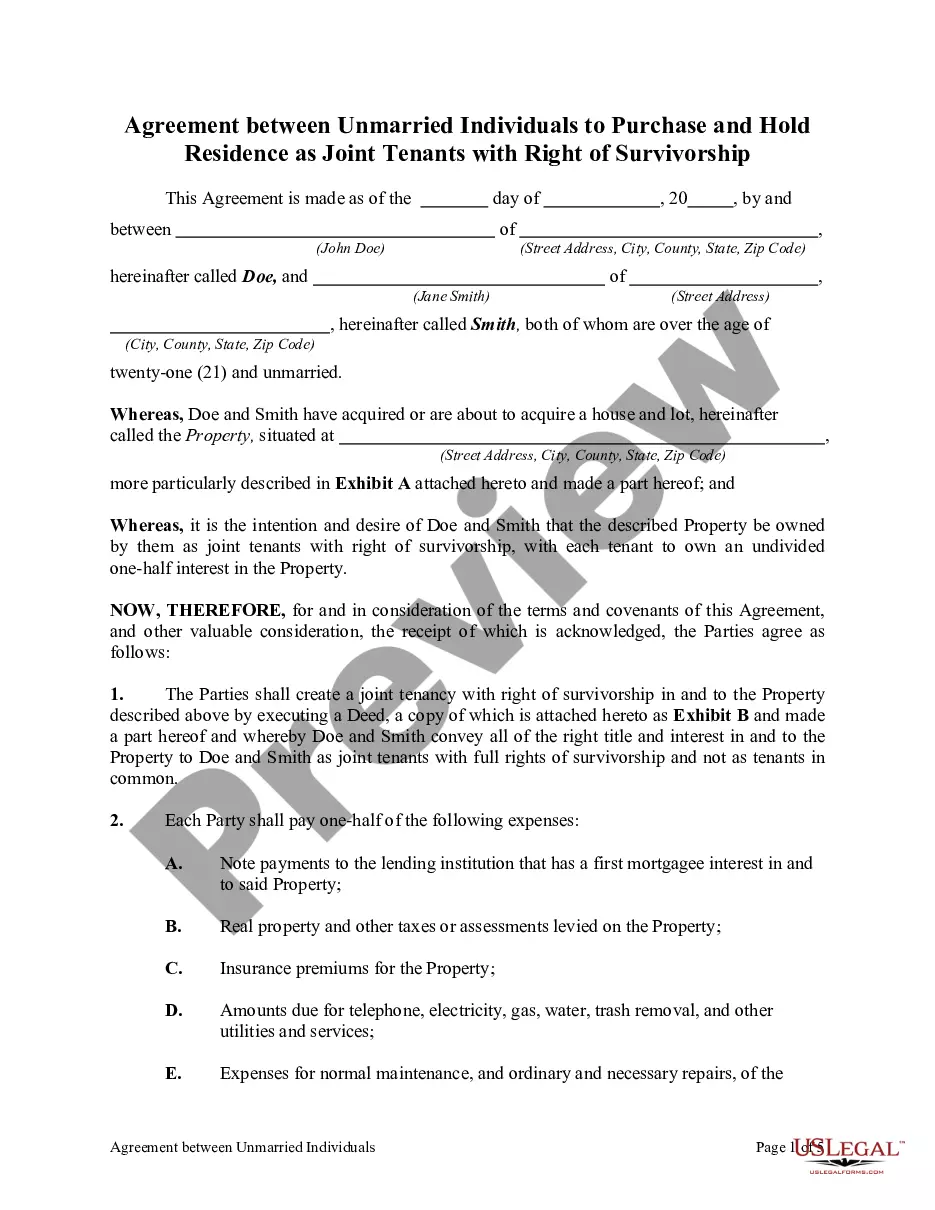
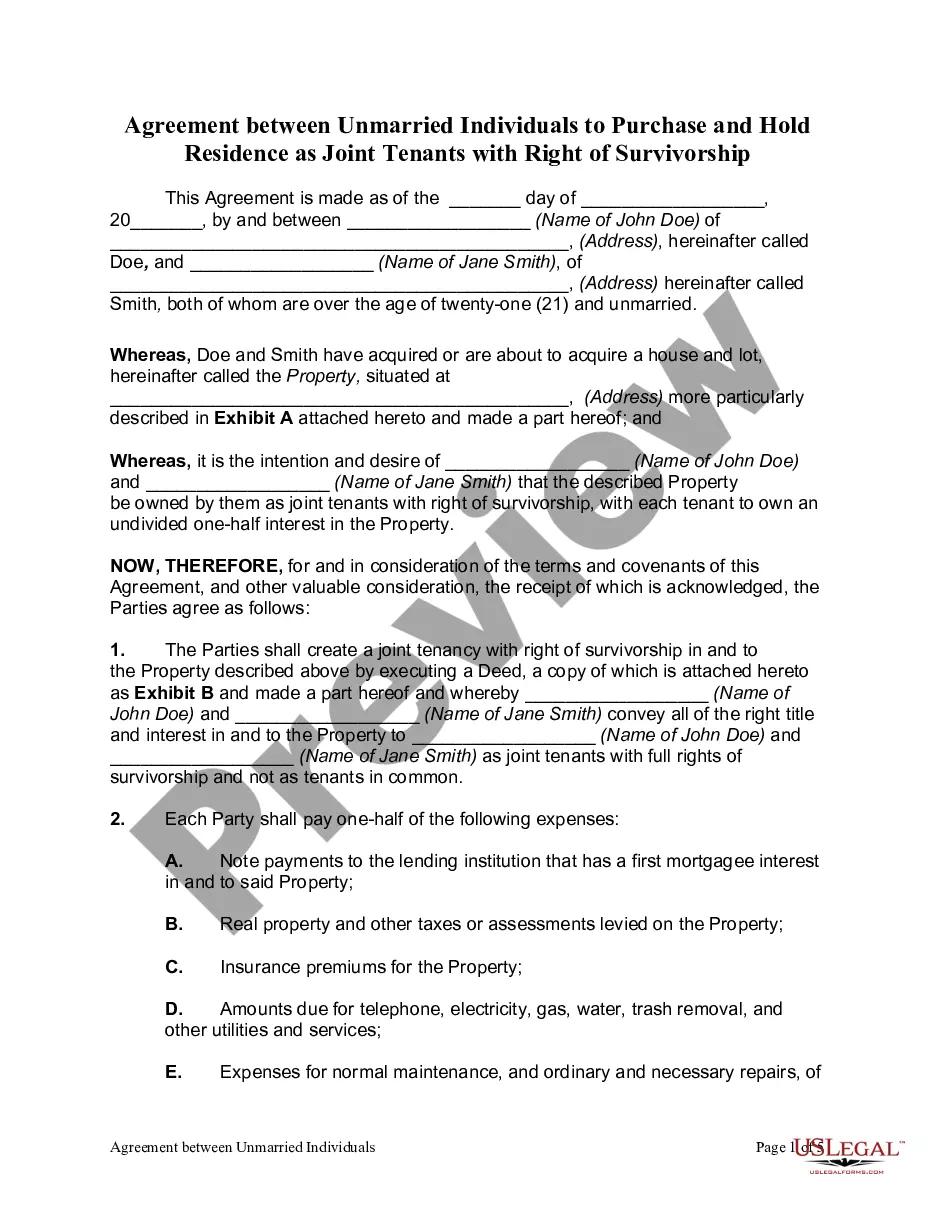
Joint tenants you have equal rights to the whole property. the property automatically goes to the other owners if you die. you cannot pass on your ownership of the property in your will.
If you decide to take on a joint mortgage yourself, you will have to prove that you can afford the monthly repayments solo. It's also common to sell the property and split the equity between the two parties. Speak to your mortgage lender or seek independent advice to get a joint mortgage transferred to one person.
For example, if two unmarried partners make equal contributions toward purchasing a inium and they choose to hold title as joint tenants, the surviving joint tenant will automatically become the sole and separate owner of the inium after the first joint tenant dies.
Comments Section If your sole income supports the mortgage then that covers the financials. There's no need for a joint mortgage or their name to be on the property deeds. Whether, as your fiancée or spouse, they will need to consent to your taking on the mortgage if they live in the property been mortgaged.
The primary pitfalls are the need for agreement, the potential for assets to be frozen, and loss of control over the distribution of assets after death. Tenancy in common is an alternative to joint tenancy that avoids some of its drawbacks.
Joint tenancy should be used with extreme caution. It can subject a co- owner to unnecessary taxes and liabili- ty for the other co-owner's debts. It can also deprive heirs of bequeathed prop- erty and, in California, leave the joint tenant without right of survivorship.
Joint tenancy provides an efficient and straightforward way for two or more people to co-own property, particularly real estate. It ensures that when one tenant dies, their share is passed on to the surviving tenants without the hassle of probate.
Despite the many advantages, there are also potential drawbacks to consider with Co-Ownership. a) Limited Usage. b) Potential Main Residence. c) Reduced Control over Management. d) Need for Coordination among Co-Owners. e) Longer-Term Commitment.
If you co-own property such as a home, building or vacant land with someone in New York and have come to find this co-ownership situation unbearable, undesirable or unaffordable you can under New York State's RPAPL Article 9 Partition law bring a partition action and force your co-owner to either sell the property or ...
Joint tenants – each owner owns an undivided interest in the whole property, but if the interest is sold, the joint tenancy ends and the owners become tenants in common. If one of the joint tenants dies, the deceased person's interest automatically goes to the other joint tenant.