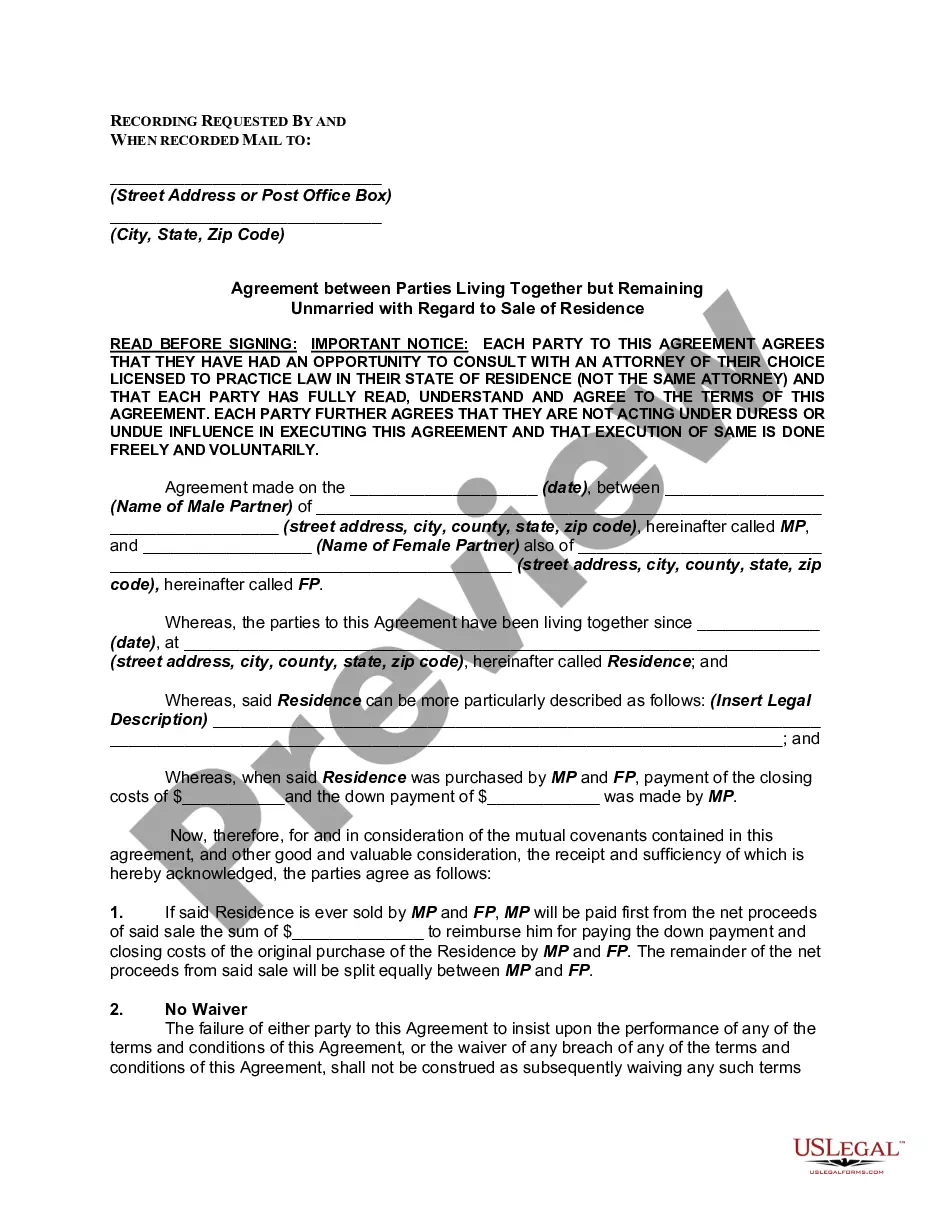
Separation Agreement For Unmarried Couples In Minnesota
Description

Get your form ready online
Our built-in tools help you complete, sign, share, and store your documents in one place.
Make edits, fill in missing information, and update formatting in US Legal Forms—just like you would in MS Word.
Download a copy, print it, send it by email, or mail it via USPS—whatever works best for your next step.
Sign and collect signatures with our SignNow integration. Send to multiple recipients, set reminders, and more. Go Premium to unlock E-Sign.
If this form requires notarization, complete it online through a secure video call—no need to meet a notary in person or wait for an appointment.
We protect your documents and personal data by following strict security and privacy standards.

Make edits, fill in missing information, and update formatting in US Legal Forms—just like you would in MS Word.

Download a copy, print it, send it by email, or mail it via USPS—whatever works best for your next step.

Sign and collect signatures with our SignNow integration. Send to multiple recipients, set reminders, and more. Go Premium to unlock E-Sign.

If this form requires notarization, complete it online through a secure video call—no need to meet a notary in person or wait for an appointment.

We protect your documents and personal data by following strict security and privacy standards.
Looking for another form?









Form popularity
FAQ
In Minnesota, common law marriage doesn't exist. It was abolished in 1941. No matter how long you live with someone in this state or how often you tell people you're married, a common law marriage cannot be established in Minnesota.
"Legal Separation" is a major change in the status of your marriage. To get a legal separation you must serve and file a petition in the District Court in the county where you or your spouse lives.
Is Minnesota a mother or father state? In Minnesota, both mothers and fathers have equal legal rights to their children. However, for unmarried parents, these protections are not established until paternity is proven through a Recognition of Parentage form or court action.
Couples often live together before they marry, and many live together indefinitely without getting married at all. Property laws generally treat an unmarried couple as separate individuals with no legal rights or responsibilities if the relationship ends.
As long as you and your ex can agree on how to divide up your assets, there is no need to involve lawyers or the court system. Even if children are involved, in most states you have the opportunity to separate in private, ing to whatever arrangements the two of you agree on.
Legal Protections and Responsibilities A registered domestic partnership in Minnesota comes with both protections and responsibilities: Property Rights: Rights to jointly own property and manage shared expenses. Legal Documentation: Ability to sign documents and make legal decisions together.
Fortunately, there are some benefits to legal separation. For one, the parties can maintain some of the benefits of being married by avoiding divorce. Those who do not believe in divorce are also able to stay true to their values. The downfall, however, is that the couple does not have the finality of divorce.
8 Steps You MUST Take When You Separate 8 Steps You MUST Take When You Separate. AGREE A DATE OF SEPARATION. CHANGE PASSWORDS & PINS. STAY IN THE HOUSE. CHILDREN. SORT OUT YOUR FINANCES. MAKE OR REVIEW YOUR WILL. SEVER ANY JOINT TENANCY.
To get a legal separation you must serve and file a petition in the District Court in the county where you or your spouse lives. It is a different process from the divorce process. In Minnesota, you do not have to be separated before you get divorced.
To get a legal separation you must serve and file a petition in the District Court in the county where you or your spouse lives. It is a different process from the divorce process. In Minnesota, you do not have to be separated before you get divorced.
