Joint Tenants Force Sale In Maricopa
Description

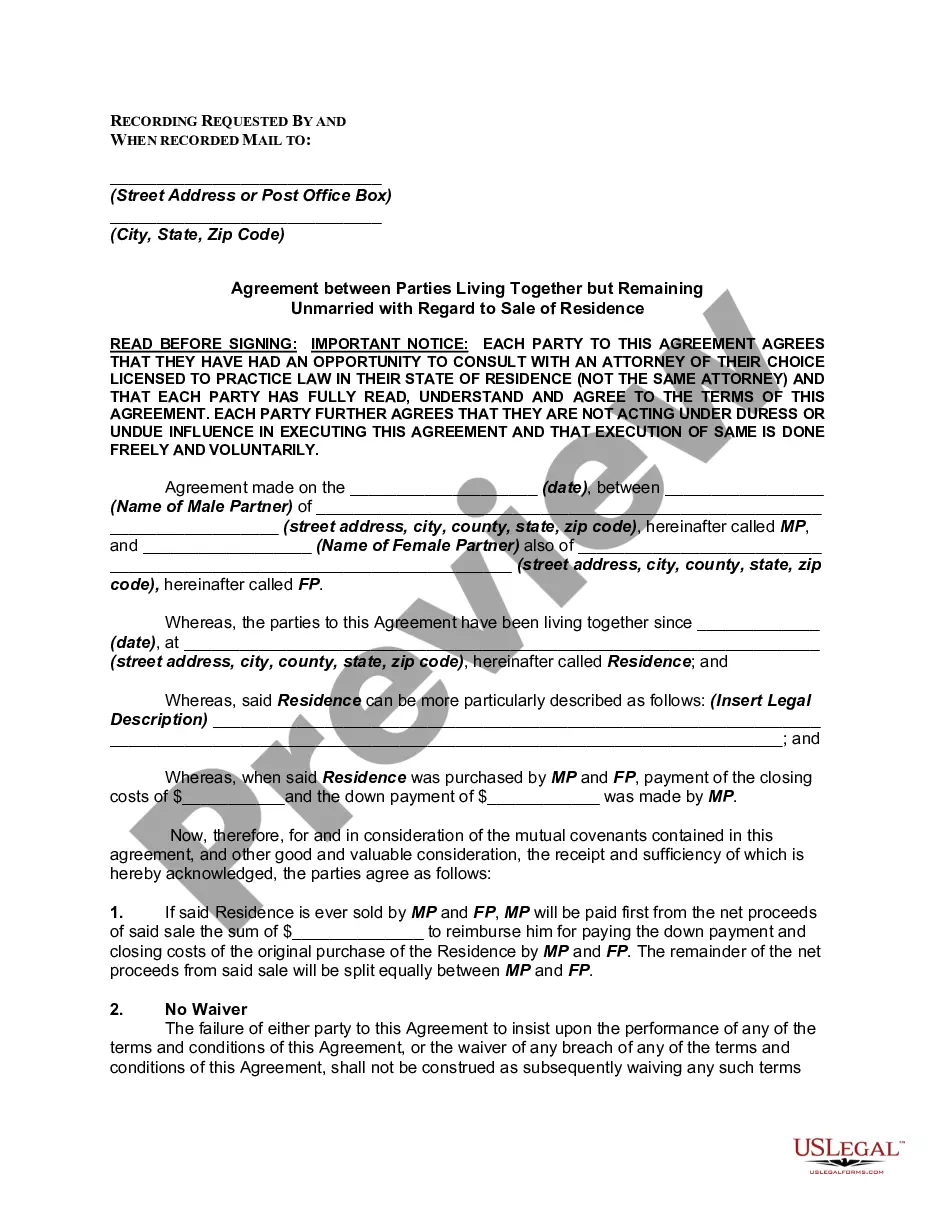
Get your form ready online
Our built-in tools help you complete, sign, share, and store your documents in one place.
Make edits, fill in missing information, and update formatting in US Legal Forms—just like you would in MS Word.
Download a copy, print it, send it by email, or mail it via USPS—whatever works best for your next step.
Sign and collect signatures with our SignNow integration. Send to multiple recipients, set reminders, and more. Go Premium to unlock E-Sign.
If this form requires notarization, complete it online through a secure video call—no need to meet a notary in person or wait for an appointment.
We protect your documents and personal data by following strict security and privacy standards.

Make edits, fill in missing information, and update formatting in US Legal Forms—just like you would in MS Word.

Download a copy, print it, send it by email, or mail it via USPS—whatever works best for your next step.

Sign and collect signatures with our SignNow integration. Send to multiple recipients, set reminders, and more. Go Premium to unlock E-Sign.

If this form requires notarization, complete it online through a secure video call—no need to meet a notary in person or wait for an appointment.

We protect your documents and personal data by following strict security and privacy standards.
Looking for another form?








Form popularity
FAQ
Starting September 24, 2022, Arizona has a law that allows motorcycles to do what is called LANE FILTERING. Here are the rules and guidelines explained for lane filtering in Arizona. In Arizona, lane filtering is a relatively new law that allows motorcyclists to navigate through traffic in specific situations.
It shall be unlawful for any person to permit trees, shrubs or bushes growing upon their property to encroach and interfere with a traffic control device, the passage of persons or vehicles, or the flow of drainage water over or on any public right-of-way or easement.
Luckily, Arizona law provides a solution, called a partition action. In a partition action, the Court can divide, or partition, property by ordering that it be sold, with the net proceeds distributed to the owners in proportion to their individual ownership interests.
§§ 12-1211 through 12-1225. Partition is an absolute right of property owners in the state, meaning that a person with an ownership interest in property may ask a court to force a sale or divide jointly-owned property at anytime. There are, however, some exceptions to this general rule.
If the title of your property is in joint names, it means that both you and your husband own it. In this case, one person cannot sell the property without the consent of the other.
A joint tenancy is severed by (a) mortgage or creation of a deed of trust, (b) transfer to a revocable or irrevocable trust, (c) contract to convey the property, or (d) destruction of one or more of the four unities; and the result is the failure of the right of survivorship. In re the Estate of Estelle, 122 Ariz.
In Arizona, tenancy in common is the default classification for married couples seeking joint ownership. The property can be divided evenly, or the owners can control differing shares if needs be (e.g. two business partners own 25% each, and the third owns 50%).
The key difference is in post-mortem property sale taxation. Joint tenancy triggers capital gains tax on property sales after a spouse's death. CPWROS exempts it. Additionally, joint tenancy is open to anyone, while community property is usually for married couples.
In the case of joint owners, each owner generally has the right to lease out property that is jointly owned. This means that one owner can enter into a lease agreement with a tenant without the permission of the other co-owner(s).