Job Application Letter For Any Available Vacancy In Massachusetts
Description

Get your form ready online
Our built-in tools help you complete, sign, share, and store your documents in one place.
Make edits, fill in missing information, and update formatting in US Legal Forms—just like you would in MS Word.
Download a copy, print it, send it by email, or mail it via USPS—whatever works best for your next step.
Sign and collect signatures with our SignNow integration. Send to multiple recipients, set reminders, and more. Go Premium to unlock E-Sign.
If this form requires notarization, complete it online through a secure video call—no need to meet a notary in person or wait for an appointment.
We protect your documents and personal data by following strict security and privacy standards.

Make edits, fill in missing information, and update formatting in US Legal Forms—just like you would in MS Word.

Download a copy, print it, send it by email, or mail it via USPS—whatever works best for your next step.

Sign and collect signatures with our SignNow integration. Send to multiple recipients, set reminders, and more. Go Premium to unlock E-Sign.

If this form requires notarization, complete it online through a secure video call—no need to meet a notary in person or wait for an appointment.

We protect your documents and personal data by following strict security and privacy standards.
Looking for another form?








Form popularity
FAQ
How to apply for a job Search for jobs in your field. Research hiring companies. Ready your resume for submission. Decide if a cover letter is right for you. Submit your resume and online application. Application follow-up.
If you know of an available job with a company that interests you, write a traditional cover letter for an advertised job following these steps: Research the company. Include a header. Write a greeting. Introduce yourself . Discuss your experience and qualifications. Close with a call to action. Sign off.
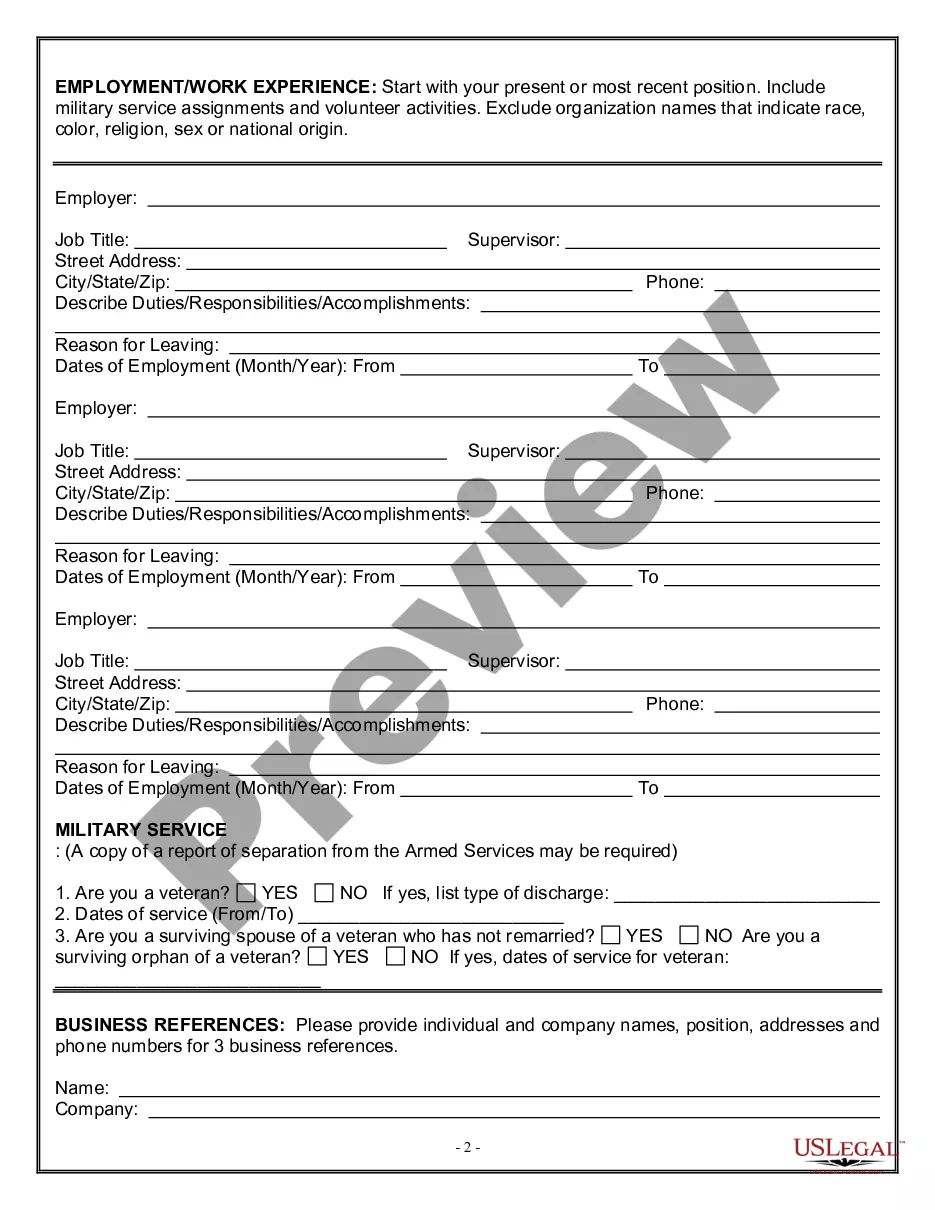
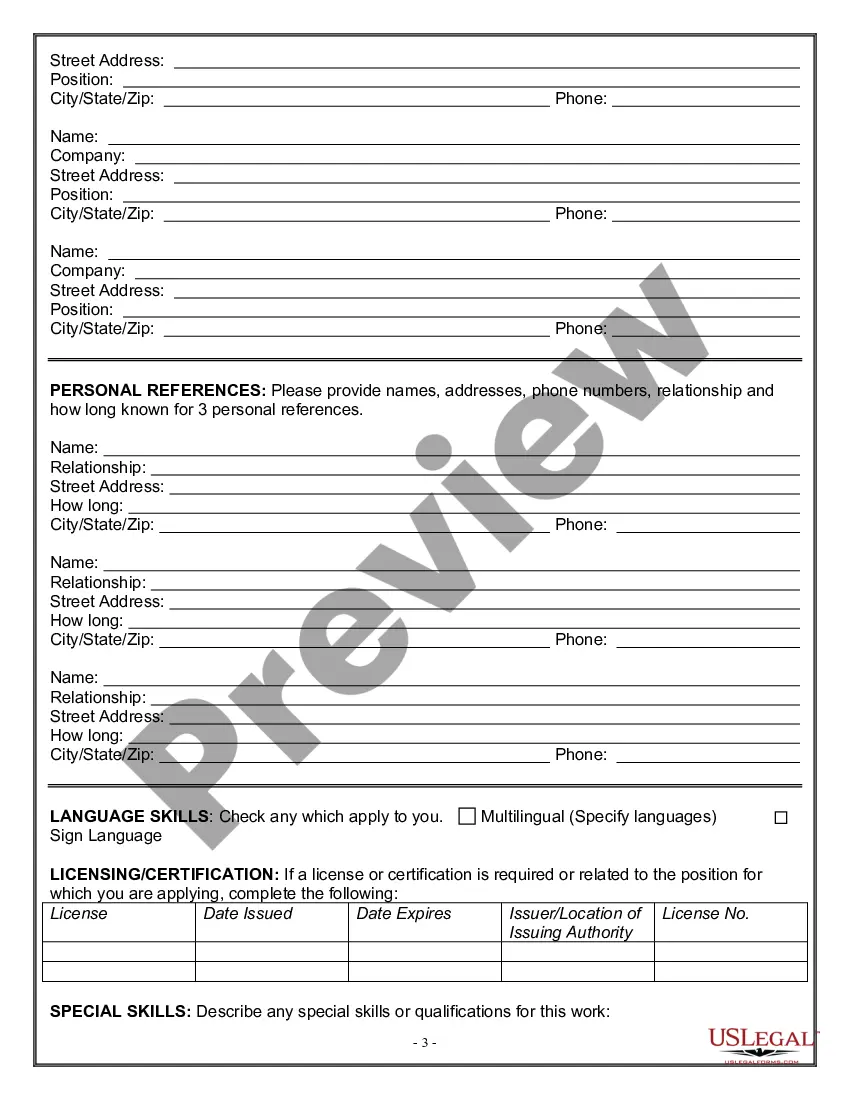
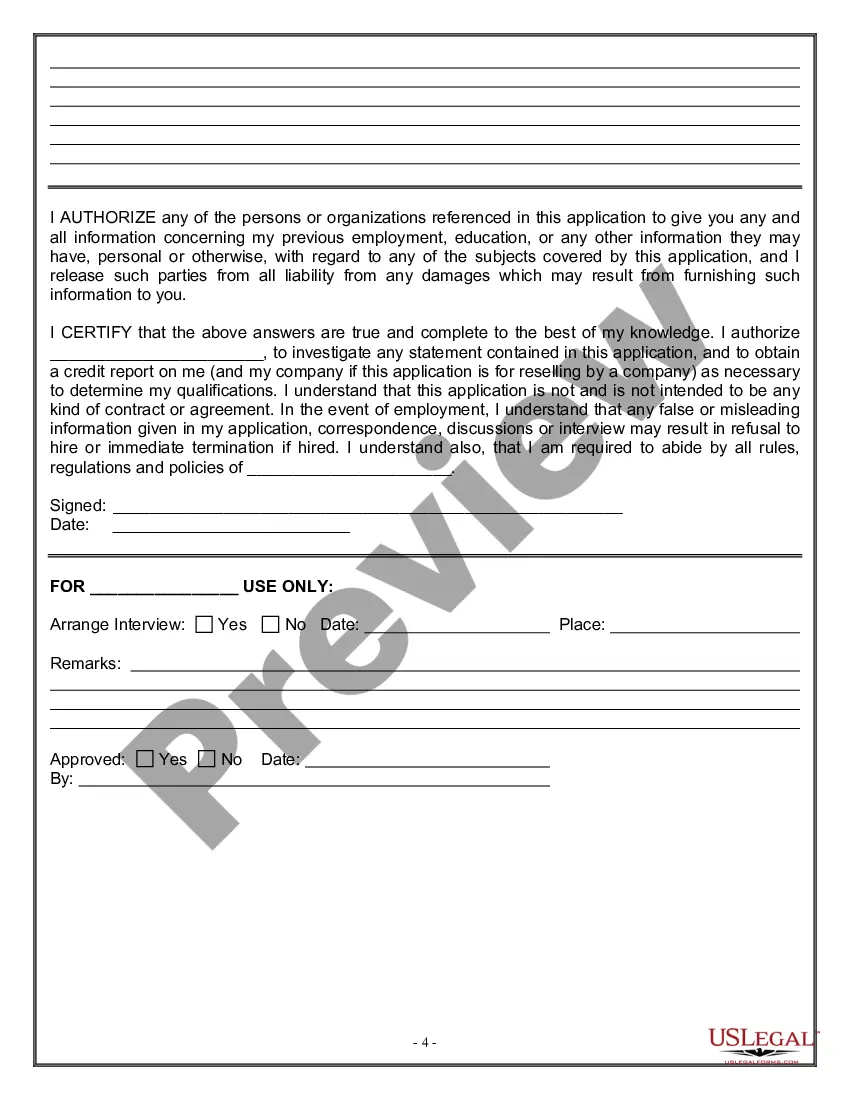
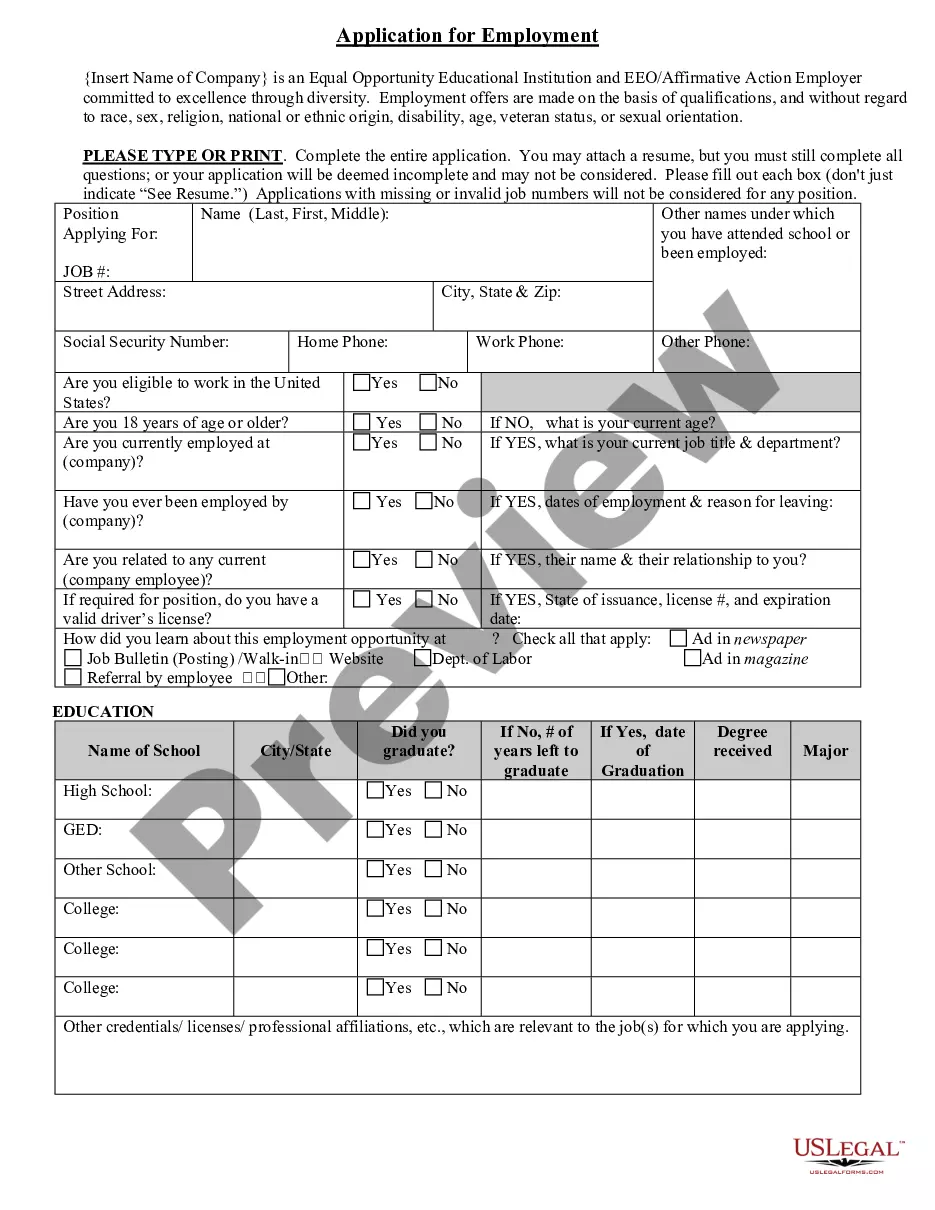
A job application is a form employers use to collection information about you to see if you are a good fit for the position. There are usually four parts of a job application: Personal information. Employment information, also called work history. Education and training.
How to write an application letter Research the company and job opening. Use a professional format. State the position you're applying for. Explain why you're the best fit for the job. Summarize your qualifications. Mention why you want the job. Include a professional closing.
Dear Mr./Mrs. Last Name, I am writing this letter to apply for the job title position at your company - company name. I believe that my educational background and professional experience make me an ideal candidate for this role.
Dear Mr./Mrs. Last Name, I am writing this letter to apply for the job title position at your company - company name. I believe that my educational background and professional experience make me an ideal candidate for this role.
I Am Familiar With Your Company. I Am Flexible. I Am Energetic and Positive. I Have Experience. I Am a Team Player. I Am Seeking to Become an Expert. I Am Highly Motivated. FAQs.
How to write a job application letter Research the company and position. Start by expressing your interest in the position. Mention your qualifications and experience. Describe your personality. Appreciate the reader. Close the letter. Be concise. Proofread your application letter.
Dear Mr/Ms {Recipient's Name}, I would like to thank you for the job offer of {Title} that has been offered to me. It makes me more than happy to be able to work for {Company's name}. Please consider this email as my formal acceptance letter.
You should: Read over the job application. Use a professional name and email address. Follow the instructions. Tailor your cover letter to the job. Include keywords in your resume. Check your responses for errors. Track your applications when applying for multiple jobs. Tidy your social media profiles.
