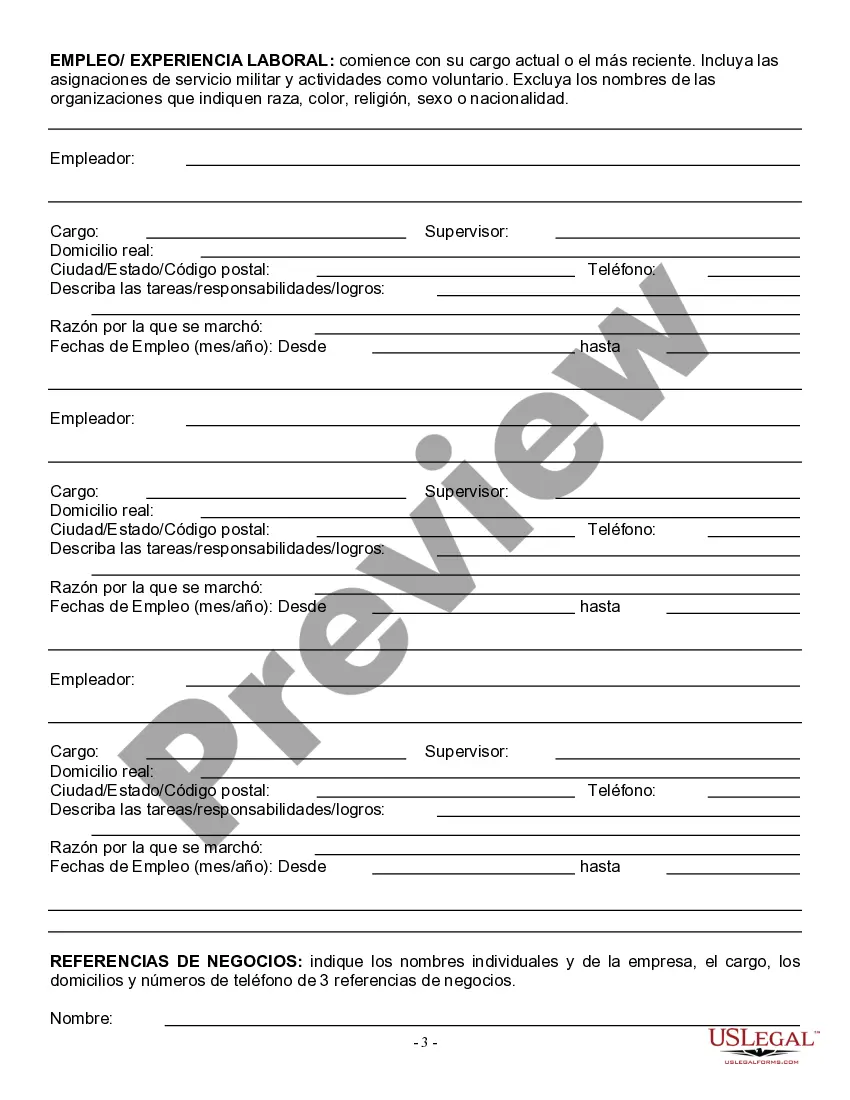
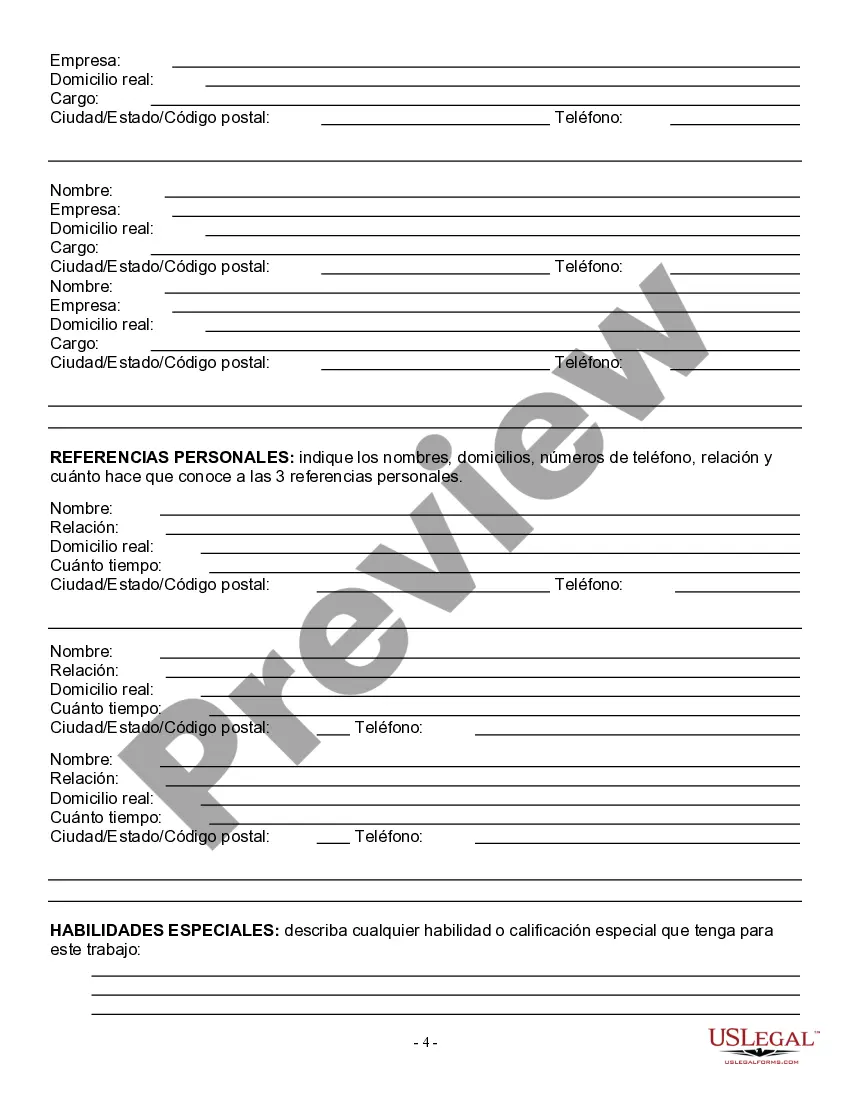
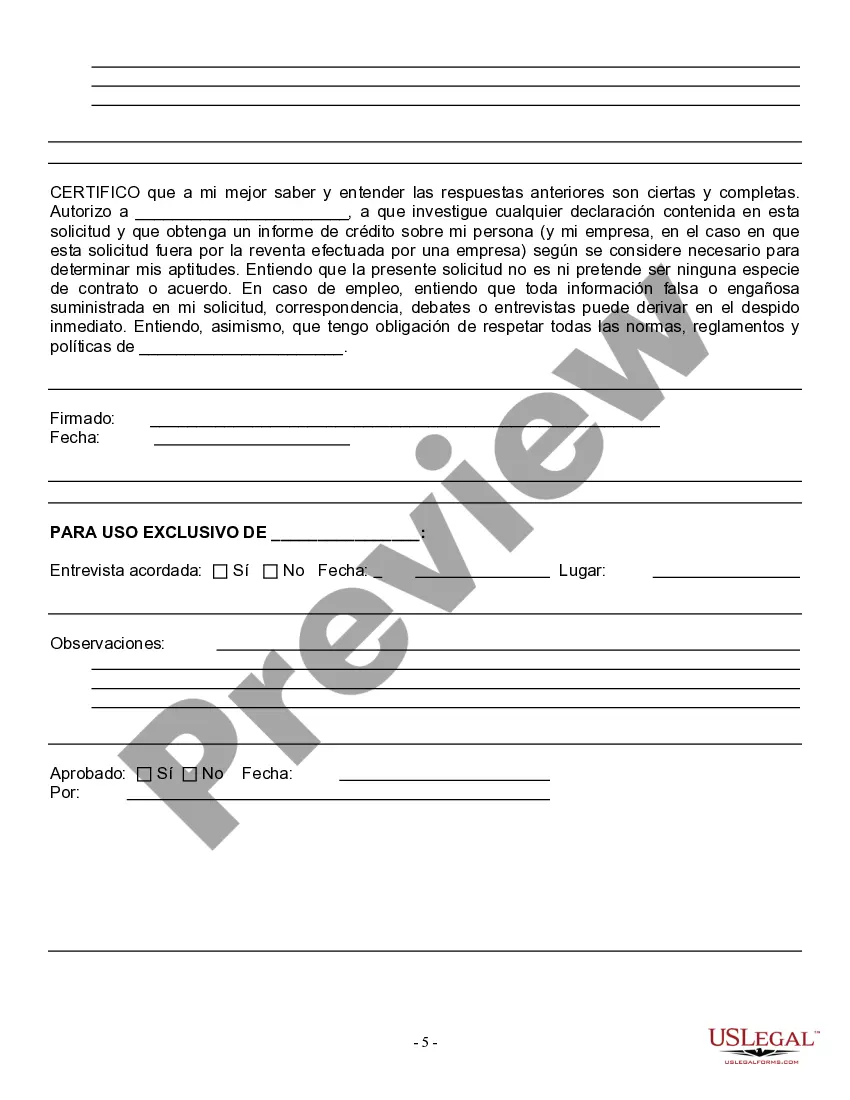
Employment Application En Español Withdrawn Significado In Arizona
Description

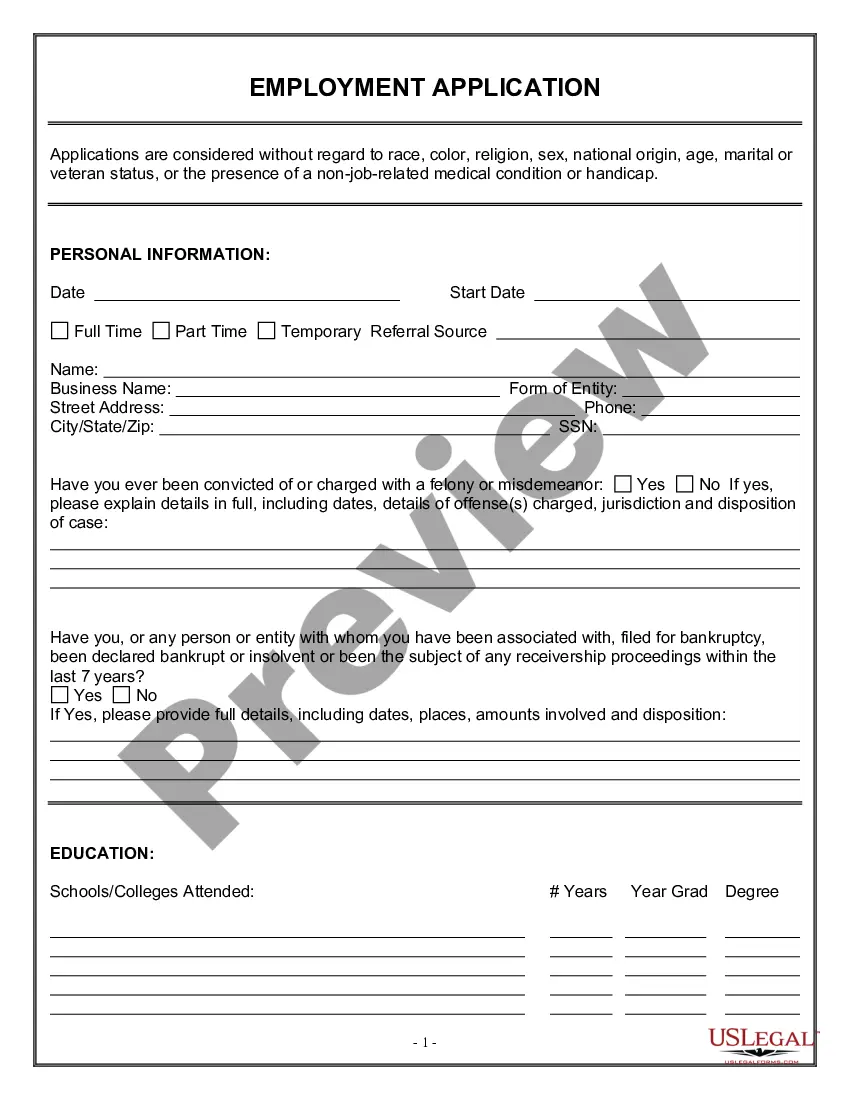
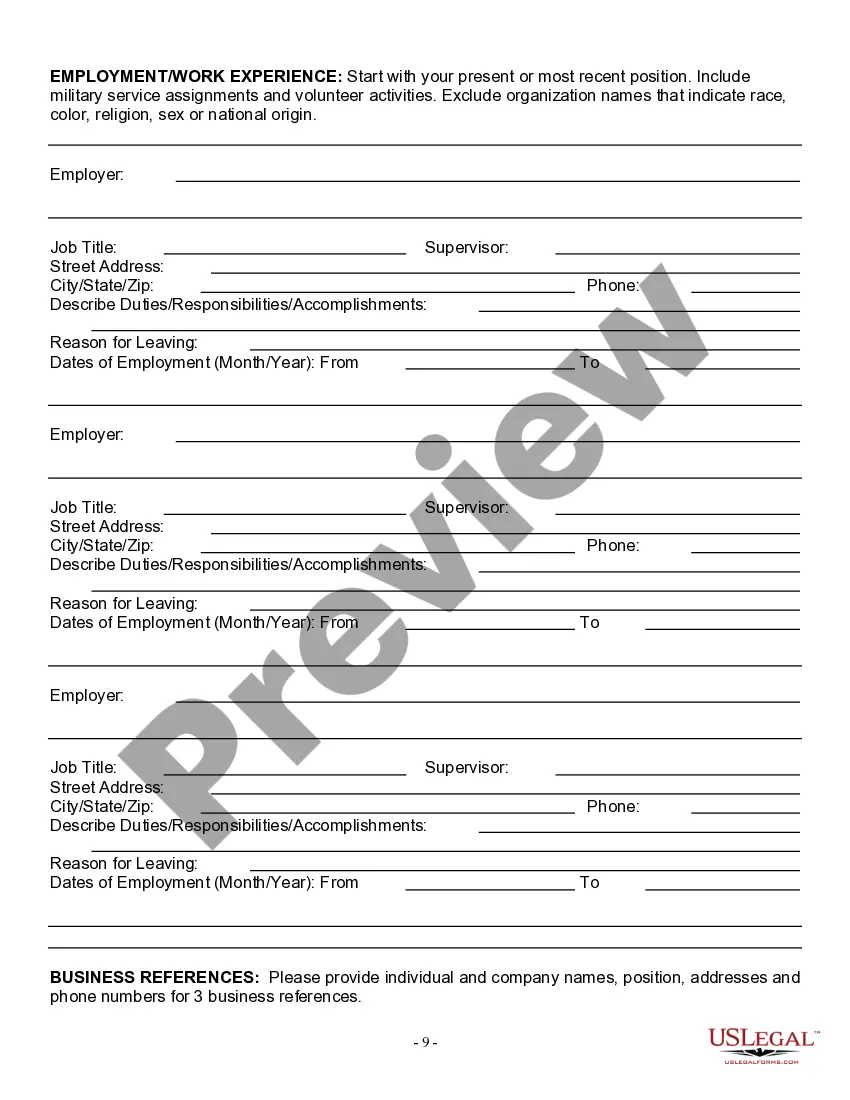
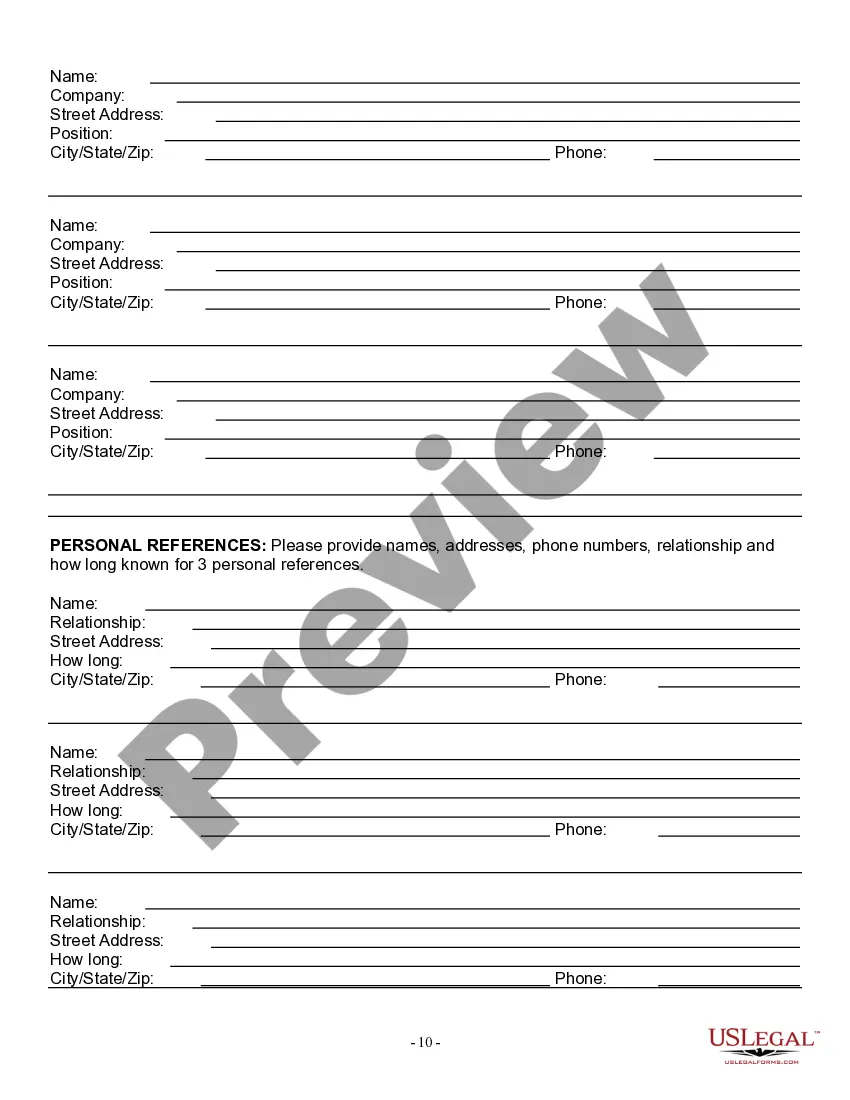


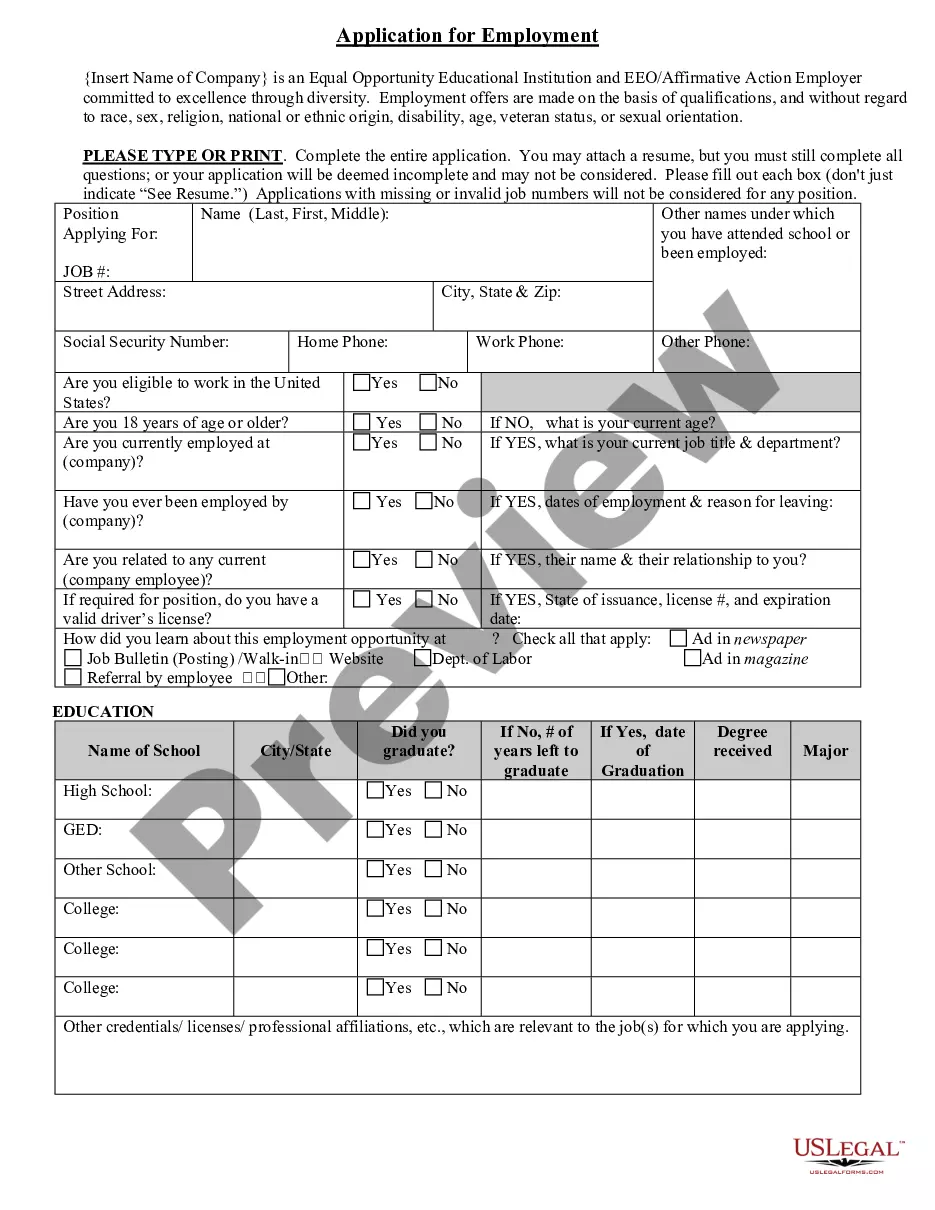

Get your form ready online
Our built-in tools help you complete, sign, share, and store your documents in one place.
Make edits, fill in missing information, and update formatting in US Legal Forms—just like you would in MS Word.
Download a copy, print it, send it by email, or mail it via USPS—whatever works best for your next step.
Sign and collect signatures with our SignNow integration. Send to multiple recipients, set reminders, and more. Go Premium to unlock E-Sign.
If this form requires notarization, complete it online through a secure video call—no need to meet a notary in person or wait for an appointment.
We protect your documents and personal data by following strict security and privacy standards.

Make edits, fill in missing information, and update formatting in US Legal Forms—just like you would in MS Word.

Download a copy, print it, send it by email, or mail it via USPS—whatever works best for your next step.

Sign and collect signatures with our SignNow integration. Send to multiple recipients, set reminders, and more. Go Premium to unlock E-Sign.

If this form requires notarization, complete it online through a secure video call—no need to meet a notary in person or wait for an appointment.

We protect your documents and personal data by following strict security and privacy standards.
Looking for another form?






Form popularity
FAQ
Unlawful presence is any period of time when you are present in the United States without being admitted or paroled, or when you are present in the United States after your “period of stay authorized by the Secretary” expires.
“Admission” is a term of art in immigration law, defined by statute as an entry with inspection. 102 Generally, “admission” means a lawful entry into the United States after inspection and authorization.
Persons who came into the U.S. without inspection or persons that came with a visa and the visa has expired, may be eligible to apply for residency in the U.S., however, their adjustment of status petition may require a waiver.
Section 101(a)(13)(A) of the Immigration and Nationality Act codified as 8 U.S.C. 1101(a)(13)(A) PDF version defines “admission” and “admitted” to mean: “with respect to an alien, the lawful entry of the alien into the United States after inspection or authorization by an immigration officer.”
During the inspection process, CBP Officers must determine the following: (1) why you are seeking entry into the U.S., (2) what documents you require, (3) if you have those documents, and (4) how long you should be allowed to initially stay in the U.S. These determinations usually take less than a minute, but may take ...
A Waiver of Inadmissibility for Entry Without Inspection (EWI) allows individuals who entered the U.S. without proper documentation or inspection to overcome their inadmissibility and pursue legal residency.
Entry Without Inspection (EWI) occurs when someone crosses the U.S. border without proper authorization or inspection by immigration officials. This action can have serious consequences on one's eligibility for visas and the ability to adjust status, making it crucial to understand the legal implications involved.
The entire adjustment process may take 8 to 14 months for most applicants. The most important thing you can do to ensure the best processing times is to submit a complete and thorough application package. You may not need a lawyer, but you need CitizenPath to help you get the best processing time on USCIS forms.
Individuals who entered the United States without inspection (unlawfully) but are eligible for 245i under the Immigration and Nationality Act can adjust their status within the United States if they have a qualifying relative or employer interested in petitioning for them.
Initially, it's important to note that those who enter the U.S. under ESTA are typically not permitted to adjust their status. This is unless a U.S. citizen immediate relative submits an I-130 petition for them. Immediate relatives in this context are: Spouses of U.S.
