Dental Office Application With Sedation In Pennsylvania
Description
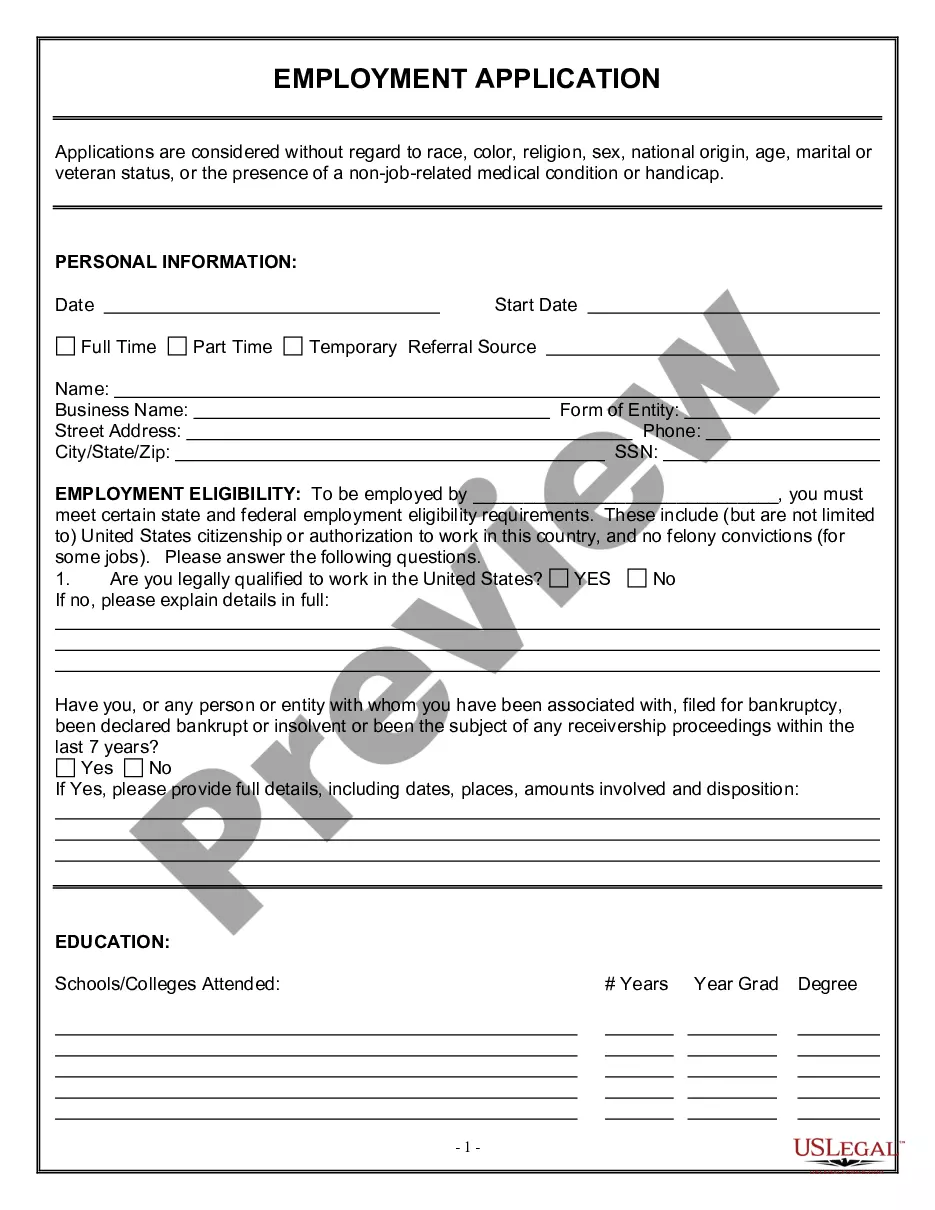
Get your form ready online
Our built-in tools help you complete, sign, share, and store your documents in one place.
Make edits, fill in missing information, and update formatting in US Legal Forms—just like you would in MS Word.
Download a copy, print it, send it by email, or mail it via USPS—whatever works best for your next step.
Sign and collect signatures with our SignNow integration. Send to multiple recipients, set reminders, and more. Go Premium to unlock E-Sign.
If this form requires notarization, complete it online through a secure video call—no need to meet a notary in person or wait for an appointment.
We protect your documents and personal data by following strict security and privacy standards.
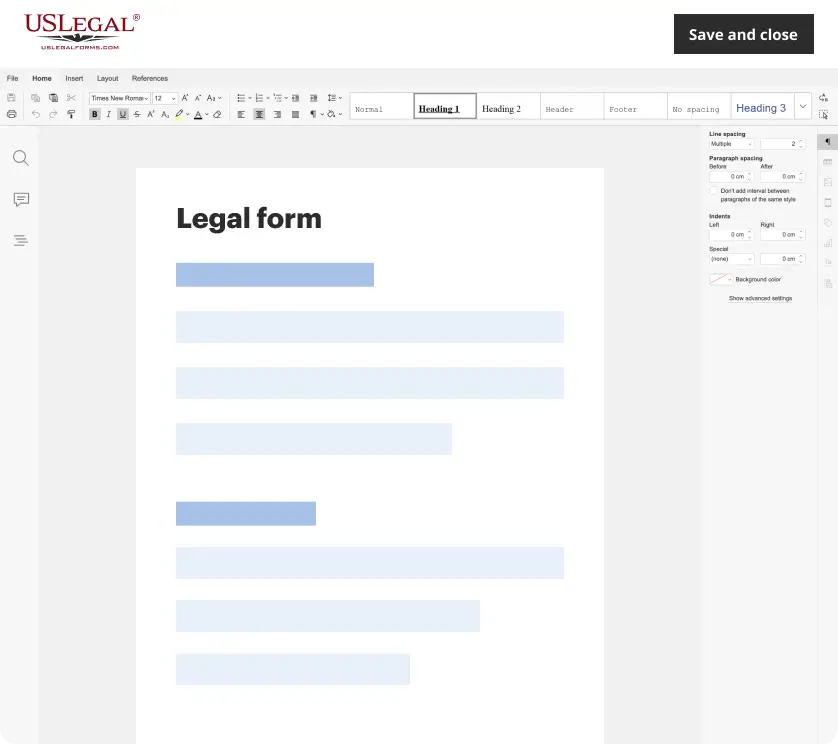
Make edits, fill in missing information, and update formatting in US Legal Forms—just like you would in MS Word.
Download a copy, print it, send it by email, or mail it via USPS—whatever works best for your next step.
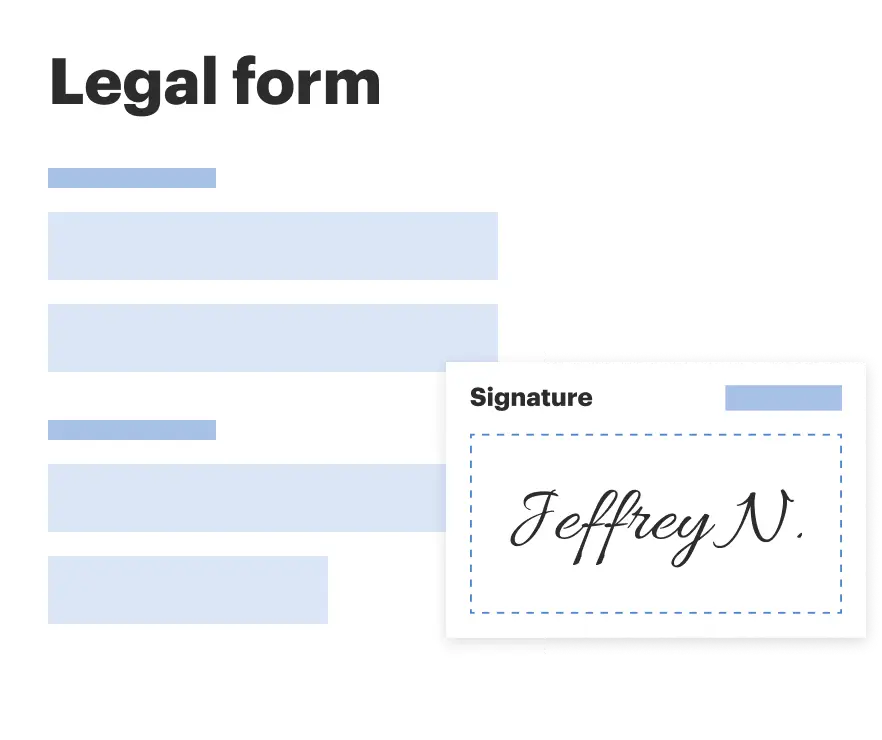
Sign and collect signatures with our SignNow integration. Send to multiple recipients, set reminders, and more. Go Premium to unlock E-Sign.
If this form requires notarization, complete it online through a secure video call—no need to meet a notary in person or wait for an appointment.
We protect your documents and personal data by following strict security and privacy standards.
Looking for another form?




Form popularity
FAQ
Here are common procedures that may utilize dental sedation: Bone grafts. When dentures have an improper fit, they are sometimes uncomfortable or even painful. Dental implants. Many people lose teeth over time due to issues such as injury, neglect, illness, or age. Emergency procedures. Extractions and fillings.
Local anesthesia sees regular use in a variety of dental procedures, from cavity and crown work to root planing and scaling for periodontal disease. Common local anesthetic drugs used in dentistry include lidocaine, articaine, prilocaine, mepivacaine, and bupivacaine.
Why might I need procedural sedation? Bone or joint realignment to fix a broken bone or dislocated joint. biopsy to evaluate a lump in the . Bronchoscopy to evaluate lung conditions. Dental surgery. Electrical cardioversion to restore a normal heart rhythm. Endoscopy for gastrointestinal problems.
Abstract: Conscious sedation in dentistry is usually indicated because a patient's anxiety can prohibit the necessary dental treatment being undertaken.
In the treatment consultation, your dentist can discuss and recommend suitable sedation options for you. If you'd like sedation-assisted hygiene treatment, we can help arrange your appointment and answer your questions. Speak to your local practice to learn more.
You may ask your dentist to sedate you if the dentist is properly trained and equipped to provide anesthesia. If not, there may be an anesthesiologist that can provide the service in your dentist's office. Other options would be a surgery center or day surgery at a dentally equipped hospital.
A general dentist, making a recommendation for referral to a specialist, should do so on the basis of what is 'appropriate and best for the patient', in the context of their own level or constraints of experience, expertise and training.
You may ask your dentist to sedate you if the dentist is properly trained and equipped to provide anesthesia. If not, there may be an anesthesiologist that can provide the service in your dentist's office. Other options would be a surgery center or day surgery at a dentally equipped hospital.
Dental Code D9222 is a specific code used in dentistry to indicate the use of deep sedation or general anesthesia during dental procedures. By understanding this code, patients can gain insight into the importance of deep sedation and general anesthesia in dental treatments.
