Dog Walking Agreement With Shoes
Description

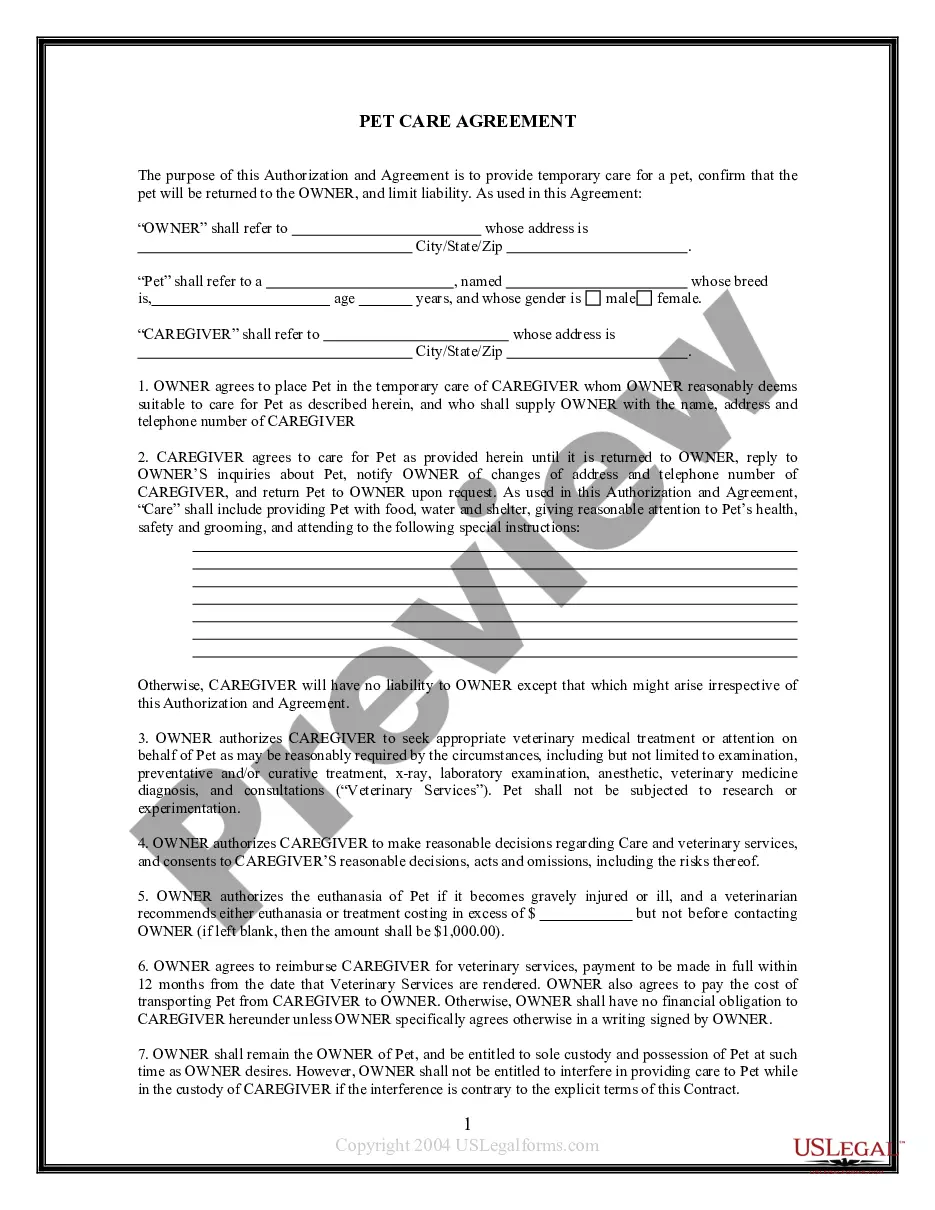
Get your form ready online
Our built-in tools help you complete, sign, share, and store your documents in one place.
Make edits, fill in missing information, and update formatting in US Legal Forms—just like you would in MS Word.
Download a copy, print it, send it by email, or mail it via USPS—whatever works best for your next step.
Sign and collect signatures with our SignNow integration. Send to multiple recipients, set reminders, and more. Go Premium to unlock E-Sign.
If this form requires notarization, complete it online through a secure video call—no need to meet a notary in person or wait for an appointment.
We protect your documents and personal data by following strict security and privacy standards.

Make edits, fill in missing information, and update formatting in US Legal Forms—just like you would in MS Word.

Download a copy, print it, send it by email, or mail it via USPS—whatever works best for your next step.

Sign and collect signatures with our SignNow integration. Send to multiple recipients, set reminders, and more. Go Premium to unlock E-Sign.

If this form requires notarization, complete it online through a secure video call—no need to meet a notary in person or wait for an appointment.

We protect your documents and personal data by following strict security and privacy standards.
Looking for another form?






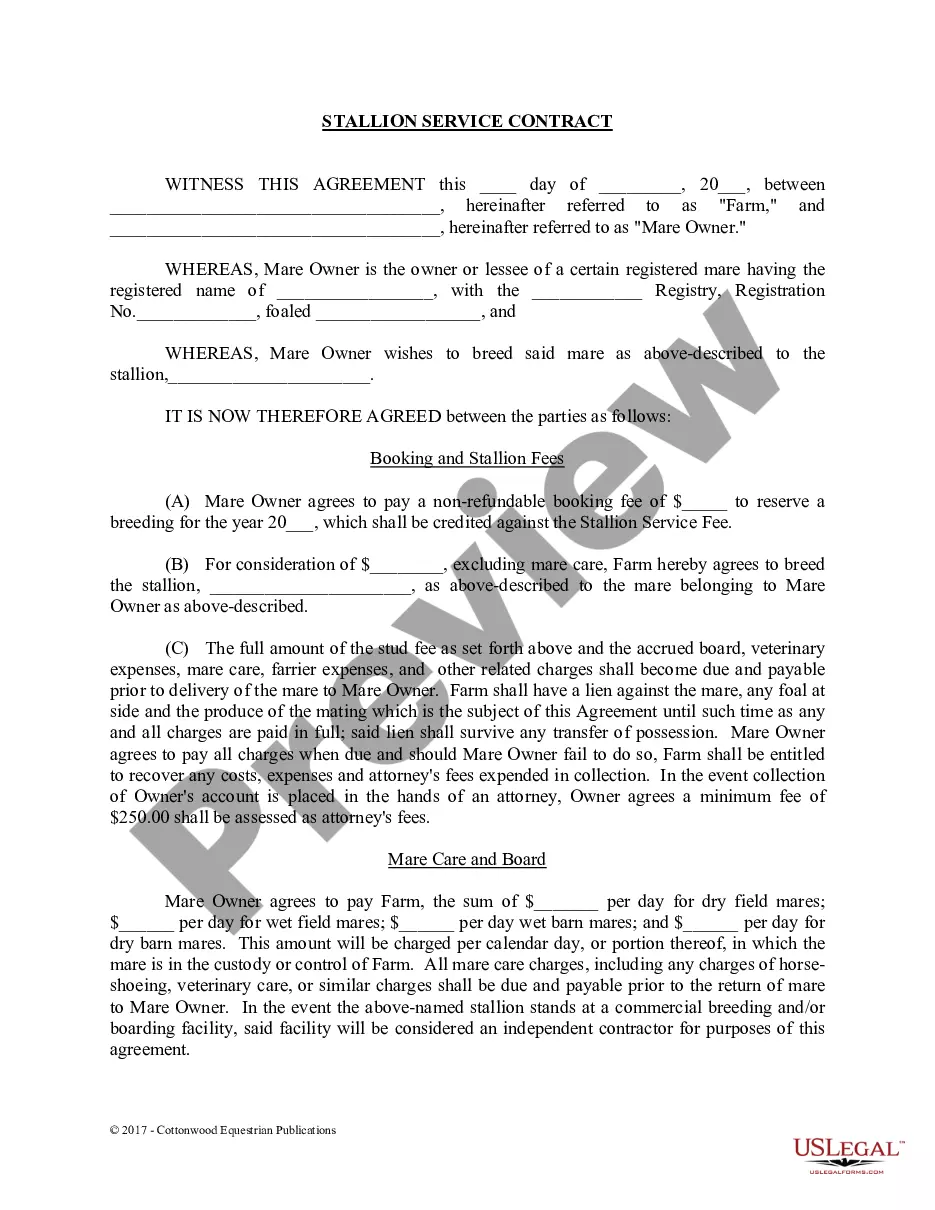


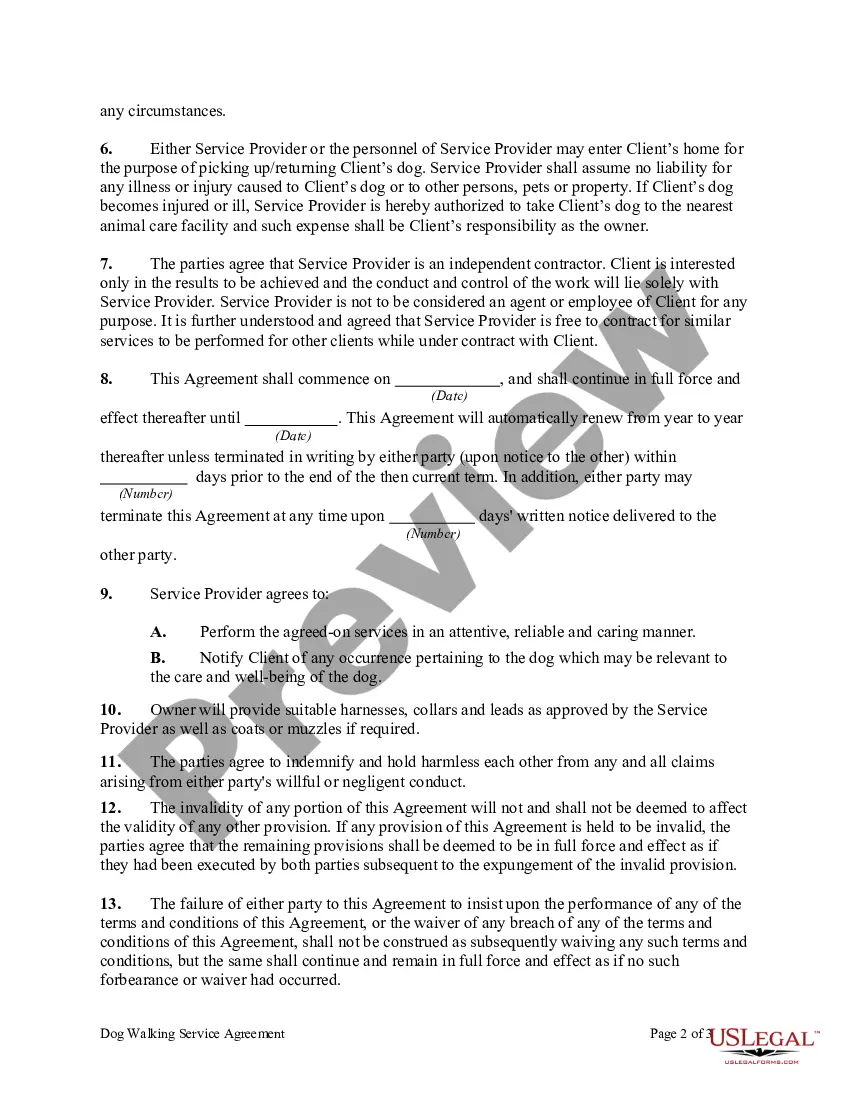
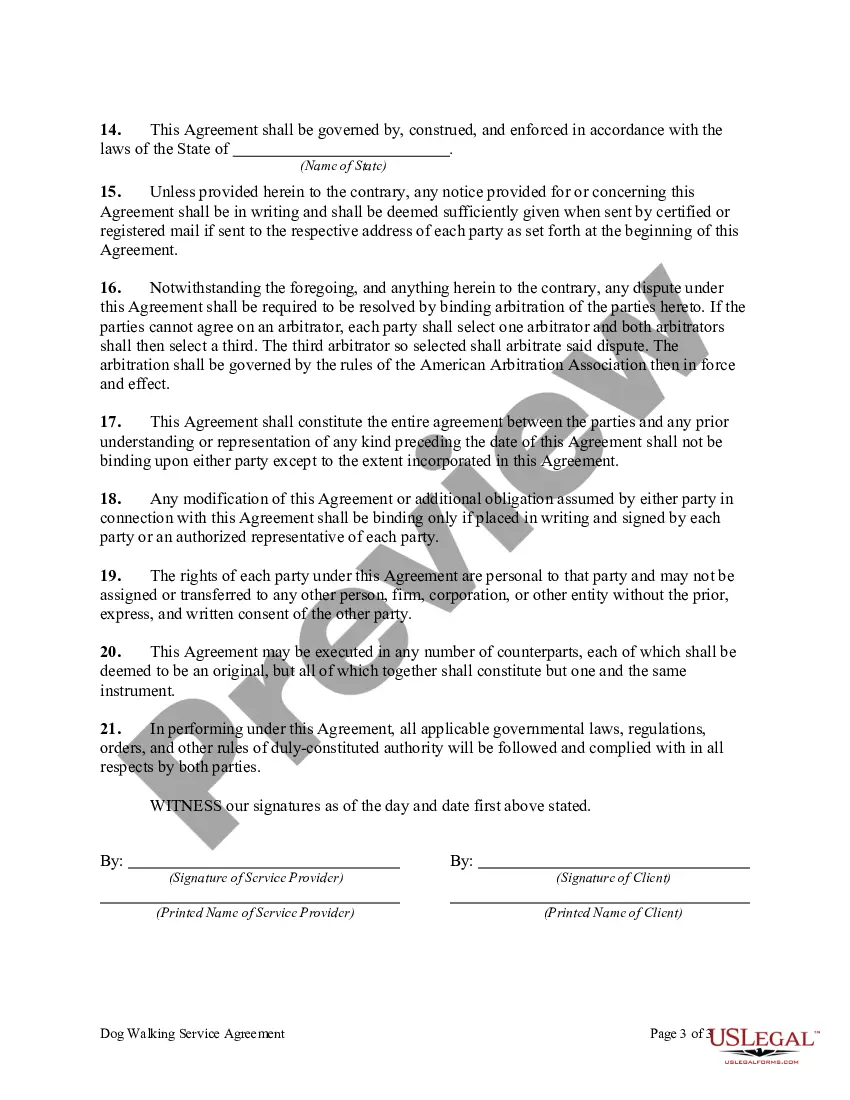
How to fill out Dog Walking Service Agreement?
- Begin by logging into your account if you're a returning user. Ensure your subscription is active and click the Download button to access your agreement.
- For first-time users, start with the Preview mode to review the form description and confirm it fulfills your requirements.
- If necessary, utilize the Search tab to find alternative templates that may better suit your agreement.
- Once you've selected the appropriate document, click on the Buy Now button and choose a subscription plan that works for you. Registration is required to access the forms.
- Complete your payment using either a credit card or PayPal, ensuring you finalize your subscription.
- After the purchase is confirmed, download your dog walking agreement and store it on your device. You can revisit it via the My Forms section whenever needed.
In conclusion, using US Legal Forms simplifies the process of creating essential legal documents like a dog walking agreement. Their extensive library and user-friendly format make it a top choice for anyone seeking legal clarity.
Start your journey with US Legal Forms today and secure your dog walking arrangement effortlessly!
Form popularity
FAQ
Many veterinarians recommend shoes for dogs that spend time on hot concrete or icy sidewalks. It’s important to consult your vet about your specific dog's needs and to create a dog walking agreement with shoes that addresses these recommendations. This proactive step can ensure your dog's paw health and overall safety.
When temperatures drop below freezing or rise above 80°F, it’s wise to consider shoes for your dog. A dog walking agreement with shoes can outline weather guidelines for safe walking practices. Protecting their paws prevents discomfort and keeps them happy during outings in extreme conditions.
Allowing your dog to play with your shoes can lead to unwanted chewing and potential damage. It’s better to provide them with their toys, while a dog walking agreement with shoes helps set rules for footwear during walks. Teaching your dog the difference between their playthings and your belongings can keep your shoes safe.
Yes, dogs can walk with shoes, especially in extreme weather or rough terrain. A dog walking agreement with shoes can help outline your expectations for your dog's comfort and safety on walks. While not all dogs require shoes, certain breeds or environments make this necessity more apparent.
Using shoes when walking your dog can protect their paws from harsh surfaces, hot pavement, or cold snow. A dog walking agreement with shoes can clarify when and how to use them effectively. Additionally, proper shoes can prevent injuries like cuts and burns, so it’s worth considering their benefits during walks.
The 3-3-3 rule is a guideline for helping dogs adjust to new environments. It suggests that a dog will take three days to decompress, three weeks to learn their new routine, and three months to fully adjust. This rule can be crucial when introducing new shoes for your dog, helping them acclimate to walking with those shoes. A dog walking agreement with shoes can assist in easing this transition by providing structured and supportive walking sessions.
The choice between one long walk or two short walks depends on your dog's energy level and needs. For some dogs, a single longer walk provides ample physical activity and mental stimulation. Others may benefit from shorter, more frequent walks that break up their day. Consider drafting a dog walking agreement with shoes that outlines the schedule, ensuring a balanced routine that suits your dog's requirements.
When walking your dog, avoid using a retractable leash in crowded places, as it can lead to accidents. Do not ignore your dog's body language; paying attention can prevent discomfort or stress. Remember to keep your dog away from aggressive dogs and stay off-leash areas unless your dog is trained for recall. A dog walking agreement with shoes can help you adhere to safety guidelines while ensuring your dog's comfort.
The 5 second rule is focused on giving your dog time to explore during your walk. When you stop for a moment, if your dog is still engaged in sniffing or exploring after five seconds, you are allowing them to embrace their natural instincts. This can be beneficial for your dog’s mental stimulation and overall enjoyment. Incorporating a dog walking agreement with shoes can help ensure your dog's paws are protected on different terrains.
Generally, you do not need formal certification to be a dog walker. However, taking a pet first aid course can enhance your credibility and safety skills. Additionally, creating a dog walking agreement with shoes can help formalize your services and gives clients peace of mind. Investing time in learning about dog behavior and care will also strengthen your standing as a professional dog walker.