Partition And Exchange Agreement With Waiver Of Rights In Riverside
Description

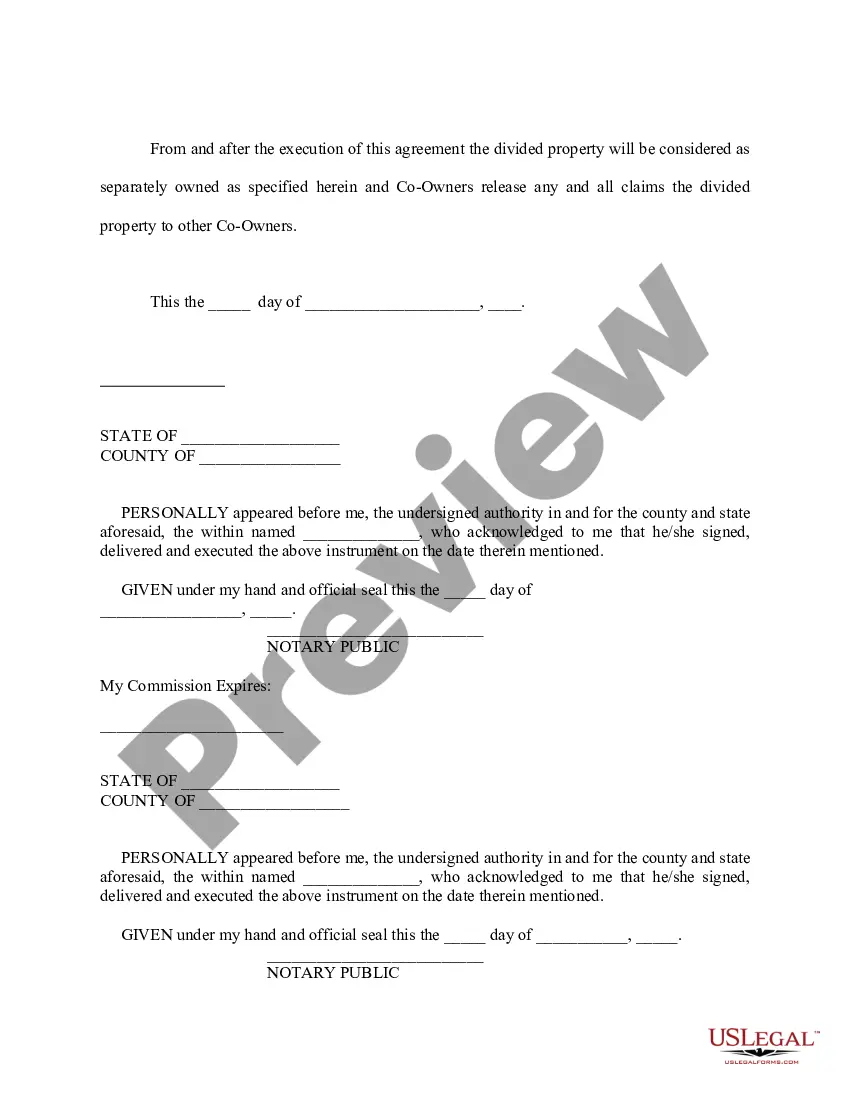
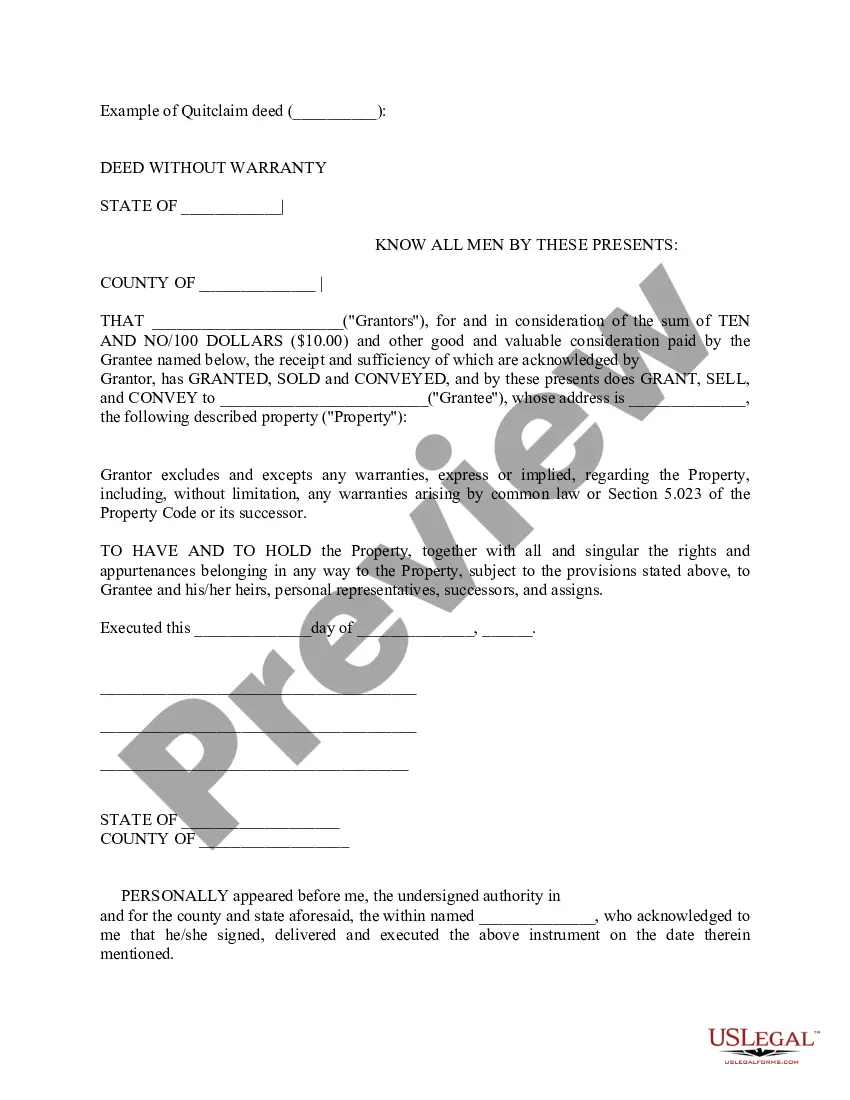

Get your form ready online
Our built-in tools help you complete, sign, share, and store your documents in one place.
Make edits, fill in missing information, and update formatting in US Legal Forms—just like you would in MS Word.
Download a copy, print it, send it by email, or mail it via USPS—whatever works best for your next step.
Sign and collect signatures with our SignNow integration. Send to multiple recipients, set reminders, and more. Go Premium to unlock E-Sign.
If this form requires notarization, complete it online through a secure video call—no need to meet a notary in person or wait for an appointment.
We protect your documents and personal data by following strict security and privacy standards.

Make edits, fill in missing information, and update formatting in US Legal Forms—just like you would in MS Word.

Download a copy, print it, send it by email, or mail it via USPS—whatever works best for your next step.

Sign and collect signatures with our SignNow integration. Send to multiple recipients, set reminders, and more. Go Premium to unlock E-Sign.

If this form requires notarization, complete it online through a secure video call—no need to meet a notary in person or wait for an appointment.

We protect your documents and personal data by following strict security and privacy standards.
Looking for another form?

Form popularity
FAQ
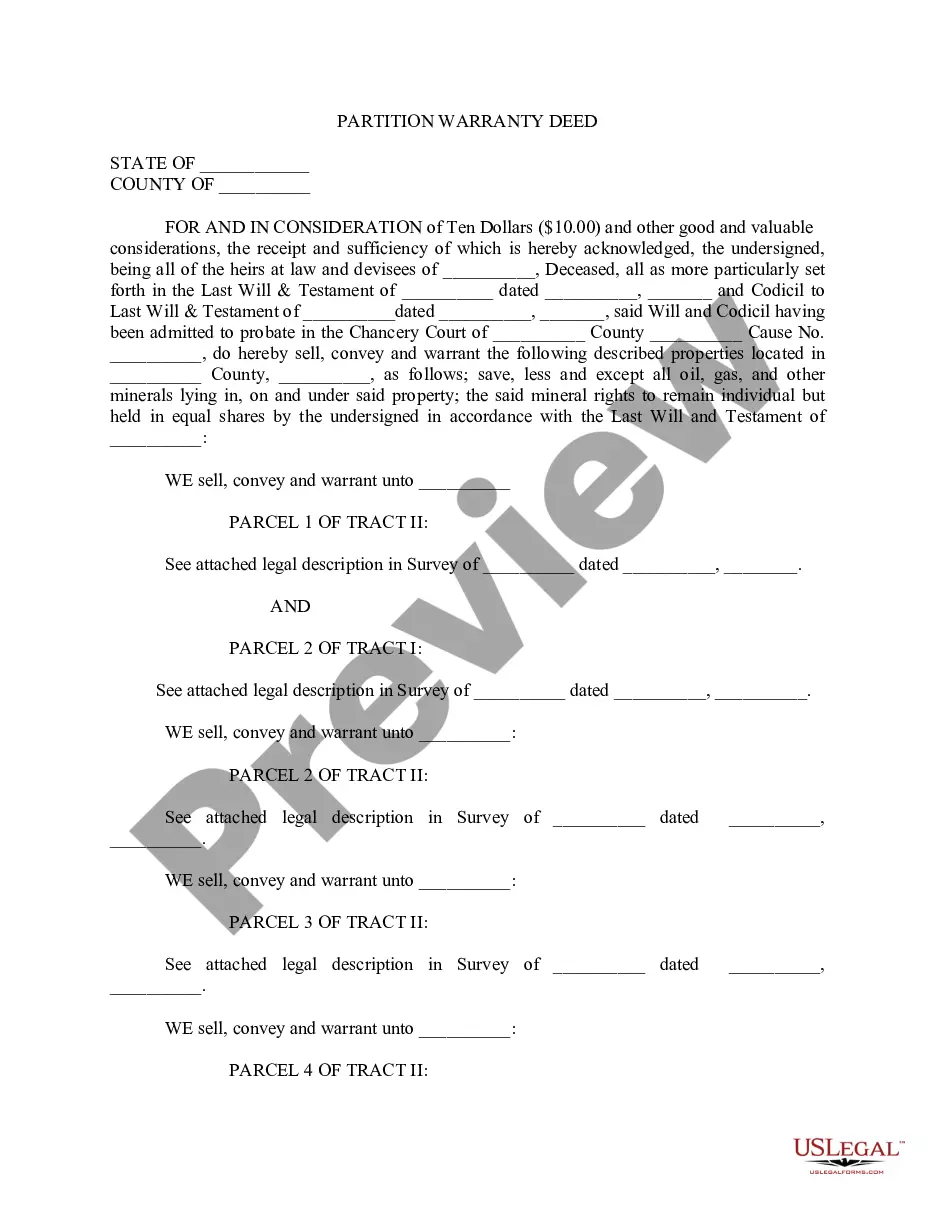
To legally “partition” property means to bring a proceeding in court to force the physical division or sale of the property and division of the proceeds among the co owners. In certain cases it can be an absolute right of a co owner while in others it is contingent on various factors.
A compelling reason for a partition action typically arises when co-owners of jointly owned property cannot agree on how to manage, use, or dispose of the property.
Right to Partition is Absolute Unless There is a Waiver Before understanding the concept of a waiver of partition, it is important to understand that every co-owner in California has a right to partition unless they waive that right.
Partition is the division of real or personal property between or among two or more co-owners, such as joint tenants or tenants-in-common. Partition is not a remedy available to owners who hold title as community property or quasi-community property.
The California partition statutes explain that “partition as to…the property shall be as of right unless barred by a valid waiver.” “'Waiver' means the intentional relinquishment or abandonment of a known right.
A California partition action happens when one co-owner of real property wants to sell but other co-owners do not want to sell their ownership rights. Partition means division. The opposing co-owners have the absolute right by law to divide the property and sell their portion with the legal remedy of “Partition”.
An agreement made not to partition a real property during a certain time constitutes a legal defense to an action brought during such time for its partition. When there is an agreement prohibiting a partition, equitable defenses like estoppel and waiver can be raised in a partition suitii.
A signed document that records any legal entitlements a defendant chooses to forego How to use "Waiver of Rights Form" in a sentence.
A Partition is generally a no-fault proceeding, meaning there are generally no defenses that an owner can raise. One exception is if the owners have waived their right to Partition. A waiver may be verbal, implied, or written. A Partition action should be filed with the assistance of an experienced attorney.
Attorney fees for even the most simple of partition actions could exceed $5,000. Even if the partition lawsuit is uncontested, there are many steps and lots of paperwork, which requires a significant amount of attorney time. And if the matter is contested or complicated, costs can exceed $15,000 or even $20,000.
