Agreement Division Property With Real Estate In Pennsylvania
Description


Get your form ready online
Our built-in tools help you complete, sign, share, and store your documents in one place.
Make edits, fill in missing information, and update formatting in US Legal Forms—just like you would in MS Word.
Download a copy, print it, send it by email, or mail it via USPS—whatever works best for your next step.
Sign and collect signatures with our SignNow integration. Send to multiple recipients, set reminders, and more. Go Premium to unlock E-Sign.
If this form requires notarization, complete it online through a secure video call—no need to meet a notary in person or wait for an appointment.
We protect your documents and personal data by following strict security and privacy standards.

Make edits, fill in missing information, and update formatting in US Legal Forms—just like you would in MS Word.

Download a copy, print it, send it by email, or mail it via USPS—whatever works best for your next step.

Sign and collect signatures with our SignNow integration. Send to multiple recipients, set reminders, and more. Go Premium to unlock E-Sign.

If this form requires notarization, complete it online through a secure video call—no need to meet a notary in person or wait for an appointment.

We protect your documents and personal data by following strict security and privacy standards.
Looking for another form?

Form popularity
FAQ
In this article, the term partitioning means the process of physically dividing data into separate data stores. It is not the same as SQL Server table partitioning.
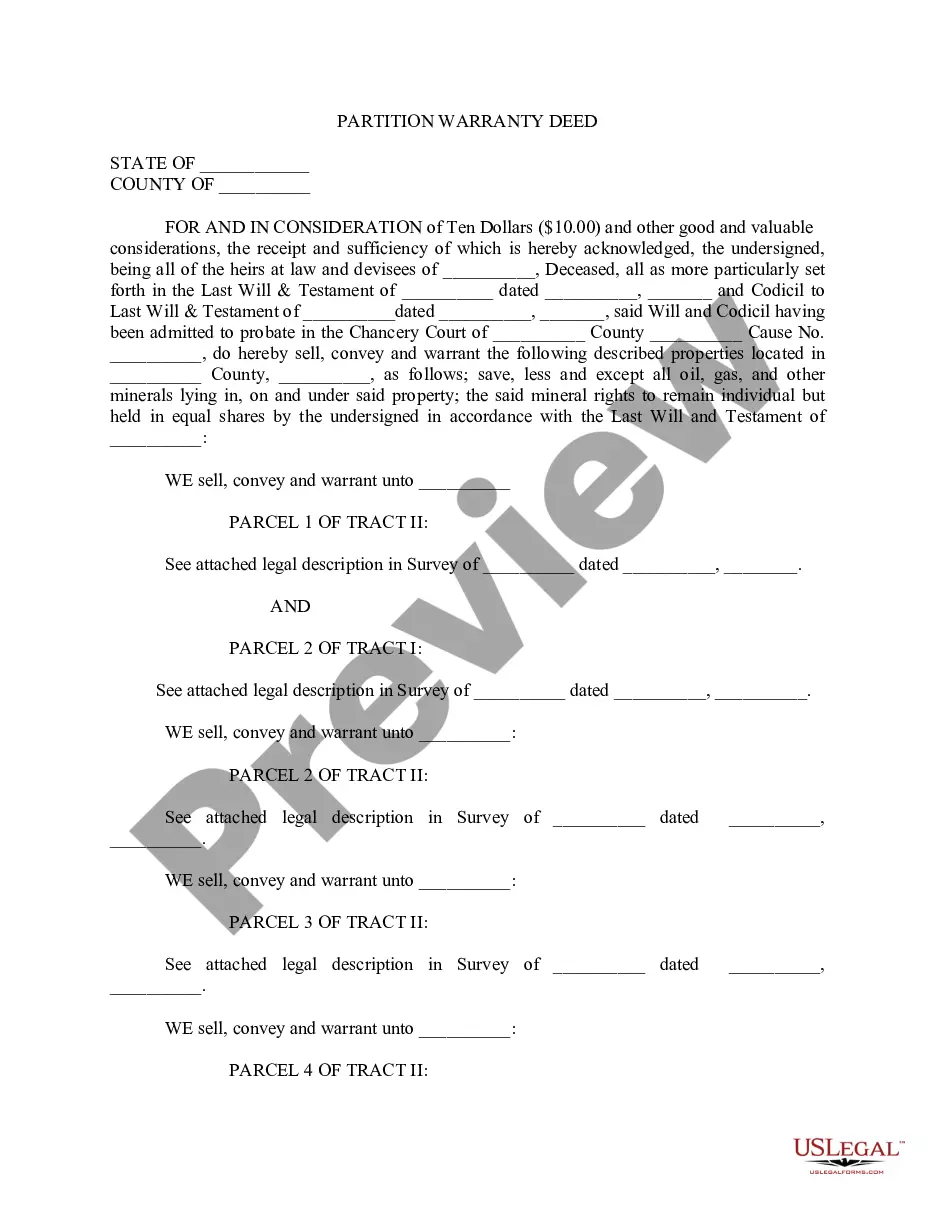
A partition action is a lawsuit in which a court determines whether a property with two or more owners is to be partitioned or sold. When two or more owners cannot agree on the disposition of the property in question, any of the owners can file a partition action in the appropriate court.
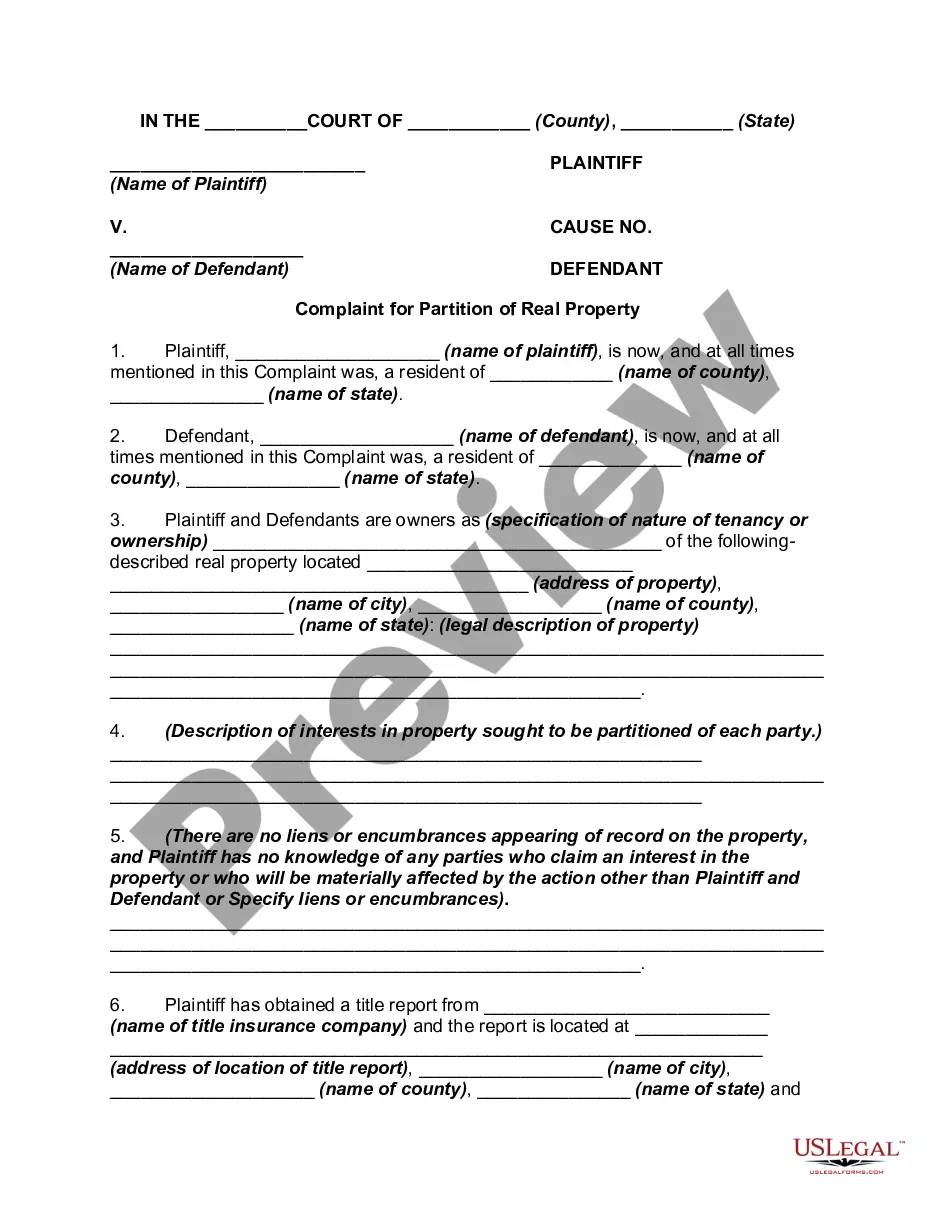
To initiate a partition action in Pennsylvania, a co-owner must file a partition complaint at the Court of Common Pleas in the county in which the property is located. The partition complaint will include the names of the co-owners, the property description, the co-owners interest in the property.
Can One Owner Sell a Jointly Owned Property? Generally, one co-owner cannot sell the entire property without the consent of the others. However, in a tenancy in common, a party may sell their interest without seeking consent from the others.
The court considers several factors in deciding how to split the marital property equitably. These factors include the length of your marriage, the amount of marital property, and how each of you either contributed to the acquisition and improvement of the marital property or dissipated (reduced) marital assets.
To initiate a partition action in Pennsylvania, a co-owner must file a partition complaint at the Court of Common Pleas. The Complaint will set forth the property description, the names and addresses of the co-owners, and their interest in the property.
