Sample Partition Agreement With Mexico In Michigan
Description

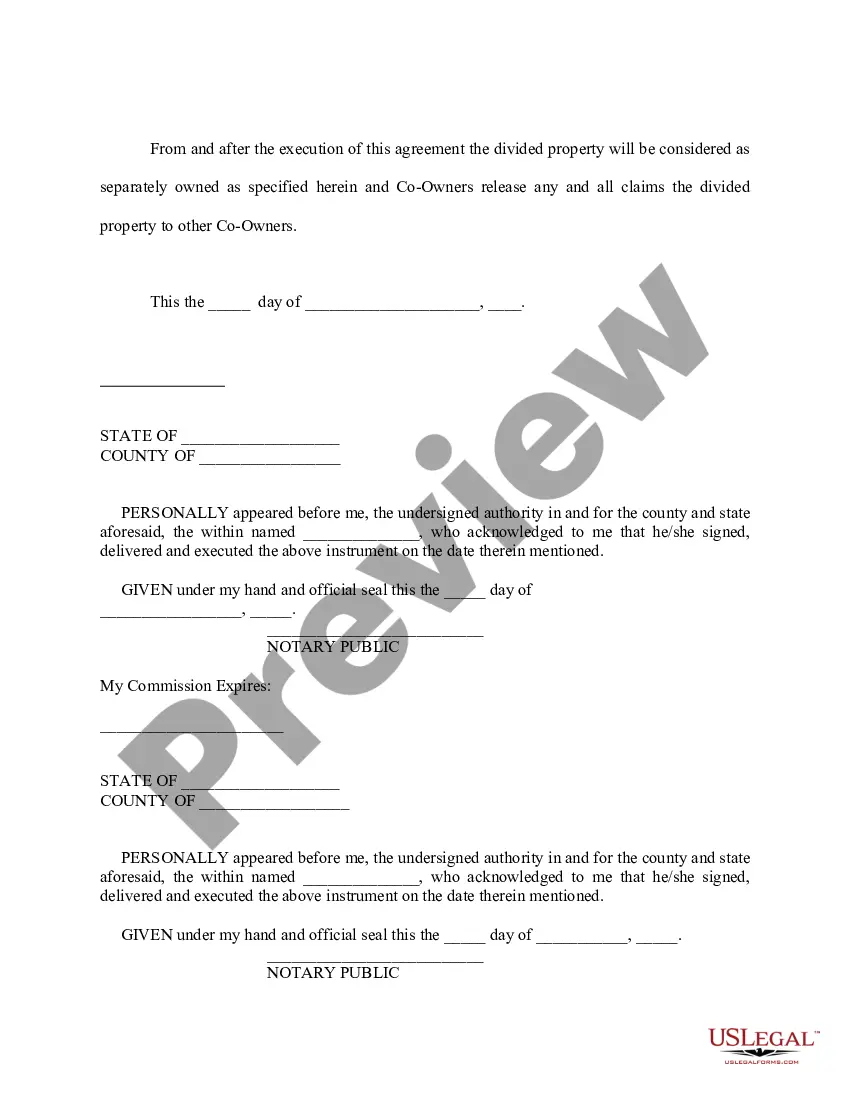
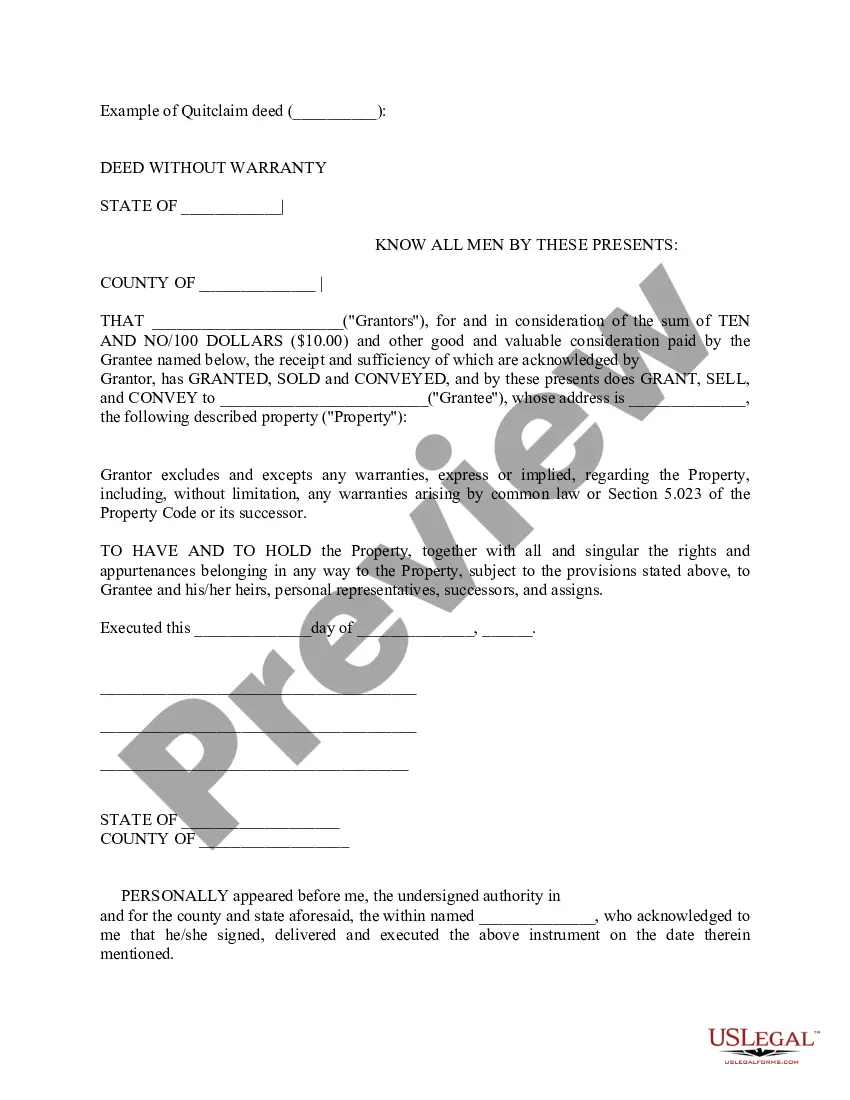

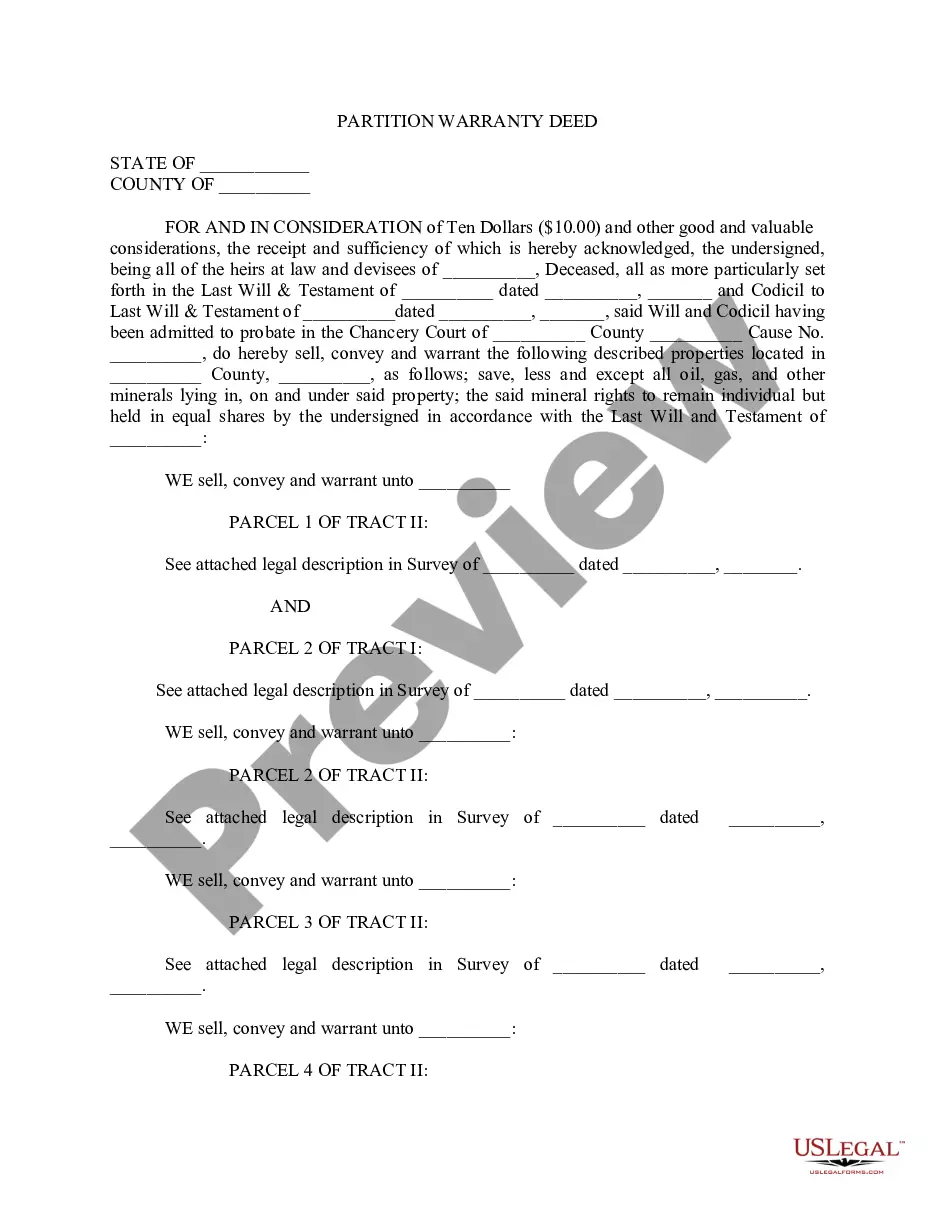
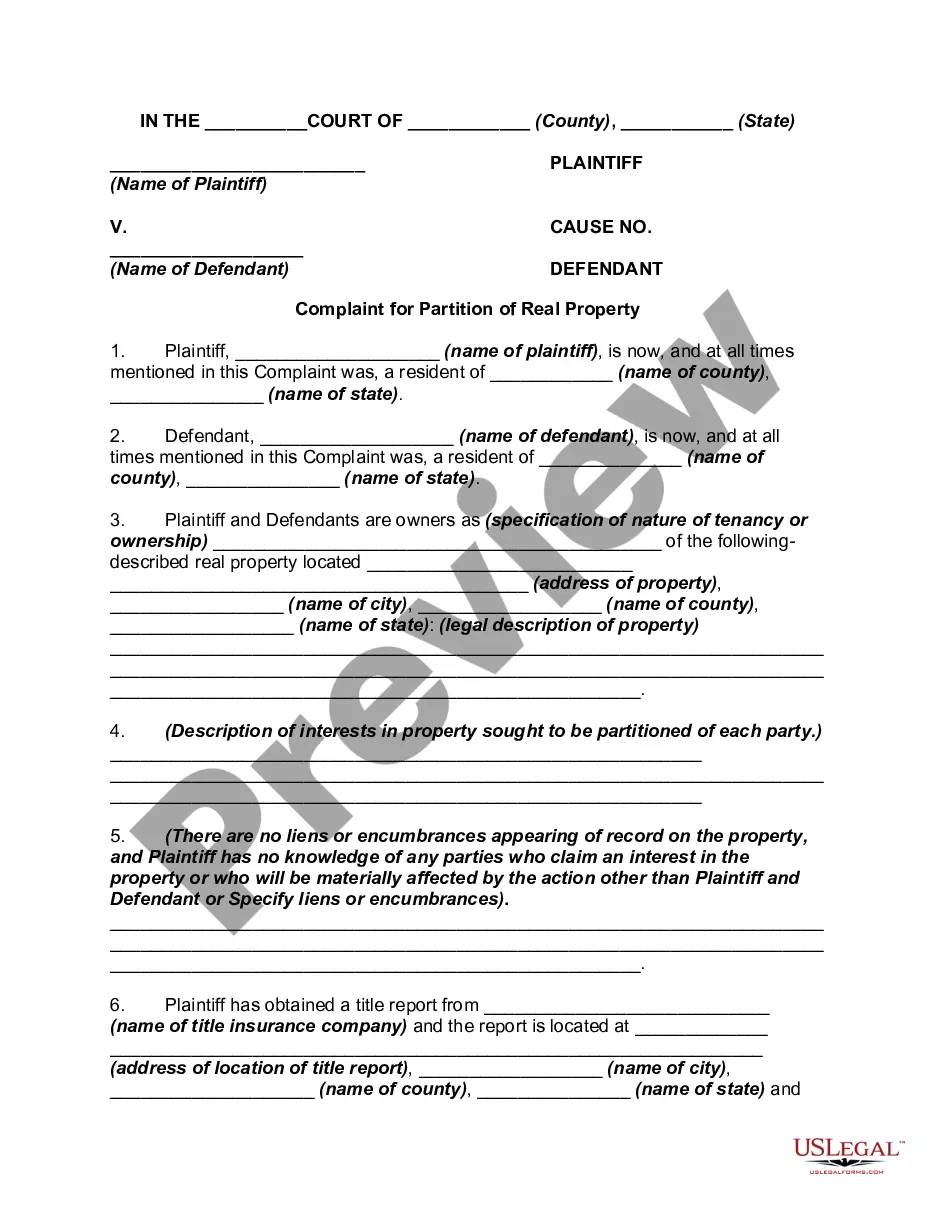
Get your form ready online
Our built-in tools help you complete, sign, share, and store your documents in one place.
Make edits, fill in missing information, and update formatting in US Legal Forms—just like you would in MS Word.
Download a copy, print it, send it by email, or mail it via USPS—whatever works best for your next step.
Sign and collect signatures with our SignNow integration. Send to multiple recipients, set reminders, and more. Go Premium to unlock E-Sign.
If this form requires notarization, complete it online through a secure video call—no need to meet a notary in person or wait for an appointment.
We protect your documents and personal data by following strict security and privacy standards.

Make edits, fill in missing information, and update formatting in US Legal Forms—just like you would in MS Word.

Download a copy, print it, send it by email, or mail it via USPS—whatever works best for your next step.

Sign and collect signatures with our SignNow integration. Send to multiple recipients, set reminders, and more. Go Premium to unlock E-Sign.

If this form requires notarization, complete it online through a secure video call—no need to meet a notary in person or wait for an appointment.

We protect your documents and personal data by following strict security and privacy standards.
Looking for another form?










Form popularity
FAQ
A forced sale is a legal process (often called a partition lawsuit) by which the co-owner of a property can accomplished a court-ordered sale of the jointly owned property. The sale occurs under court supervision, ending in division of the property or sale proceeds.
Understanding Partition Lawsuits in Michigan: A partition lawsuit is a legal action used to resolve disputes between co-owners of real property. It seeks a court-ordered division or sale of the property to ensure each co-owner receives their fair share.
The timeline for a partition lawsuit in Michigan can vary significantly depending on several factors, including the complexity of the case, the court's calendar, and whether the partition is contested by any of the co-owners. Typically, the process can take anywhere from a few months to over a year.
Partition definition: it is defined as a room divider or wooden partition wall constructed from a sturdy material such as glass, bricks, or wood studs, whose sole purpose is to be a room divider and separate one room from another.
If the court finds that any portion, interest, or part can be divided and partitioned and that other portions, interests, or parts cannot be divided without great prejudice to the owners, the court may appoint partition commissioners and direct them to partition and divide the parts or interests which can be divided ...
In short, yes, you should have an attorney to represent you in a postnuptial agreement for several reasons: To be sure you are treated fairly in the agreement. To have the agreement upheld, as a court is much more likely to say it is a valid contract if both parties were represented by counsel when they entered into it.
Texas Laws on Community Debt In many community property jurisdictions, debts incurred during the marriage are presumed to be the joint responsibility of both spouses.
ORA-14096: tables in ALTER TABLE EXCHANGE PARTITION must have the same number of columns. You cannot do that. You'll have to add the columns to the partitioned table first. A partition exchange is simply an exchange of segments -- no movement of data takes place. It is a data dictionary update.
A partition agreement divides, or partitions, a married couple's community estate into two separate estates. It is sometimes called a post-nuptial or post-marital agreement and is similar to a prenuptial agreement, except that it is executed by a married couple.
At any time, the spouses may partition or exchange between themselves all or part of their community property, then existing or to be acquired, as the spouses may desire. Property or a property interest transferred to a spouse by a partition or exchange agreement becomes that spouse's separate property.
