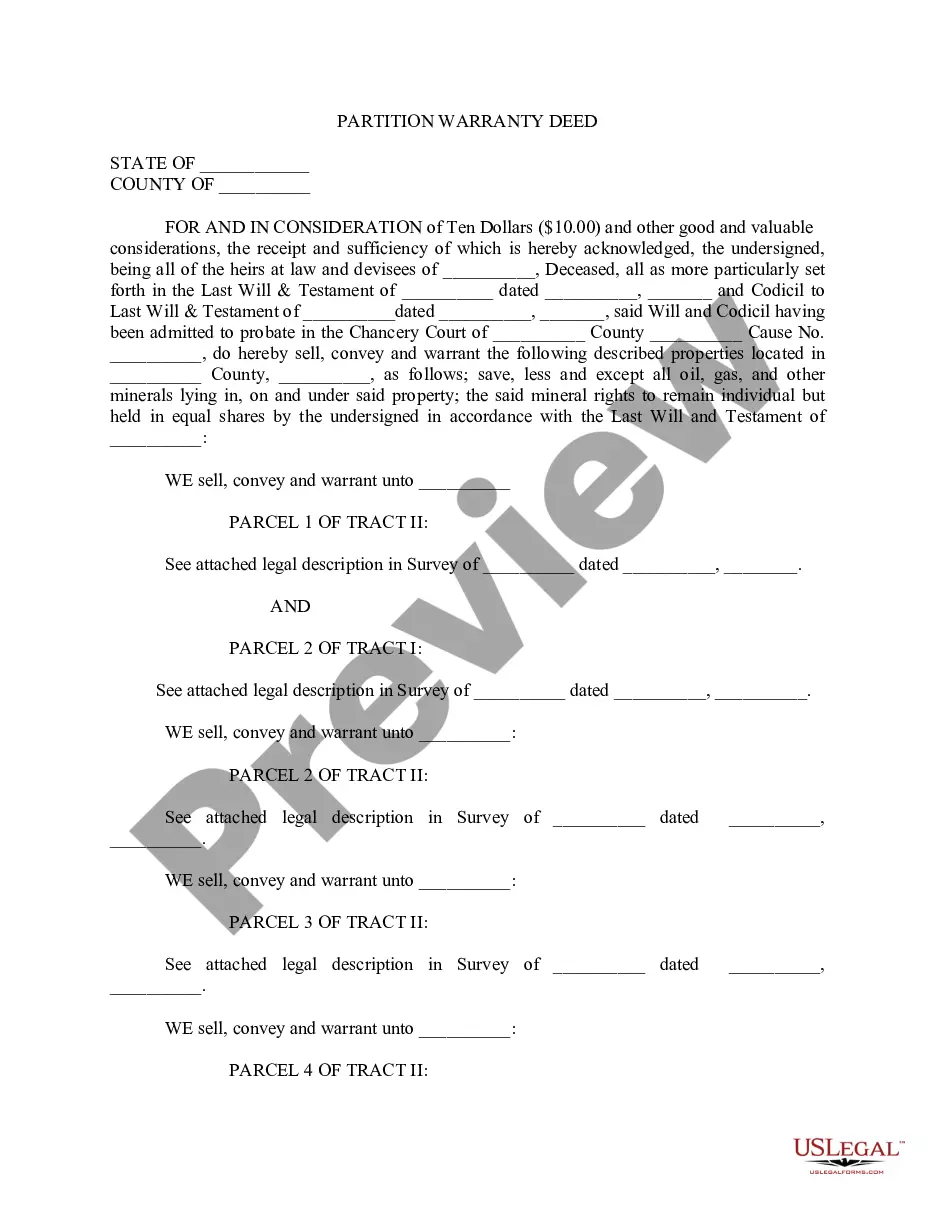
Partition Settlement Agreement With Consent Judgment In Florida
Description


Get your form ready online
Our built-in tools help you complete, sign, share, and store your documents in one place.
Make edits, fill in missing information, and update formatting in US Legal Forms—just like you would in MS Word.
Download a copy, print it, send it by email, or mail it via USPS—whatever works best for your next step.
Sign and collect signatures with our SignNow integration. Send to multiple recipients, set reminders, and more. Go Premium to unlock E-Sign.
If this form requires notarization, complete it online through a secure video call—no need to meet a notary in person or wait for an appointment.
We protect your documents and personal data by following strict security and privacy standards.

Make edits, fill in missing information, and update formatting in US Legal Forms—just like you would in MS Word.

Download a copy, print it, send it by email, or mail it via USPS—whatever works best for your next step.

Sign and collect signatures with our SignNow integration. Send to multiple recipients, set reminders, and more. Go Premium to unlock E-Sign.

If this form requires notarization, complete it online through a secure video call—no need to meet a notary in person or wait for an appointment.

We protect your documents and personal data by following strict security and privacy standards.
Looking for another form?







Form popularity
FAQ
A consent judgment is a settlement between two parties meant to end a dispute. In the insurance industry, consent judgments include an admission of the insured's liability, along with a covenant for the claimant: they agree not to execute or collect against the insured defendant.
While it is possible to file a partition lawsuit without a lawyer or “Pro Se” in Florida, it is highly recommended to seek the assistance of an experienced partition attorney. The process can become complex, and having a knowledgeable litigator on your side can help protect your interests and maximize your recovery.
If partition by sale is ordered by the court, then the co-owned land will be sold, and under court supervision if necessary. It can be sold by the co-owners at a private sale or at a public auction, and the proceeds of the sale are split ing to each co-owners percentage ownership of the real property.
Some cases can be resolved in three months, whereas others take up to a year. This can depend on the valuation of the property and how complex the parcel is. Parcels with multiple structures or unique features may take longer to partition. If the court forces a sale, you'll then have to wait for the parcel to sell.
—When a judgment of partition is made, the court shall appoint three suitable persons as commissioners to make the partition. They shall be selected by the court unless agreed on by the parties. They may be removed by the court for good cause and others appointed in their places.
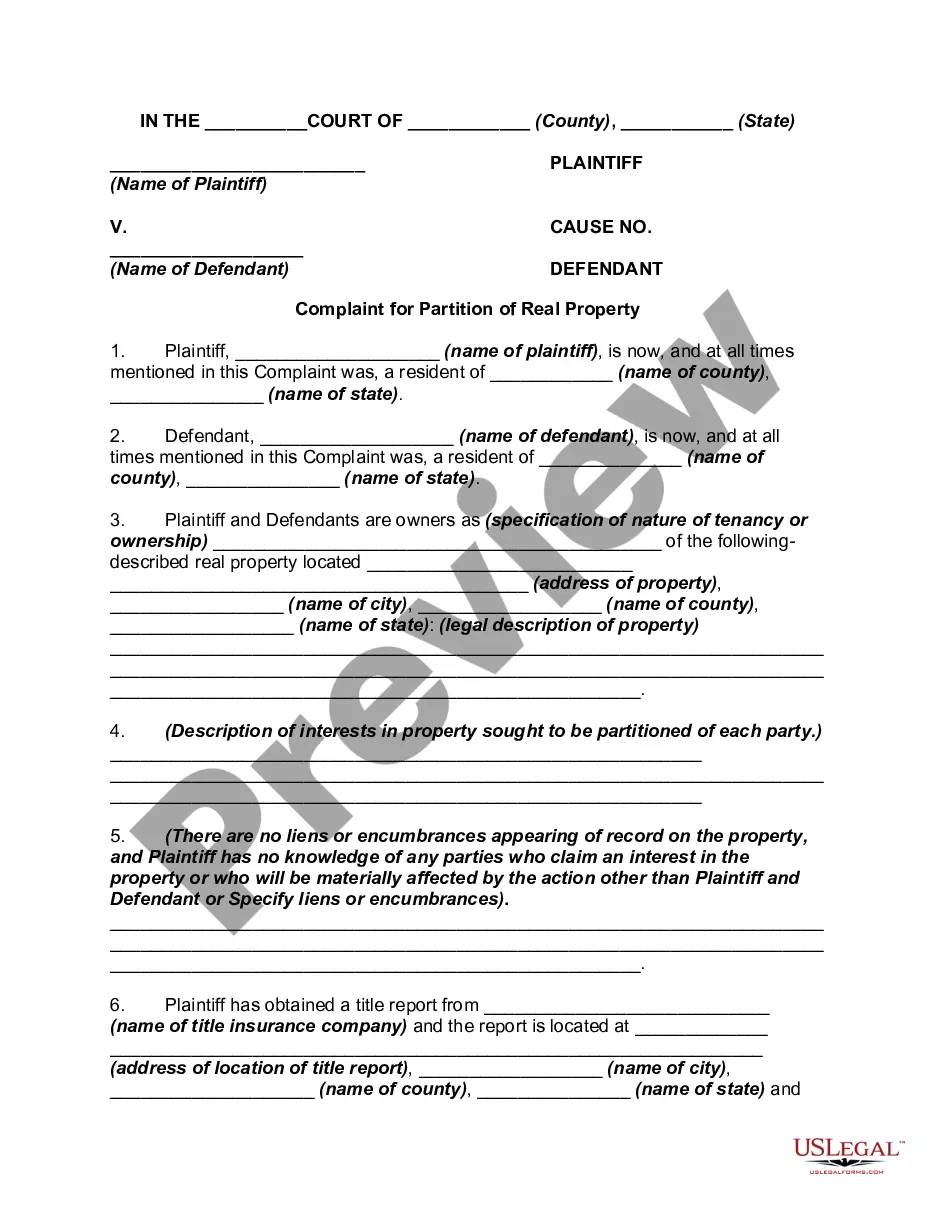
Under Florida law, the partition process must comply with the Florida Statutes – Chapter 64 – titled “Partition of Property.” The first part of the partition action is the filing of the complaint. By statute, the complaint shall include the following: “A description of the lands of which partition is demanded”
A consent to settlement clause is a provision (also known as the "hammer clause" and "blackmail settlement clause") found in professional liability insurance policies that requires an insurer to seek an insured's approval prior to settling a claim for a specific amount.
(D) Consent settlement defined For purposes of this paragraph, the term “consent settlement” means an agreement between the Secretary and a provider of services or supplier whereby both parties agree to settle a projected overpayment based on less than a statistically valid sample of claims and the provider of services ...
A consent judgment is a settlement between two parties meant to end a dispute. In the insurance industry, consent judgments include an admission of the insured's liability, along with a covenant for the claimant: they agree not to execute or collect against the insured defendant.
