Sublease Real Estate With Little Money In San Antonio
Description



Form popularity
FAQ
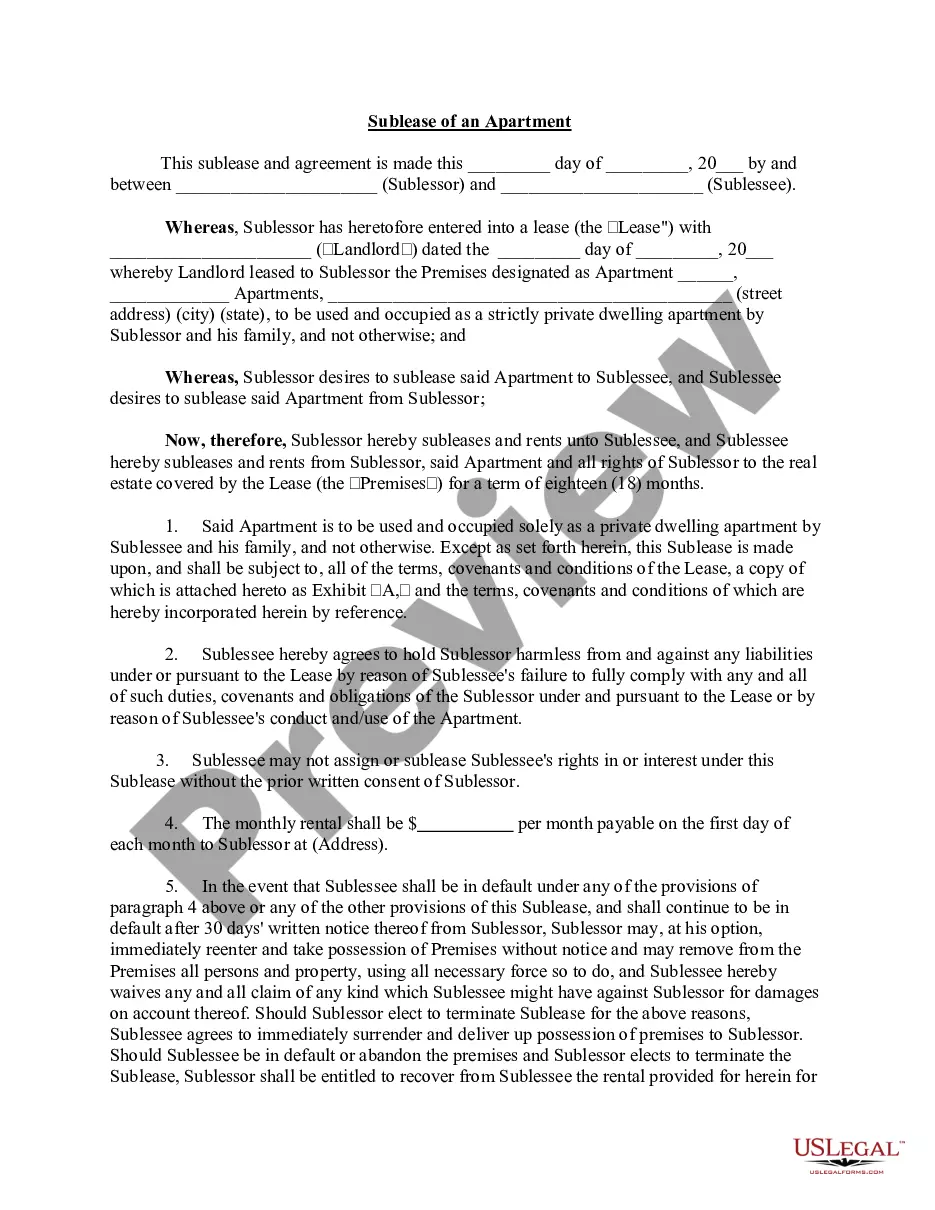
Subletting. In Texas, you are not allowed to rent your place to someone else without your landlord's permission. This law is in Section 91.005 of Texas Property Code. Some leases may allow it under certain conditions.
If you've sublet your home unlawfully Your landlord could take legal action against you. Unlawful subletting includes if you: need your landlord's permission before subletting all or part of your home but don't get it. aren't allowed to sublet all or part of your home but you do so anyway.
The cons of sub leasing for sublessees Risk of sublessor default. Perhaps the most significant risk that you need to consider is the chance of your sublessor defaulting or breaching the terms of the original lease. Unfavourable lease terms. Less flexibility to customise. Maintenance Delays.
Tips on Subletting Read your lease – usually you will need your Landlord's written consent to sublease. Consult your roommates. Sign a sublease agreement with your subtenant and keep a copy! ... Record a permanent address for your subtenant and do not hesitate to ask for references!
The key distinction lies in whether the original lessee (now acting as a sublessor) remains liable to the superior landlord for the full lease amount. If so, the sublease income isn't a direct offset to lease expenses but rather recognized separately as income.
There are some things to consider to protect your interests if you will be subleasing someone's property. Research the lessee. Check with the landlord about the lessee's account history. Include a mandatory notification clause. Consider a direct relationship with the landlord. Ask for a copy of the master record.
If you have a lease for a set term, like one year, you can sublet with or without your landlord's permission, unless they prohibit this in the written lease.
