Sublease Real Estate With Pool In Sacramento
Description


Get your form ready online
Our built-in tools help you complete, sign, share, and store your documents in one place.
Make edits, fill in missing information, and update formatting in US Legal Forms—just like you would in MS Word.
Download a copy, print it, send it by email, or mail it via USPS—whatever works best for your next step.
Sign and collect signatures with our SignNow integration. Send to multiple recipients, set reminders, and more. Go Premium to unlock E-Sign.
If this form requires notarization, complete it online through a secure video call—no need to meet a notary in person or wait for an appointment.
We protect your documents and personal data by following strict security and privacy standards.

Make edits, fill in missing information, and update formatting in US Legal Forms—just like you would in MS Word.

Download a copy, print it, send it by email, or mail it via USPS—whatever works best for your next step.

Sign and collect signatures with our SignNow integration. Send to multiple recipients, set reminders, and more. Go Premium to unlock E-Sign.

If this form requires notarization, complete it online through a secure video call—no need to meet a notary in person or wait for an appointment.

We protect your documents and personal data by following strict security and privacy standards.
Looking for another form?




Form popularity
FAQ
A California month-to-month lease agreement is legally binding.
How to Write One Identify all parties to the contract. Define the lease term. Identify the terms and rent amount. Address any other financial responsibilities. Discuss the terms of the security deposit. List any other restrictions. Date and sign the agreement. Attach a copy of the original lease.
If you have a lease for a set term, like one year, you can sublet with or without your landlord's permission, unless they prohibit this in the written lease.
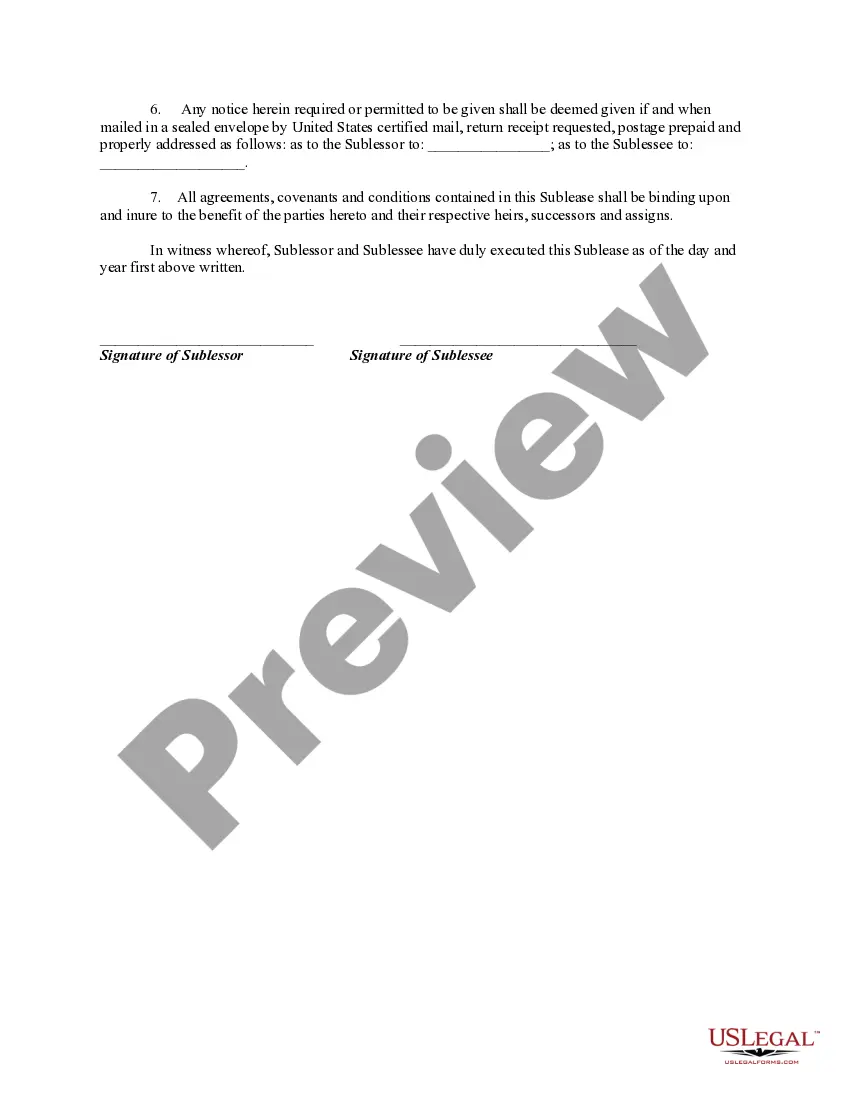
Writing Your Sublease State the name of the parties and the date of the contract. Identify the property. Provide the term of the sublease. State the rent schedule and amount. Include a section on the security deposit. Sign and date the contract. Deliver the contract to your landlord.
Subletting involves the tenant allowing another party to temporarily occupy part or all of a rental property. Subleasing transfers the entire lease for part of the lease term. Subleasing may require landlord approval, just like subletting.
For example, if a tenant is renting an apartment in Chicago with a 12-month lease and, during month four, that tenant receives a job offer in Boston, the tenant may decide to sublease the apartment to another tenant for the remaining eight months.
Cons of Subleasing Subleasing can get legally tricky. Many lease agreements have strict rules about subletting, often requiring landlord approval. Be sure to look over your lease agreement and have a conversation with your landlord or property manager to avoid disputes and penalties.
California law requires tenants to seek explicit, written permission from their landlords to sublet if it is not already allowed in the lease. Landlords have the right to approve or deny these requests unless prohibited by a local ordinance.
