Affidavit For Non-prosecution In The State Of Texas In Middlesex
Description
Get your form ready online
Our built-in tools help you complete, sign, share, and store your documents in one place.
Make edits, fill in missing information, and update formatting in US Legal Forms—just like you would in MS Word.
Download a copy, print it, send it by email, or mail it via USPS—whatever works best for your next step.
Sign and collect signatures with our SignNow integration. Send to multiple recipients, set reminders, and more. Go Premium to unlock E-Sign.
If this form requires notarization, complete it online through a secure video call—no need to meet a notary in person or wait for an appointment.
We protect your documents and personal data by following strict security and privacy standards.

Make edits, fill in missing information, and update formatting in US Legal Forms—just like you would in MS Word.

Download a copy, print it, send it by email, or mail it via USPS—whatever works best for your next step.

Sign and collect signatures with our SignNow integration. Send to multiple recipients, set reminders, and more. Go Premium to unlock E-Sign.

If this form requires notarization, complete it online through a secure video call—no need to meet a notary in person or wait for an appointment.

We protect your documents and personal data by following strict security and privacy standards.
Looking for another form?







Form popularity
FAQ
Contact the District Attorney's Office in the county where the case is being prosecuted. Request the necessary forms for filing an affidavit of non-prosecution. Fill out the forms accurately and completely.
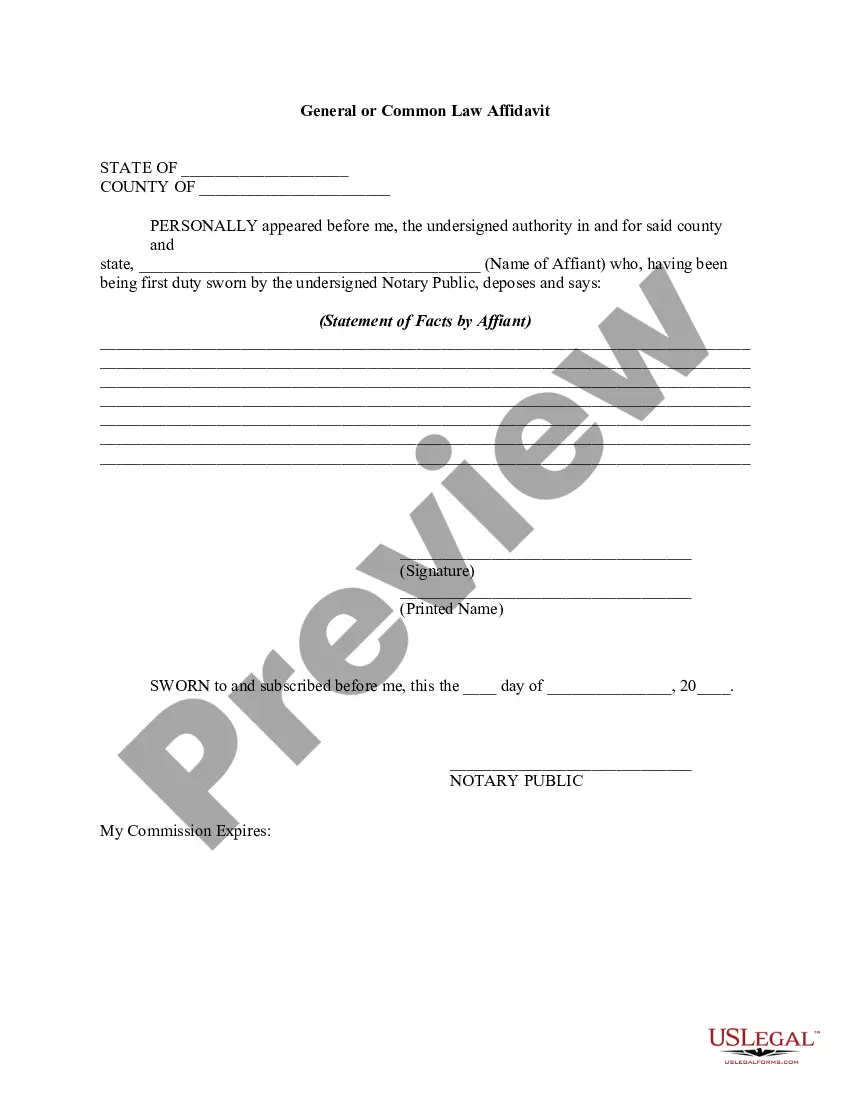
General Affidavits must be signed in front of a notary public. A notary must verify your identification before you sign the document. Make sure to bring ID (like a driver's license or other form of identification) for the notary before you sign the affidavit.
The Process of Dropping Charges The victim can provide a written statement, known as an affidavit of non-prosecution (ANP), expressing their desire not to press charges. This statement should be notarized and can be used as evidence of the victim's intentions not to cooperate in the prosecution process.
In Texas, you may use a general affidavit form to compile your statement so long as you include the details pertinent to the reason you need an affidavit. You must also have the document notarized.
The Process of Dropping Charges The victim can provide a written statement, known as an affidavit of non-prosecution (ANP), expressing their desire not to press charges.
If you're hoping to have charges dropped before your court date, there are specific actions you can take with the guidance of a skilled defense lawyer. While there's no guaranteed method, here are the most effective approaches: Presenting evidence to challenge the charges. Filing affidavits of non-prosecution.
An affidavit of non-prosecution is a sworn, notarized statement from a victim requesting that charges against a defendant be dismissed. An affidavit of non-prosecution is a legal statement where the victim or witness of a crime formally declares they don't want to press charges against the accused.
A person who decides they no longer want to press charges can contact the State about submitting an Affidavit of Non-Prosecution. However, it is ultimately up to the State to decide whether to pursue or decline charges.

