Legal Definition For Affidavit Of Service In Broward
Description
Get your form ready online
Our built-in tools help you complete, sign, share, and store your documents in one place.
Make edits, fill in missing information, and update formatting in US Legal Forms—just like you would in MS Word.
Download a copy, print it, send it by email, or mail it via USPS—whatever works best for your next step.
Sign and collect signatures with our SignNow integration. Send to multiple recipients, set reminders, and more. Go Premium to unlock E-Sign.
If this form requires notarization, complete it online through a secure video call—no need to meet a notary in person or wait for an appointment.
We protect your documents and personal data by following strict security and privacy standards.

Make edits, fill in missing information, and update formatting in US Legal Forms—just like you would in MS Word.

Download a copy, print it, send it by email, or mail it via USPS—whatever works best for your next step.

Sign and collect signatures with our SignNow integration. Send to multiple recipients, set reminders, and more. Go Premium to unlock E-Sign.

If this form requires notarization, complete it online through a secure video call—no need to meet a notary in person or wait for an appointment.

We protect your documents and personal data by following strict security and privacy standards.
Looking for another form?


Form popularity
FAQ
A filer electronically files documents to the Florida Courts E-Filing Portal at .myflcourtaccess. The filing is electronically delivered to the Clerk's inbox. A filing is considered received by the Clerk upon transmission from the portal to the Clerk's inbox.
Evicting a tenant in Florida typically takes between two to four weeks. The process starts with providing a notice to the tenant, which can vary from three days for non-payment of rent to seven or fifteen days for other lease violations. If the tenant does not comply, the landlord can file an eviction lawsuit.
Eviction Steps: Step 1 — Issue Notice. Pursuant to Florida Statues Chapter 83.56 a notice is required prior to filing an eviction. Step 2 — Fill out Forms. Step 3 — Service the Tenant. Step 4 — Judgment & Writ of Possession.
You may file your case with the Clerk of the Circuit Court & Comptroller's office online using the statewide E-Filing portal, or in person or by mail at any Clerk of the Circuit Court & Comptroller courthouse location.
Affidavit refers to a written promise, and its Latin roots connect it to another kind of promise in English. It comes from a past tense form of the Latin verb affidare, meaning “to pledge”; in Latin, affidavit translates to “he or she has made a pledge.”
One such document, the affidavit of fact, plays a pivotal role in many legal proceedings. It's a sworn statement of truth, a powerful tool that can serve as compelling evidence in a court of law.
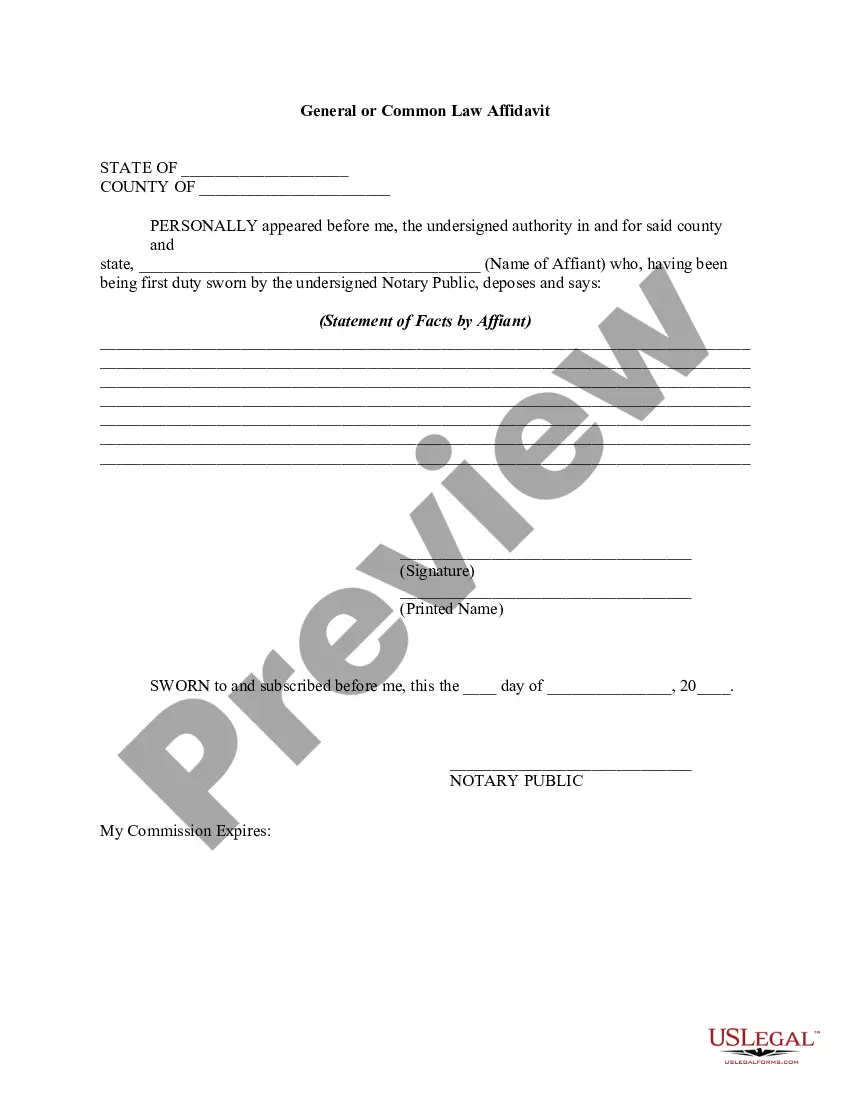
Affidavit definition. An affidavit is a sworn statement put in writing. When you use an affidavit, you're claiming that the information within the document is true and correct to the best of your knowledge. Like taking an oath in court, an affidavit is only valid when you make it voluntarily and without any coercion.
Sworn statement: A statement made under oath, often used interchangeably with “affidavit.” Declaration: A formal statement, sometimes without an oath, that conveys similar meaning in legal settings. Testimonial: A statement given by a witness, which may take a written or verbal form, often used in court.
An affidavit is a sworn statement a person makes before a notary or officer of the court outside of the court asserting that certain facts are true to the best of that person's knowledge. Affidavits by both plaintiff / prosecutor and defense witnesses are usually collected in preparation for a trial .
Personal service refers to the in-person delivery of notice to a defendant . It is one of the many different ways of serving a defendant, which is required to establish jurisdiction over said defendant.

