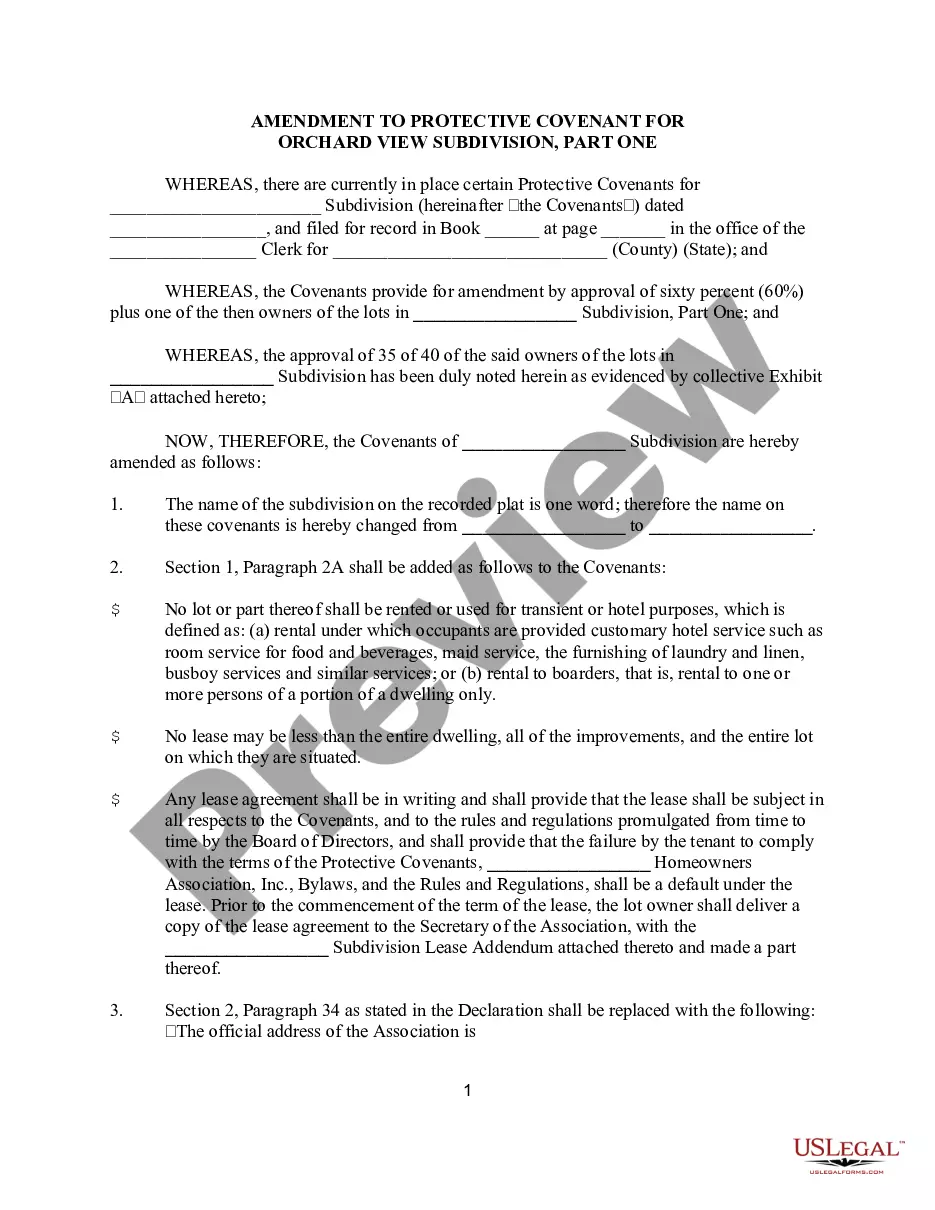
A Protective Covenant For Property In California
Description
Get your form ready online
Our built-in tools help you complete, sign, share, and store your documents in one place.
Make edits, fill in missing information, and update formatting in US Legal Forms—just like you would in MS Word.
Download a copy, print it, send it by email, or mail it via USPS—whatever works best for your next step.
Sign and collect signatures with our SignNow integration. Send to multiple recipients, set reminders, and more. Go Premium to unlock E-Sign.
If this form requires notarization, complete it online through a secure video call—no need to meet a notary in person or wait for an appointment.
We protect your documents and personal data by following strict security and privacy standards.

Make edits, fill in missing information, and update formatting in US Legal Forms—just like you would in MS Word.

Download a copy, print it, send it by email, or mail it via USPS—whatever works best for your next step.

Sign and collect signatures with our SignNow integration. Send to multiple recipients, set reminders, and more. Go Premium to unlock E-Sign.

If this form requires notarization, complete it online through a secure video call—no need to meet a notary in person or wait for an appointment.

We protect your documents and personal data by following strict security and privacy standards.
Looking for another form?





Form popularity
FAQ
A protective covenant can be used to protect rights while using residential property. The restriction might be put from conducting any business activity on the property like using it for running office or business from the residential property.
Restrictive covenants are usually enforced by the association's board. These agreements are also called Declarations of Covenants, Conditions, and Restrictions (CC&Rs).
For example, a protective covenant may restrict the type of buildings that can be constructed on a property, dictate architectural styles, or set standards for landscaping.
Protective Covenants: Safeguarding Your Secret Sauce In general, it is a legal provision in an agreement or legal instrument where one party promises to take or is restricted from taking certain actions or otherwise has certain obligations to protect an interest of another party.
Protective covenants, also known as restrictive covenants, are legal obligations embedded in the deed of a property. These covenants are agreements between property owners that impose certain restrictions or requirements on the use of the land.
The grantor could enforce the covenant only by suing for damages if the covenant was violated. Commencing about a hundred years ago, the courts began to enforce restrictive provisions in another way; by enjoining or forbidding their violation. Injunction is now the customary method of enforcing restrictions.
Although they are generally referred to collectively as restrictive, or restrictive and protective, covenants, there are two types of such covenants: (i) restrictions on the use of the property, and (ii) affirmative obligations imposed on the owner of the properties.
Restrictive covenants are most common when your property is part of a homeowners association, inium association, or planned community. Typical limits include restrictions on how many people can occupy the home and the colors you are allowed to paint the exterior.

