Covenant Agreement In English In Salt Lake
Description

Get your form ready online
Our built-in tools help you complete, sign, share, and store your documents in one place.
Make edits, fill in missing information, and update formatting in US Legal Forms—just like you would in MS Word.
Download a copy, print it, send it by email, or mail it via USPS—whatever works best for your next step.
Sign and collect signatures with our SignNow integration. Send to multiple recipients, set reminders, and more. Go Premium to unlock E-Sign.
If this form requires notarization, complete it online through a secure video call—no need to meet a notary in person or wait for an appointment.
We protect your documents and personal data by following strict security and privacy standards.

Make edits, fill in missing information, and update formatting in US Legal Forms—just like you would in MS Word.

Download a copy, print it, send it by email, or mail it via USPS—whatever works best for your next step.

Sign and collect signatures with our SignNow integration. Send to multiple recipients, set reminders, and more. Go Premium to unlock E-Sign.

If this form requires notarization, complete it online through a secure video call—no need to meet a notary in person or wait for an appointment.

We protect your documents and personal data by following strict security and privacy standards.
Looking for another form?

Form popularity
FAQ
Non-Competitive Activity at New Employer: One of the most straightforward ways to overcome a noncompete is by ensuring that your new role with a different employer is in a non-competitive capacity. If you're not engaging in activities that directly compete with your former employer's business, you may be in the clear.
Non-compete agreements typically restrict an employee from competing with an employer's business for a period of time in a specific geographical area. Utah courts require that non-compete restrictions be “reasonably limited in time and geographic area” in order to be valid and enforceable.
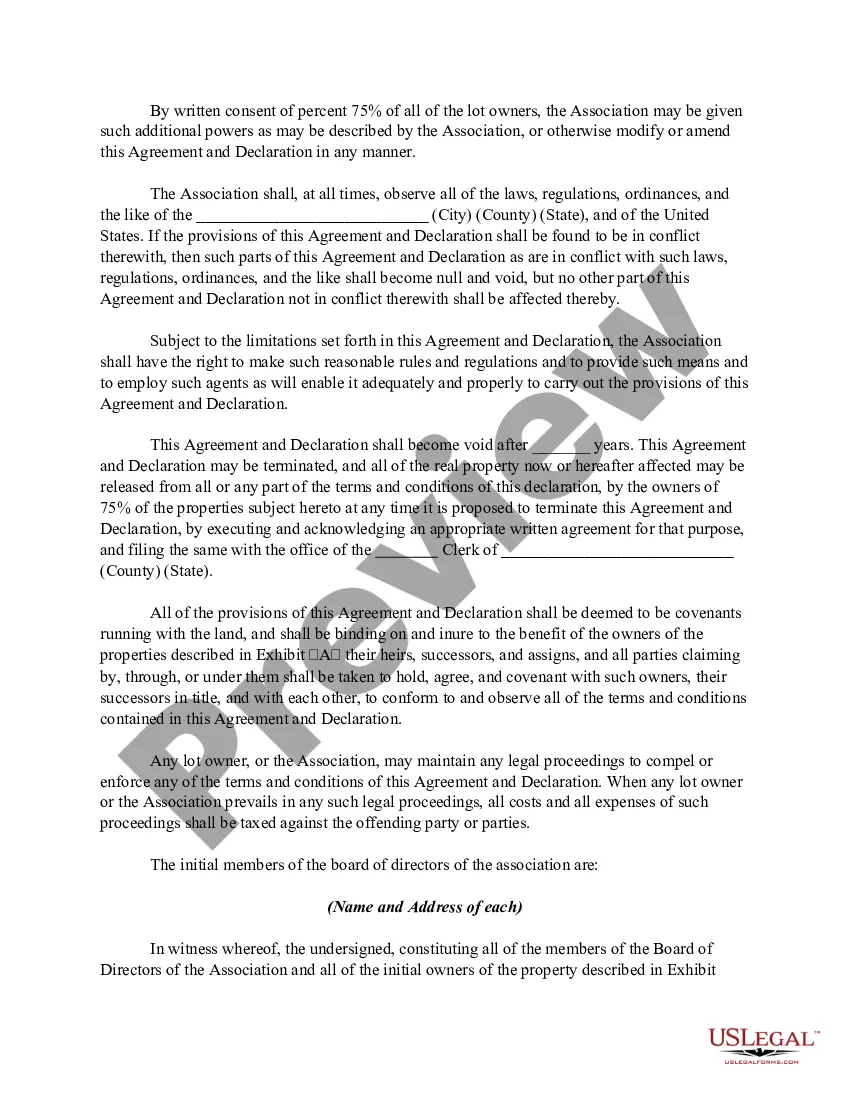
A covenant agreement is akin to a contractual agreement between parties. It often outlines terms and conditions where a party will perform a certain action or refrain from performing a certain action. Covenants are legally binding and enforceable.
Although an early Utah case upheld a five-year non-compete provision, more recent experience shows that time limits under a year can often be enforced, restrictions up to two years are sometimes enforced, and restrictions beyond two years are rarely enforced.
Non-Compete Agreements are generally not enforceable unless they're used to protect trade secrets or a purchaser of a business, recover education or training expenses from an employee of less than two years, or restrict executive and management personnel or professional staff to those personnel ( C.R.S.
It is possible to defeat a non-compete agreement in Utah in some cases. One possible strategy for successfully fighting a non-compete agreement in the state would be to demonstrate that the non-compete agreement was drafted solely to stifle competition and not to protect business interests.
A covenant agreement is akin to a contractual agreement between parties. It often outlines terms and conditions where a party will perform a certain action or refrain from performing a certain action. Covenants are legally binding and enforceable.
Think of a marriage—a husband and wife choose to enter into a formal relationship, binding themselves to one another in lifelong faithfulness and devotion. They then work as partners to reach a common goal, like building a life or raising children together.
A good example is real estate, wherein a covenant may prohibit the construction of high-rise buildings in a residential area to preserve the neighborhood's atmosphere. The main goal of negative covenants is to protect the stability and integrity of agreements.
A covenant is a formal agreement or promise , usually included in a contract or deed , to do or not do a particular act.