Covenants Form For Hoa In Queens
Description

Get your form ready online
Our built-in tools help you complete, sign, share, and store your documents in one place.
Make edits, fill in missing information, and update formatting in US Legal Forms—just like you would in MS Word.
Download a copy, print it, send it by email, or mail it via USPS—whatever works best for your next step.
Sign and collect signatures with our SignNow integration. Send to multiple recipients, set reminders, and more. Go Premium to unlock E-Sign.
If this form requires notarization, complete it online through a secure video call—no need to meet a notary in person or wait for an appointment.
We protect your documents and personal data by following strict security and privacy standards.

Make edits, fill in missing information, and update formatting in US Legal Forms—just like you would in MS Word.

Download a copy, print it, send it by email, or mail it via USPS—whatever works best for your next step.

Sign and collect signatures with our SignNow integration. Send to multiple recipients, set reminders, and more. Go Premium to unlock E-Sign.

If this form requires notarization, complete it online through a secure video call—no need to meet a notary in person or wait for an appointment.

We protect your documents and personal data by following strict security and privacy standards.
Looking for another form?





Form popularity
FAQ
To comply with New York law, there are three primary pathways to establish an HOA: obtaining a no-action letter under 13 NYCRR Section 22.8, utilizing the Cooperative Policy Statement No. 7 (CPS-7), or filing an offering plan pursuant to 13 NYCRR Part 22 (Part 22).
One of the primary reasons HOA fees might feel high or are on the rise is inflation. The increasing costs of services, labor, and materials place HOAs in a challenging position, often leading them to make tough choices between hiking up assessments or cutting back on services and maintenance.
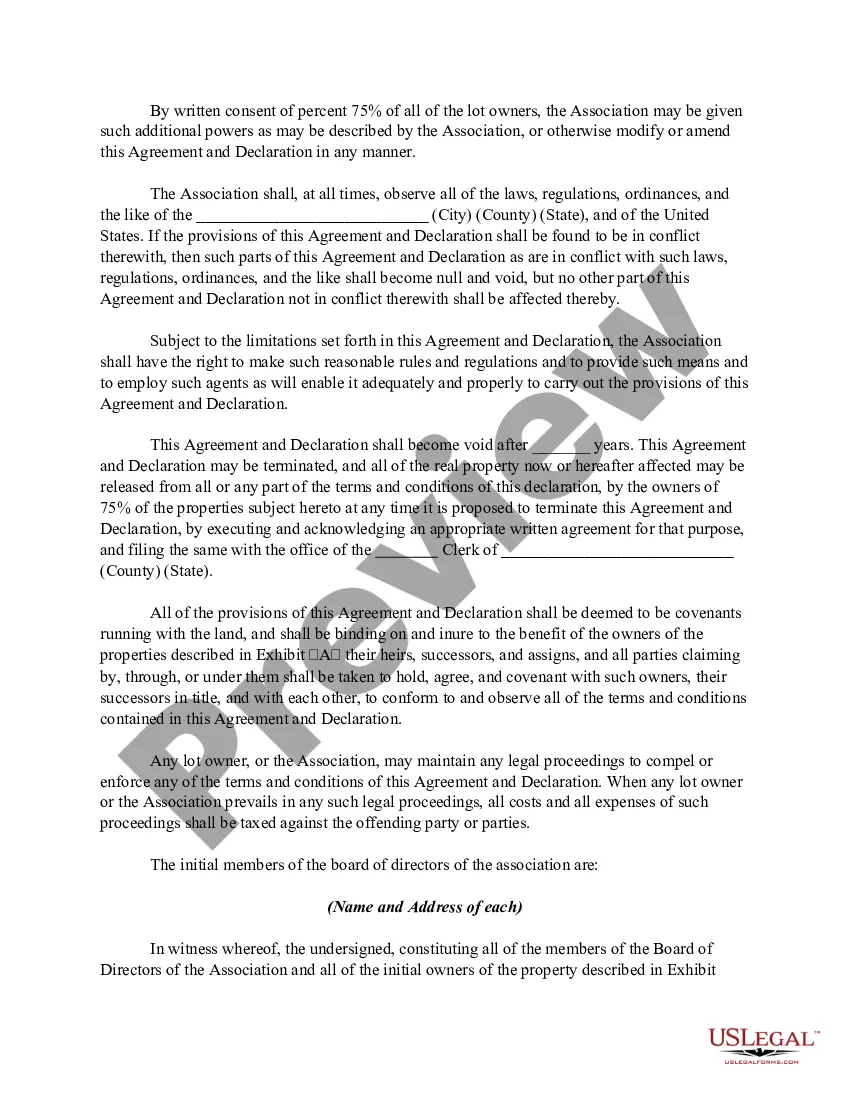
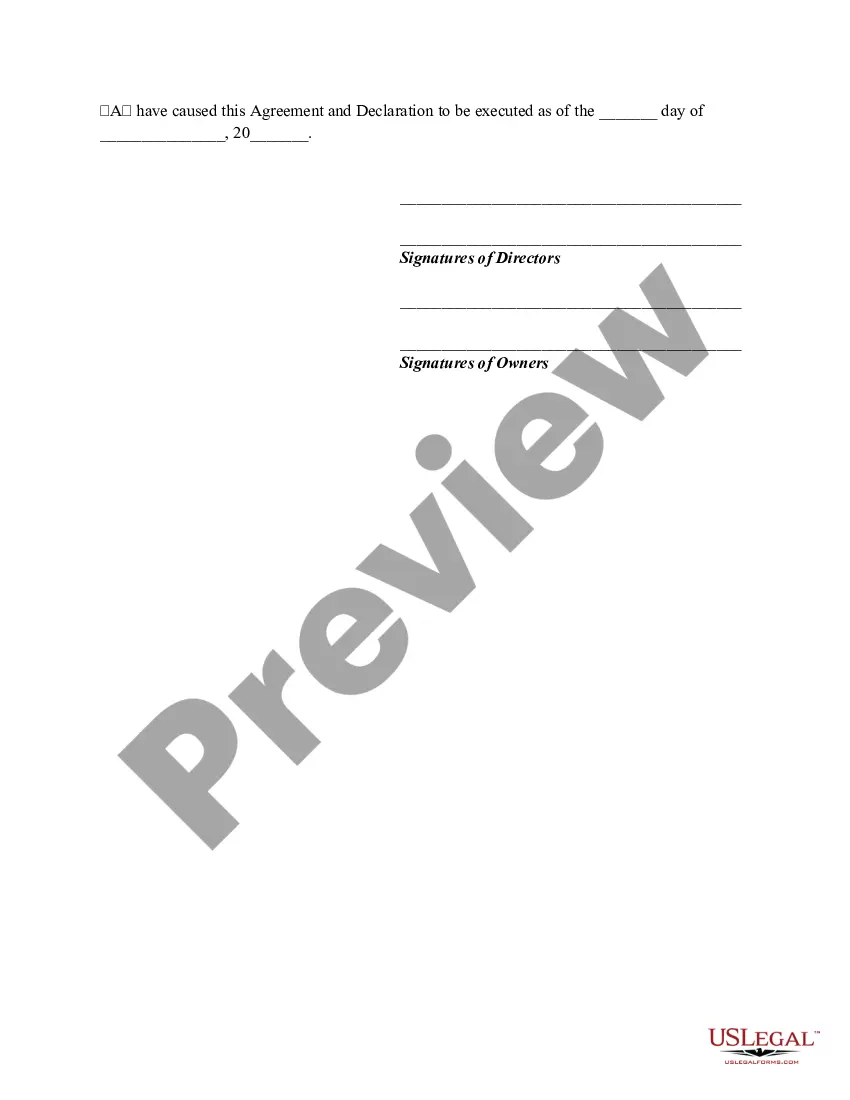
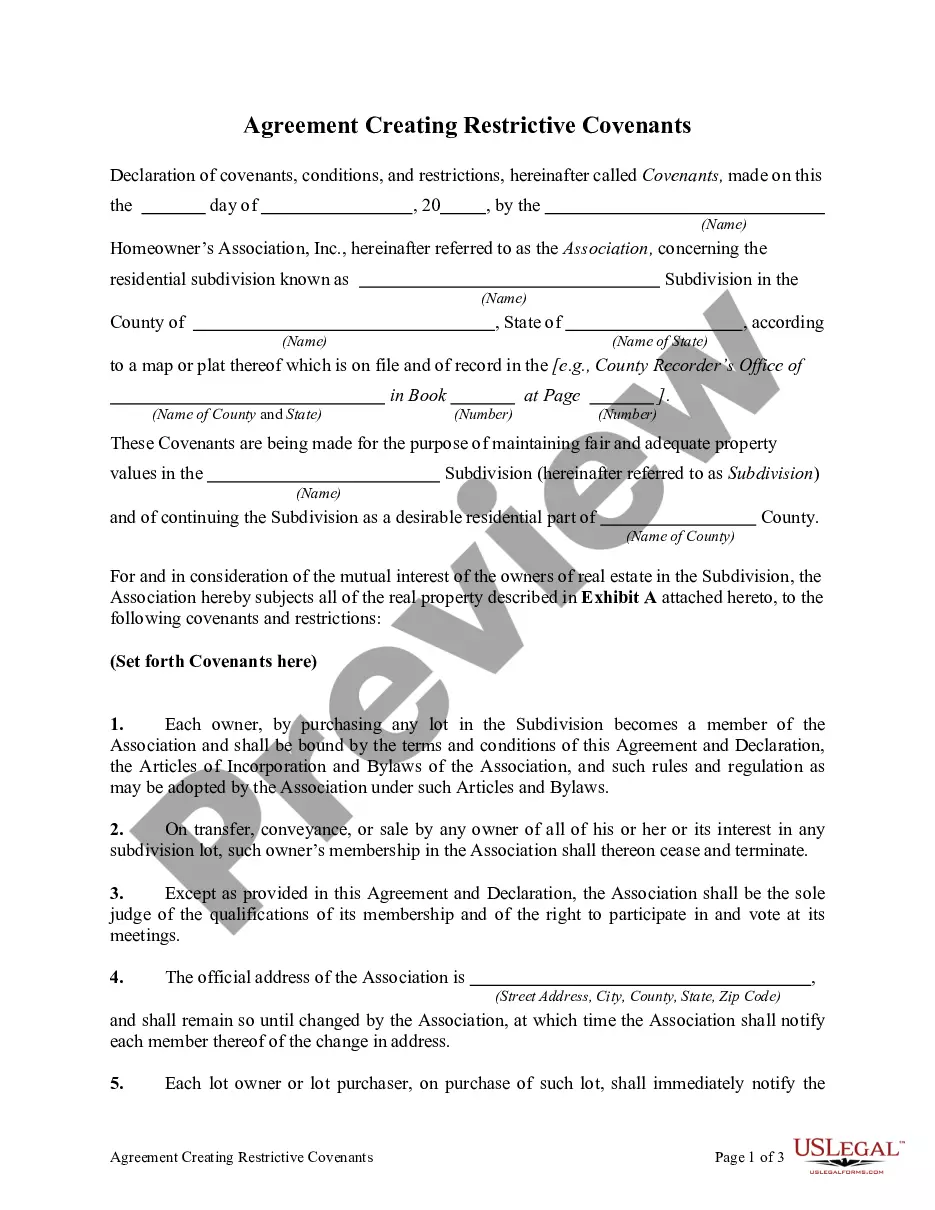
An HOA's "Covenants, Conditions, and Restrictions" (CC&Rs) is a legal document that describes what you can and can't do with your home. For example, the CC&Rs might limit what color you can paint your house, prohibit you from leaving your laundry out to dry, or describe what type of mailbox you may .
The details of restrictive covenants are typically found in the deed to your home or in an HOA document known as the CC&R (covenants, conditions and restrictions). These CC&R agreements are legally binding, and violations may lead to fines or other consequences.
Be concise and make your purpose/request clear. You can add a friendly greeting at the beginning, but there is no need to provide paragraphs of background information or personal opinions. Offer a solution, if possible. Complete the letter or email with a suggestion on how the board can take action.
Homeowners association CC&Rs are, in essence, the rules of a community. They describe the HOA's obligations and rights to its members and vice versa. They are often referred to as homeowner association covenants or simply covenants. An association's CC&Rs are recorded and filed officially with the state.
HOA Approval: 8 Tips to Quickly Get to Yes! Review your Covenants, Conditions, and Restrictions. Speak with your Neighborhood's Property Manager. Obtain a List of Pre-Approved Colors or Get Guidance on your Options. Don't be a Copy Cat. Going Without Guidance. Add Time for the Approval Process. Build Your Case.
HOA Fees and Assessments Homeowners associations levy HOA fees to cover common expenses. These fees are typically set annually and can change based on the association's budget and financial needs. They fund everyday operations, maintenance, and reserves for future expenses.
Homeowners' Associations in New York, or otherwise known as Common Interest Communities, are regulated by the Attorney General's office and must be set up as non-profit organizations. They are governed by NY Not-For-Profit Corporation Law, the Association's Articles of Declaration, and Bylaws.
You could start an HOA with the homeowners who consent, of course. And you can try to talk all owners into it by explaining the value they will receive. Depending on the facts, it may or may not be a tough sell. Ordinarily, the purpose of an HOA is to restrict what people can do with their properties.