Restrictive Covenants In Commercial Contracts In Philadelphia
Description

Get your form ready online
Our built-in tools help you complete, sign, share, and store your documents in one place.
Make edits, fill in missing information, and update formatting in US Legal Forms—just like you would in MS Word.
Download a copy, print it, send it by email, or mail it via USPS—whatever works best for your next step.
Sign and collect signatures with our SignNow integration. Send to multiple recipients, set reminders, and more. Go Premium to unlock E-Sign.
If this form requires notarization, complete it online through a secure video call—no need to meet a notary in person or wait for an appointment.
We protect your documents and personal data by following strict security and privacy standards.

Make edits, fill in missing information, and update formatting in US Legal Forms—just like you would in MS Word.

Download a copy, print it, send it by email, or mail it via USPS—whatever works best for your next step.

Sign and collect signatures with our SignNow integration. Send to multiple recipients, set reminders, and more. Go Premium to unlock E-Sign.

If this form requires notarization, complete it online through a secure video call—no need to meet a notary in person or wait for an appointment.

We protect your documents and personal data by following strict security and privacy standards.
Looking for another form?






Form popularity
FAQ
These covenants were agreements added to property deeds that typically prohibited the sale or lease of the property to non-White persons. In Philadelphia, such covenants were put into place to restrict the movement of Black residents into new developments and predominantly White neighborhoods.
How do I challenge a restrictive covenant? Express release: It may be possible to negotiate the release or variation of a restrictive covenant. Indemnity insurance: It is possible to obtain indemnity insurance to protect against the risk of a person with the benefit of a restrictive covenant seeking to enforce it.
To officially end the restrictive covenants, it may be necessary to file a lawsuit seeking a declaration from a court that the covenants are no longer enforceable. This can be a complex legal process that may require the assistance of an attorney.
The courts will restrain an ex-employee from violating a restrictive covenant only when the circumstances make it reasonable to enforce. However, a Pennsylvania court will look only at the terms when the ex-employer sues for damages, not an injunction.
If a deed restriction is not enforceable, you can choose to ignore it and take on the risk of a neighbor filing suit, or you can seek out a judge's ruling to have the covenant removed from the deed. Obtaining that ruling is easier when no one is actively enforcing the covenant.
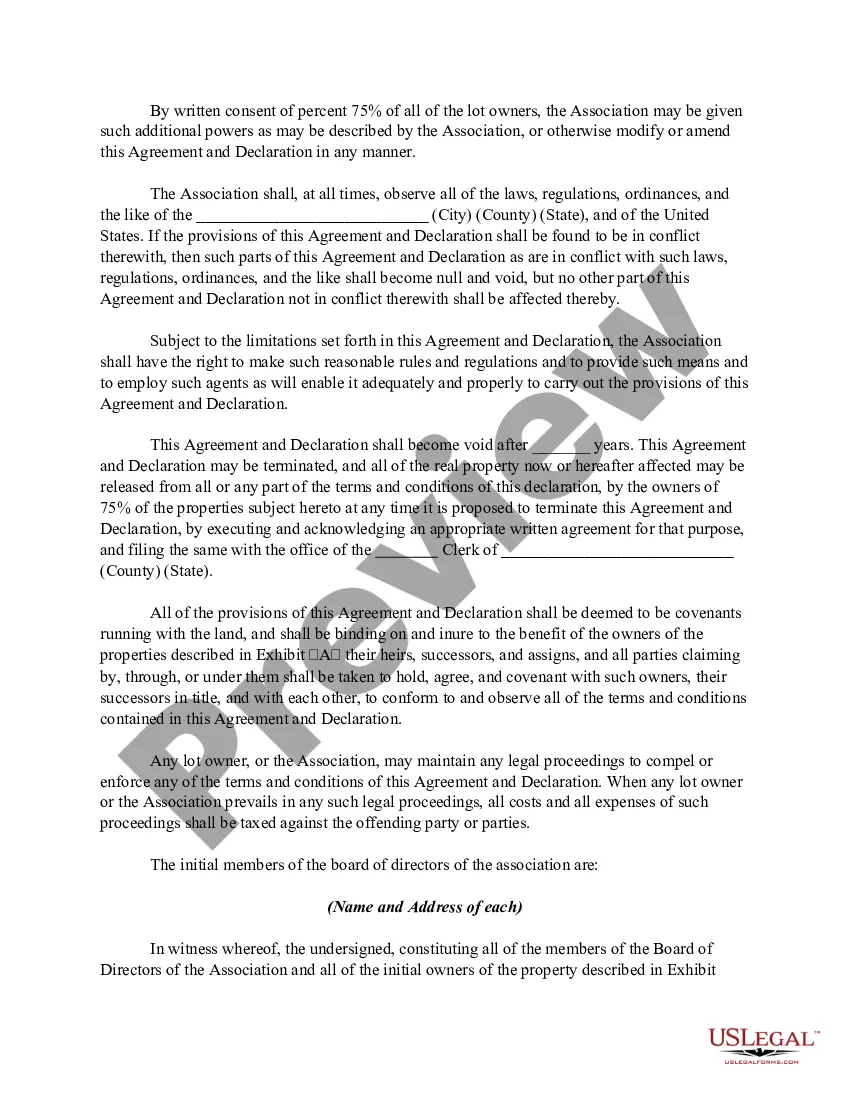
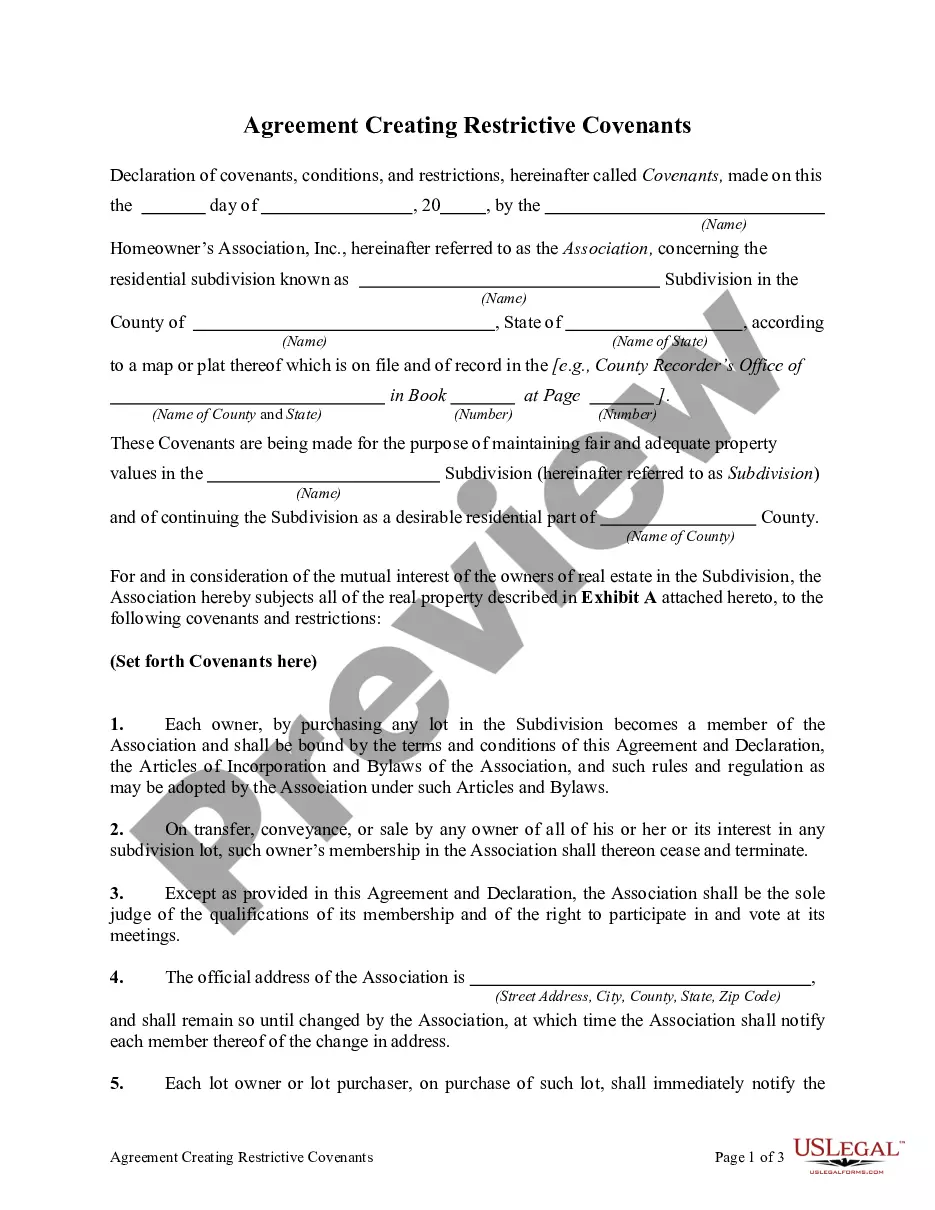
Restrictive covenants are clauses in commercial contracts that limit what a party can do, to protect your business interests. The primary purpose of a restrictive covenant in a commercial contract is to restrict the other party from engaging in certain commercial activities.
One of the most common restrictive covenants is not to do or keep anything on the property that could be a nuisance to the neighbouring properties. This is general covenant that could cover a wide variety of actions, to try to keep the area a pleasant place to live.
The History and Effects of Racial Covenants in Philadelphia Property developers used these racial covenants to prevent African Americans and other minority groups from owning, renting, or residing in homes located in more desirable parts of the city and predominantly white neighborhoods.
