Covenants Form For Hoa In New York
Description

Get your form ready online
Our built-in tools help you complete, sign, share, and store your documents in one place.
Make edits, fill in missing information, and update formatting in US Legal Forms—just like you would in MS Word.
Download a copy, print it, send it by email, or mail it via USPS—whatever works best for your next step.
Sign and collect signatures with our SignNow integration. Send to multiple recipients, set reminders, and more. Go Premium to unlock E-Sign.
If this form requires notarization, complete it online through a secure video call—no need to meet a notary in person or wait for an appointment.
We protect your documents and personal data by following strict security and privacy standards.

Make edits, fill in missing information, and update formatting in US Legal Forms—just like you would in MS Word.

Download a copy, print it, send it by email, or mail it via USPS—whatever works best for your next step.

Sign and collect signatures with our SignNow integration. Send to multiple recipients, set reminders, and more. Go Premium to unlock E-Sign.

If this form requires notarization, complete it online through a secure video call—no need to meet a notary in person or wait for an appointment.

We protect your documents and personal data by following strict security and privacy standards.
Looking for another form?










Form popularity
FAQ
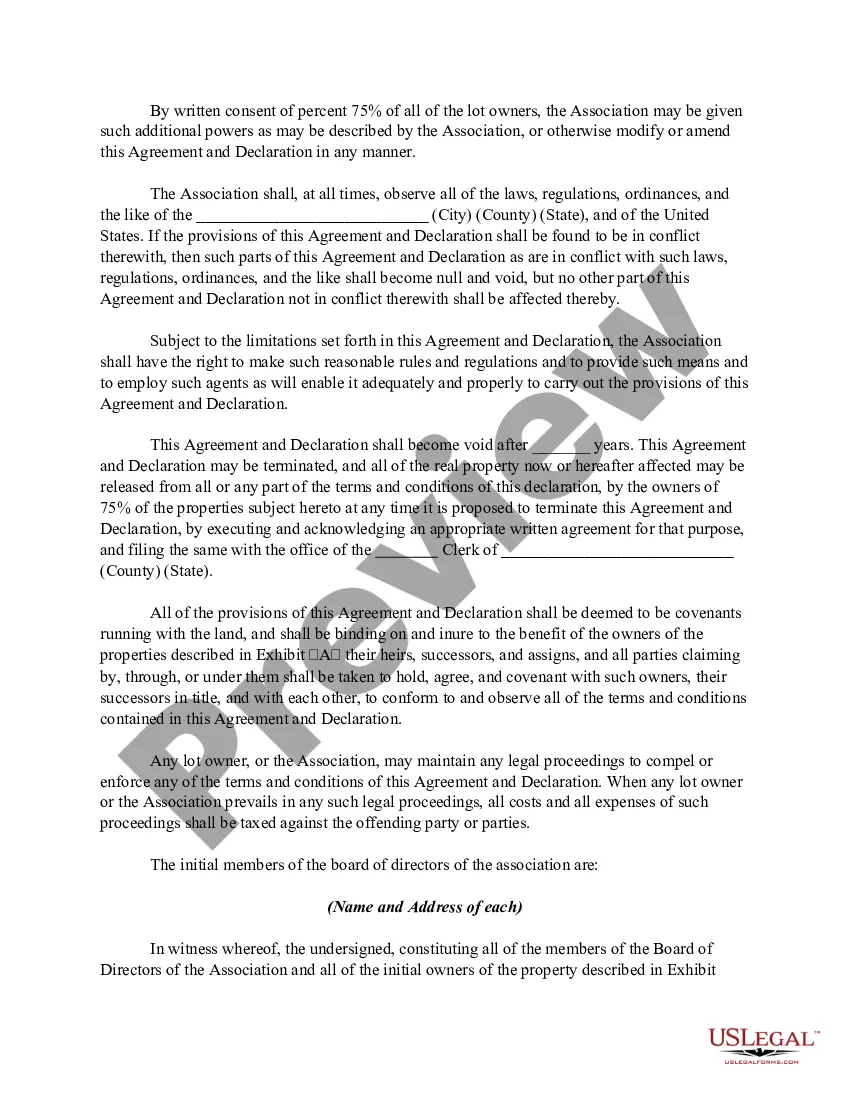
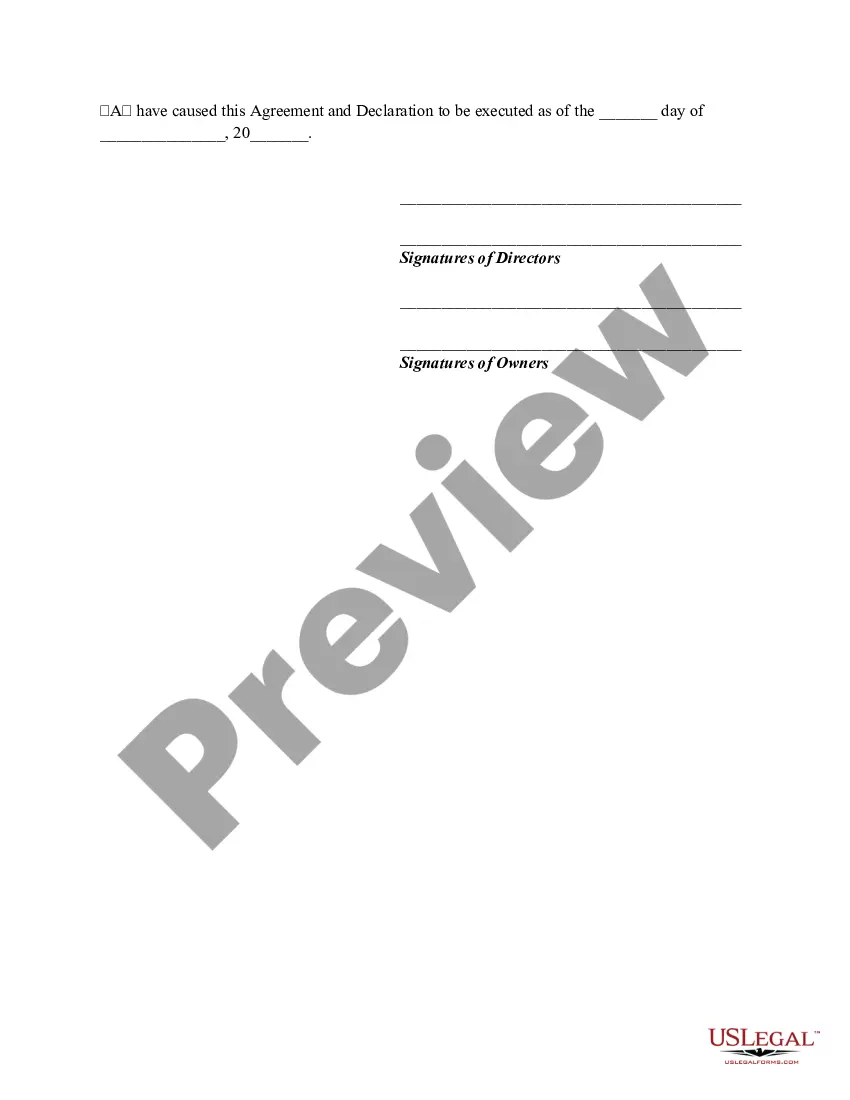
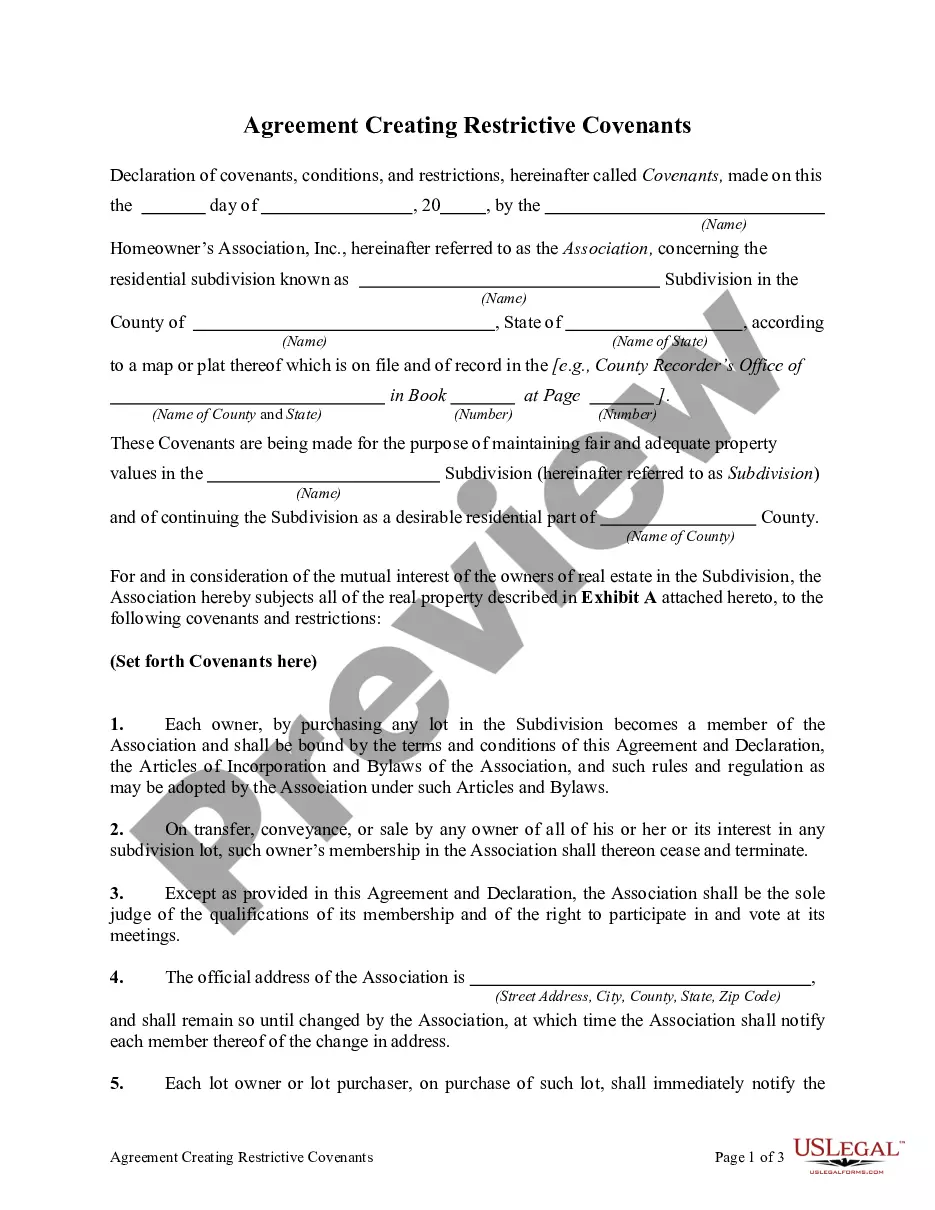
The regulations or guidelines governing the HOA community are called restrictive covenants and are outlined in a document called a Declaration of Covenants, Conditions, and Restrictions (CC&Rs). These CC&Rs can play an integral role in how an HOA influences day-to-day life in a neighborhood.
The regulations or guidelines governing the HOA community are called restrictive covenants and are outlined in a document called a Declaration of Covenants, Conditions, and Restrictions (CC&Rs). These CC&Rs can play an integral role in how an HOA influences day-to-day life in a neighborhood.
CC&Rs stand for the Declaration of Covenants, Conditions, and Restrictions. Homeowners association CC&Rs are, in essence, the rules of a community. They describe the HOA's obligations and rights to its members and vice versa. They are often referred to as homeowner association covenants or simply covenants.
The Declaration of Covenants is the legal document that lays out the guidelines for the Association and community. It basically describes the rules of the neighborhood. It's goal is to protect, preserve, and enhance property values in the community.
Common HOA CC&R examples include the following: Property maintenance. The HOA may require you to maintain your lawn or landscaping as well as apply a fresh coat of paint to the outside of your home every once in a while. Many associations, though, provide such services as part of HOA dues.
In short, Bylaws govern how an HOA operates, outlining rules for board meetings, elections, and decision-making. Covenants, on the other hand, dictate what homeowners can and can't do with their property, from landscaping to exterior design.
CC&Rs stand for the Declaration of Covenants, Conditions, and Restrictions. Homeowners association CC&Rs are, in essence, the rules of a community. They describe the HOA's obligations and rights to its members and vice versa. They are often referred to as homeowner association covenants or simply covenants.
To comply with New York law, there are three primary pathways to establish an HOA: obtaining a no-action letter under 13 NYCRR Section 22.8, utilizing the Cooperative Policy Statement No. 7 (CPS-7), or filing an offering plan pursuant to 13 NYCRR Part 22 (Part 22).
One of the primary reasons HOA fees might feel high or are on the rise is inflation. The increasing costs of services, labor, and materials place HOAs in a challenging position, often leading them to make tough choices between hiking up assessments or cutting back on services and maintenance.
HOA Fees and Assessments Homeowners associations levy HOA fees to cover common expenses. These fees are typically set annually and can change based on the association's budget and financial needs. They fund everyday operations, maintenance, and reserves for future expenses.