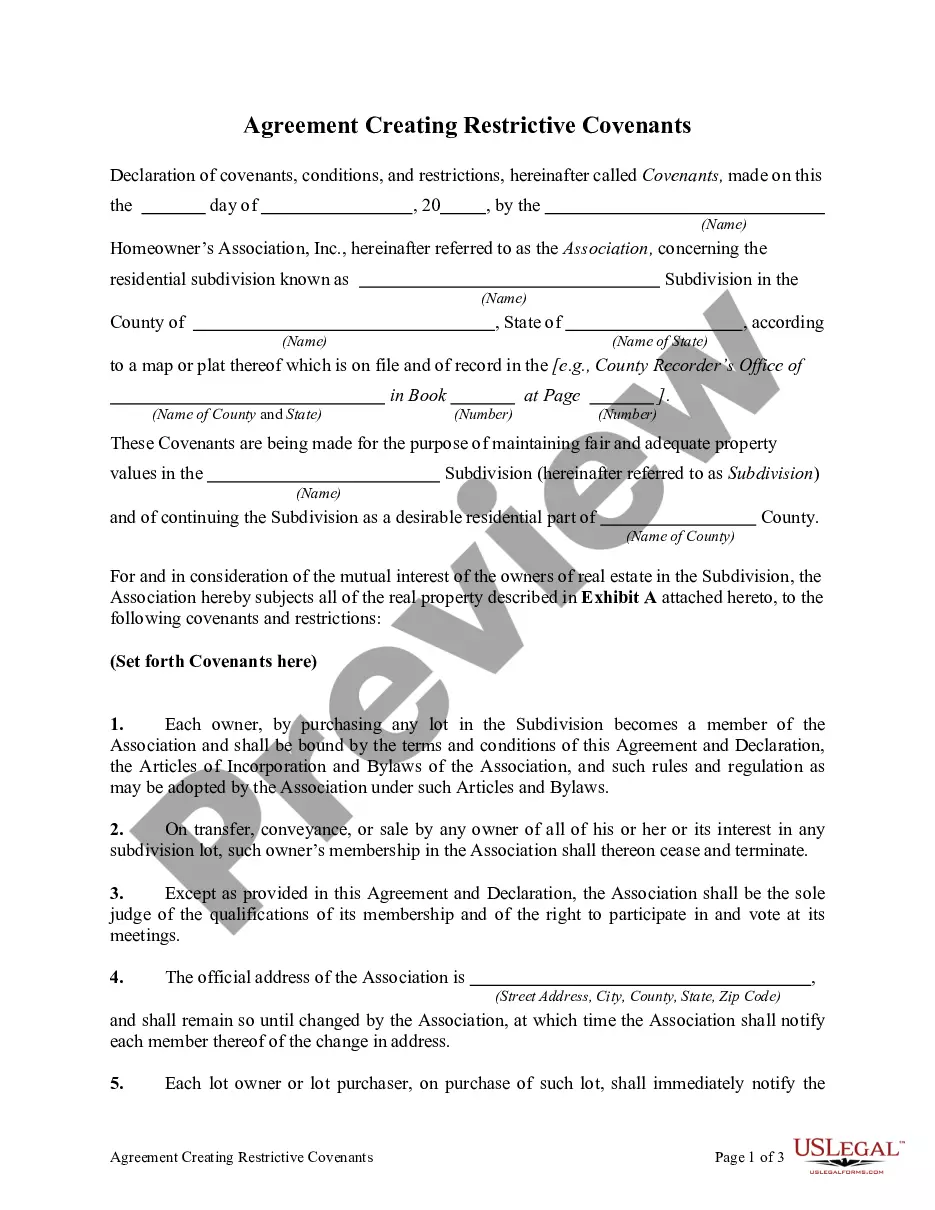
Restrictive Covenant For Physician In Michigan
Description

Get your form ready online
Our built-in tools help you complete, sign, share, and store your documents in one place.
Make edits, fill in missing information, and update formatting in US Legal Forms—just like you would in MS Word.
Download a copy, print it, send it by email, or mail it via USPS—whatever works best for your next step.
Sign and collect signatures with our SignNow integration. Send to multiple recipients, set reminders, and more. Go Premium to unlock E-Sign.
If this form requires notarization, complete it online through a secure video call—no need to meet a notary in person or wait for an appointment.
We protect your documents and personal data by following strict security and privacy standards.

Make edits, fill in missing information, and update formatting in US Legal Forms—just like you would in MS Word.

Download a copy, print it, send it by email, or mail it via USPS—whatever works best for your next step.

Sign and collect signatures with our SignNow integration. Send to multiple recipients, set reminders, and more. Go Premium to unlock E-Sign.

If this form requires notarization, complete it online through a secure video call—no need to meet a notary in person or wait for an appointment.

We protect your documents and personal data by following strict security and privacy standards.
Looking for another form?






Form popularity
FAQ
1 Michigan courts continually uphold and enforce non-competes. 2 However, recent non-competes in Michigan have been subject to debate because of the many disadvantages such clauses pose to employees.
Act 234 of 2022 AN ACT to prohibit the recording of deeds or other instruments relating to real property that contain certain restrictive covenants or conditions; to make such restrictions unenforceable; and to provide remedies with respect to those instruments.
CPOM laws are regulations that prohibit standard corporations (or other non-physician entities) from practicing medicine or employing practicing physicians.
The board of directors of a Michigan homeowners association has a duty to enforce the various regulations contained in the restrictive covenants, declaration or deed restrictions as written, subject to limited exceptions.
If you are employed with “at will” status and choose not to sign the noncompete agreement, the employer may choose to terminate you.
Some of the most common restrictive covenants include: Alterations and extensions to the building. Changes to the use of a property, for example, converting a building into flats or turning a house into business premises. Rent and lease restrictions. Limitations on pets. Limitations on home colour.
And in Michigan, such covenants will generally be enforceable, provided that they are reasonable. Restrictive covenants are typically analyzed under the Michigan Antitrust Reform Act (“MARA”).
Many Michigan businesses require their employees to sign non-compete agreements. Although many people assume these types of agreements are not enforceable, the fact is that non-compete agreements may be enforceable under Michigan so long as certain requirements are met.
NMPs consist of Physician Assistants (PAs), Nurse Practitioners (NPs) and Certified Nurse Midwives (CNMs). Billing guidance for Licensed Midwives (LMs) are also listed in this section.
Nonprofit Exception Although the CPOM doctrine limits corporate formation for learned professions, Michigan has carved out an exception that allows nonprofit corporations to employ learned professions. The most common example of this exception is a nonprofit hospital employing physicians.
