Restrictive Covenants In Commercial Contracts In Kings
Description

Get your form ready online
Our built-in tools help you complete, sign, share, and store your documents in one place.
Make edits, fill in missing information, and update formatting in US Legal Forms—just like you would in MS Word.
Download a copy, print it, send it by email, or mail it via USPS—whatever works best for your next step.
Sign and collect signatures with our SignNow integration. Send to multiple recipients, set reminders, and more. Go Premium to unlock E-Sign.
If this form requires notarization, complete it online through a secure video call—no need to meet a notary in person or wait for an appointment.
We protect your documents and personal data by following strict security and privacy standards.

Make edits, fill in missing information, and update formatting in US Legal Forms—just like you would in MS Word.

Download a copy, print it, send it by email, or mail it via USPS—whatever works best for your next step.

Sign and collect signatures with our SignNow integration. Send to multiple recipients, set reminders, and more. Go Premium to unlock E-Sign.

If this form requires notarization, complete it online through a secure video call—no need to meet a notary in person or wait for an appointment.

We protect your documents and personal data by following strict security and privacy standards.
Looking for another form?




Form popularity
FAQ
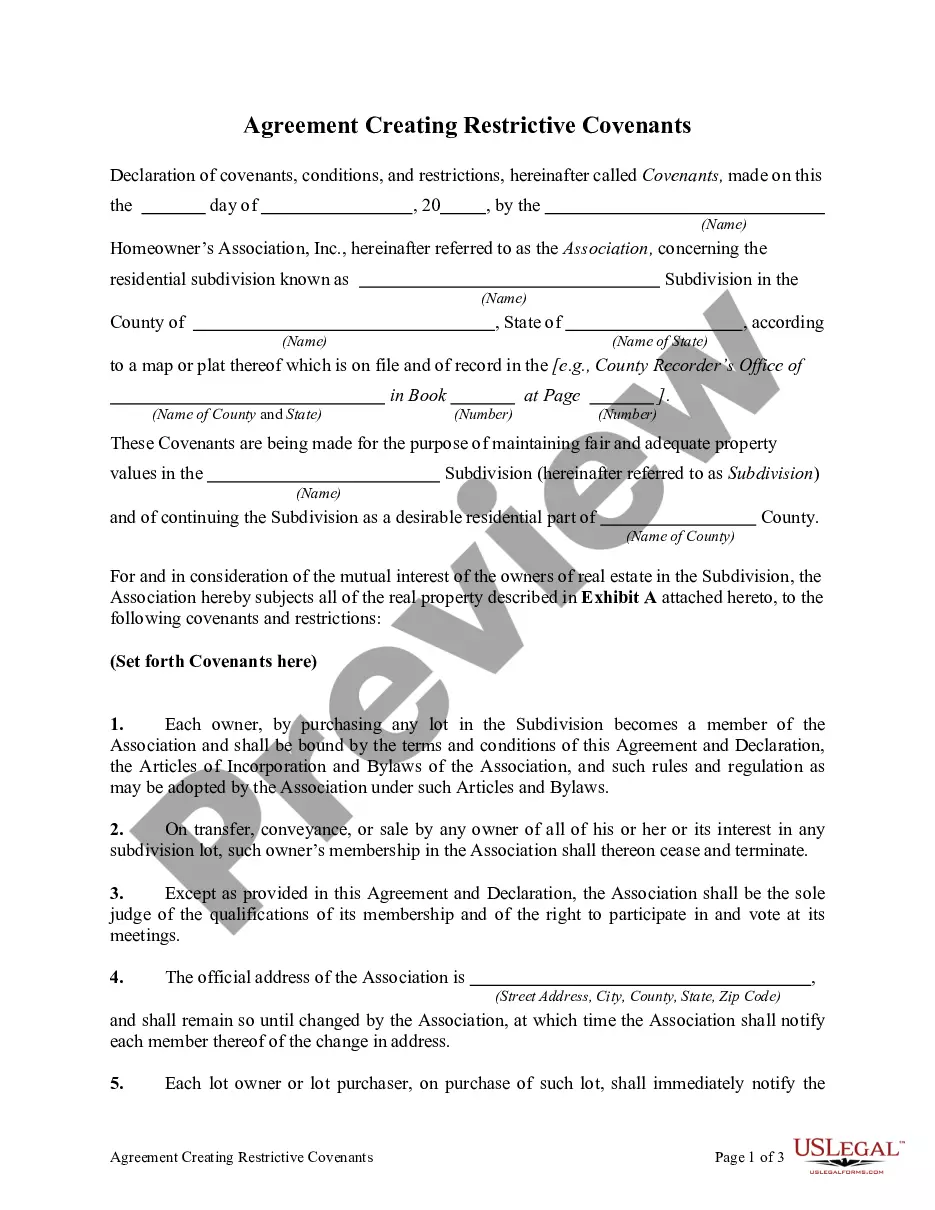
Restrictive covenants are clauses in commercial contracts that limit what a party can do, to protect your business interests. The primary purpose of a restrictive covenant in a commercial contract is to restrict the other party from engaging in certain commercial activities.
Is a 12-month restrictive covenant enforceable? Each case turns on its own facts, but a court is generally reluctant to enforce restrictive covenants longer than 12 months. Market practice dictates a period of between 3 and 6 months is appropriate for more junior employees.
How long do restrictive covenants last? They have no official expiration date. As long as the legal requirements for a restrictive covenant are otherwise met, a restrictive covenant could be hundreds of years old and could still be enforceable.
If you want to find out the details of a restrictive covenant, the information may be held in documents or registers retained by HM Land Registry.
If an employee breaches a restrictive covenant, the employer may take legal action to enforce the covenant, which could result in an injunction to stop the breach or a claim for damages. Employers should act promptly if a breach occurs to protect their interests.
Non-competition, non-dealing and non-solicitation restrictive covenants are only enforceable under English law if the employer can demonstrate that: it has a legitimate business interest that it is seeking to protect; and.
It is possible to apply to the Lands Chamber of the Upper Tribunal to have a restrictive covenant “discharged or modified”, as the statute puts it, in order to get the covenant removed or changed so that development can take place or the use of the land can be changed.
There may be terms in your contract that says you can't work for a competitor or have contact with customers for a period of time after you leave the company. These are called 'restrictive covenants'. Your company could take you to court if you breach the restrictive covenants in your contract.
The primary remedy for breach of a Restrictive Covenant is a permanent injunction to restrain the breach. However, the courts have jurisdiction to award damages instead of an injunction.
