Registering A Lis Pendens In The Land Registry In Texas
Description

Get your form ready online
Our built-in tools help you complete, sign, share, and store your documents in one place.
Make edits, fill in missing information, and update formatting in US Legal Forms—just like you would in MS Word.
Download a copy, print it, send it by email, or mail it via USPS—whatever works best for your next step.
Sign and collect signatures with our SignNow integration. Send to multiple recipients, set reminders, and more. Go Premium to unlock E-Sign.
If this form requires notarization, complete it online through a secure video call—no need to meet a notary in person or wait for an appointment.
We protect your documents and personal data by following strict security and privacy standards.

Make edits, fill in missing information, and update formatting in US Legal Forms—just like you would in MS Word.

Download a copy, print it, send it by email, or mail it via USPS—whatever works best for your next step.

Sign and collect signatures with our SignNow integration. Send to multiple recipients, set reminders, and more. Go Premium to unlock E-Sign.

If this form requires notarization, complete it online through a secure video call—no need to meet a notary in person or wait for an appointment.

We protect your documents and personal data by following strict security and privacy standards.
Looking for another form?










Form popularity
FAQ
A deed is a physical legal instrument that records the sale or transfer of property. It must be executed pursuant to the laws of the jurisdiction of where the property is located. A deed is executed by the grantor who is selling or transferring the property to the grantee who is buying or receiving the property.
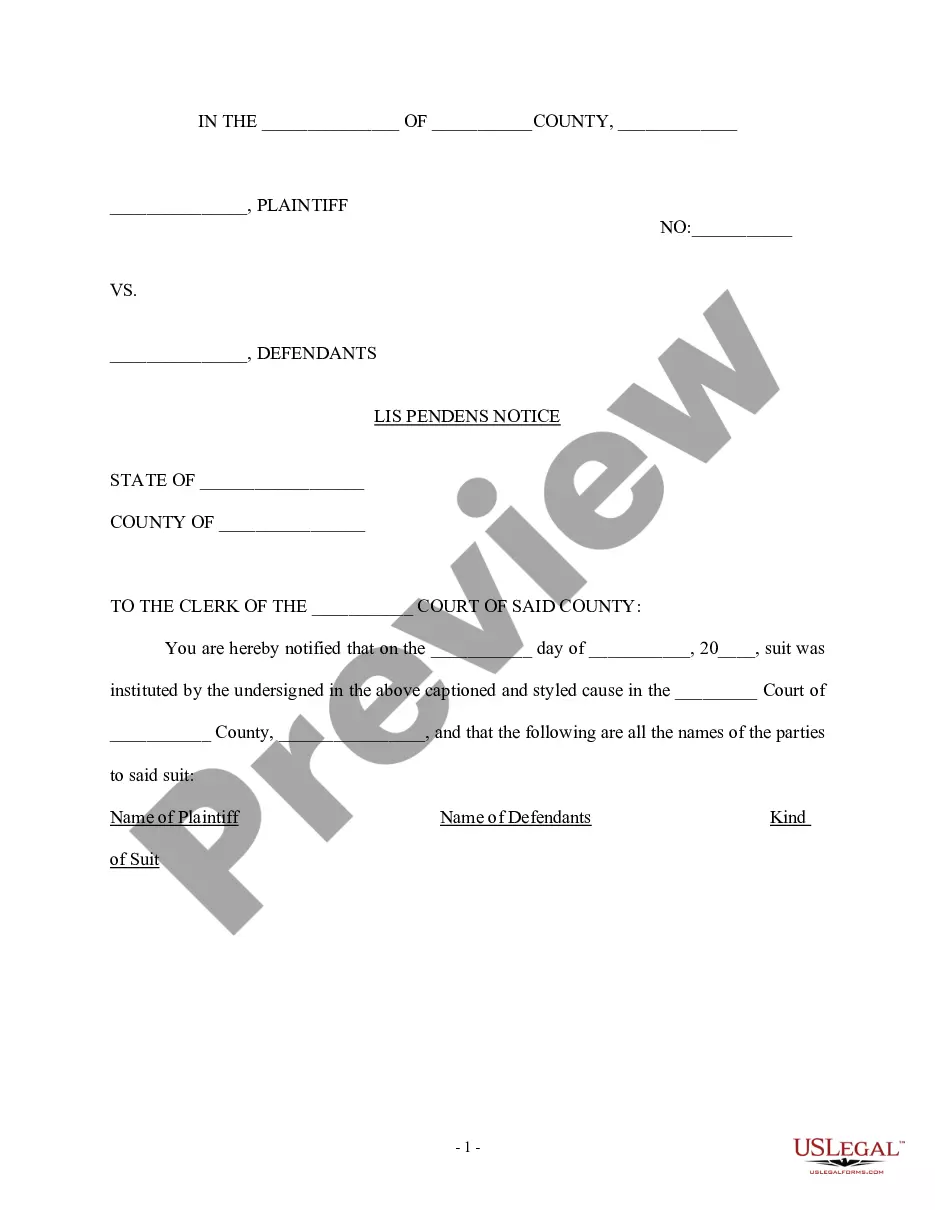
Lis Pendens Texas and Property Code Property Code Section 12.007(a) allows the party seeking relief to file a Lis Pendens during the pendency of an action involving title to real property, the establishment of an interest in real property, or the enforcement of an encumbrance against real property.
A judgment lien lasts for ten years. Generally, to file a judgment lien, an abstract of judgment must be issued by the justice court. Some justice courts have a form available on their website to request an abstract of judgment.
(b) An instrument conveying real property may not be recorded unless it is signed and acknowledged or sworn to by the grantor in the presence of two or more credible subscribing witnesses or acknowledged or sworn to before and certified by an officer authorized to take acknowledgements or oaths, as applicable.
A lis pendens has no life of its own apart from the lawsuit that underlies it. If there is no lawsuit, there can be no valid lis pendens. “A lis pendens operates only during the pendency of the underlying suit, and only as to those matters that are involved in the suit.
If someone has filed a Lis Pendens notice (which alerts others that there is a pending lawsuit involving a property), any party involved in the lawsuit can: Ask the court to remove the notice (e.g. Motion to Expunge). Notify all affected parties at least 20 days before the court hearing.
A judgment is valid for 10 years after it is issued, and it can be enforced at any time within that time period. There are ways for a creditor to extend a judgment past that time, so if properly renewed, a creditor can seek to enforce the judgment and collect for many years even after the initial ten-year window.
Section 12.002 - Liability (a) A person may not make, present, or use a document or other record with: (1) knowledge that the document or other record is a fraudulent court record or a fraudulent lien or claim against real or personal property or an interest in real or personal property; (2) intent that the document or ...
Section 12.002 - Liability (a) A person may not make, present, or use a document or other record with: (1) knowledge that the document or other record is a fraudulent court record or a fraudulent lien or claim against real or personal property or an interest in real or personal property; (2) intent that the document or ...
(b) The party filing a lis pendens or the party's agent or attorney shall sign the lis pendens, which must state: (1) the style and number, if any, of the proceeding; (2) the court in which the proceeding is pending; (3) the names of the parties; (4) the kind of proceeding; and (5) a description of the property ...
