Lis Pendens In Missouri In San Jose
Description
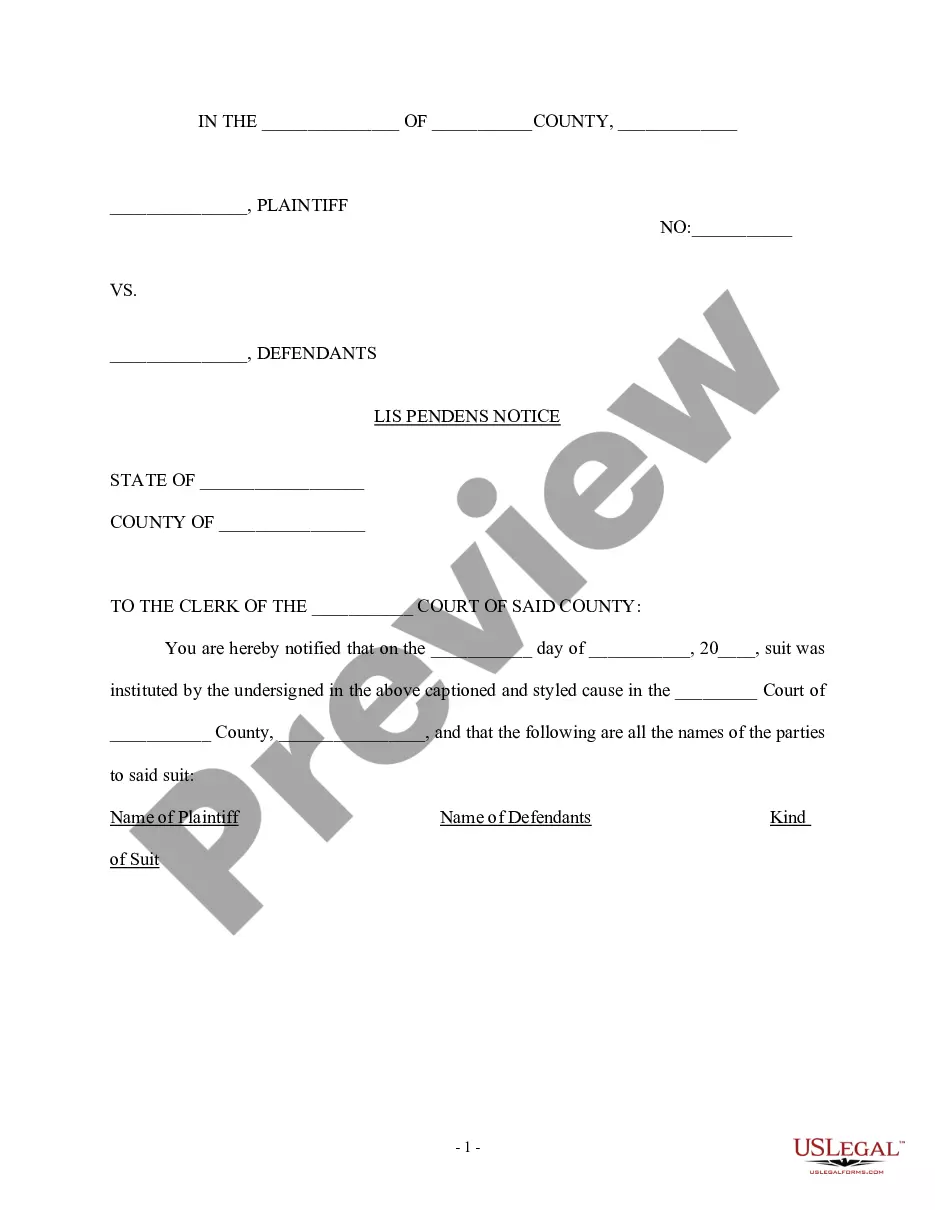

Get your form ready online
Our built-in tools help you complete, sign, share, and store your documents in one place.
Make edits, fill in missing information, and update formatting in US Legal Forms—just like you would in MS Word.
Download a copy, print it, send it by email, or mail it via USPS—whatever works best for your next step.
Sign and collect signatures with our SignNow integration. Send to multiple recipients, set reminders, and more. Go Premium to unlock E-Sign.
If this form requires notarization, complete it online through a secure video call—no need to meet a notary in person or wait for an appointment.
We protect your documents and personal data by following strict security and privacy standards.

Make edits, fill in missing information, and update formatting in US Legal Forms—just like you would in MS Word.

Download a copy, print it, send it by email, or mail it via USPS—whatever works best for your next step.

Sign and collect signatures with our SignNow integration. Send to multiple recipients, set reminders, and more. Go Premium to unlock E-Sign.

If this form requires notarization, complete it online through a secure video call—no need to meet a notary in person or wait for an appointment.

We protect your documents and personal data by following strict security and privacy standards.
Looking for another form?




Form popularity
FAQ
A judgment lien is created automatically on any debtor property located in the Missouri county where the judgment is entered. For debtor property located outside the county where the judgment is entered, the creditor files the judgment with the county circuit clerk.
But, courts allow a maximum of 10 years to discover an injury. In cases involving wrongful death, Missouri typically gives a three-year window to file a lawsuit. The longest time limit, 10 years, is for civil suits related to fraud, rent collection, debt collection, and judgments.
Sign the lis pendens document in the presence of a notary. File the lis pendens with the courthouse in the county where the property is located. Serve a notice of the lis pendens on involved parties, such as the property owner, if required.
How do I file a quit claim deed in Missouri? A person can file a quitclaim deed by (1) entering the relevant information on a quitclaim deed form, (2) signing the deed with two witnesses and a notary, and (3) recording the deed at the county comptroller's office.
Work with an attorney to negotiate with the party that filed the lis pendens notice to have the lawsuit dismissed, reach a settlement agreement or obtain a final judgment from the courts. Once the litigation has ended, you can file a release of lis pendens with the county recorder along with proof of the resolution.
File a request with the court to remove the lis pendens. Provide the legal reasons the lis pendens is improper, offering proof, for example, that the lis pendens affects real estate that is not connected to the litigation. If the lawsuit is frivolous and merely intended to harass the property owner, offer proof.
Lis pendens is a formal notice that there is a pending action, or lawsuit, that could affect the title of the property. However, it serves an even bigger purpose. When a lis pendens is filed, any future transfers of the property are affected by the pending action if it were to be awarded.
Create a document to serve as the notice Use a title that clearly identifies the document as a Notice of Lis Pendens. Include all of the required information in the document, such as a legal description of the property, the names of the parties involved, and a statement of the claim.
The signature on the notice of release of a lis pendens must be notarized. The notice must then be recorded in the office of the county recorder for the county in which the original lis pendens was recorded.

