Lis Pendens In Missouri In Salt Lake
Description
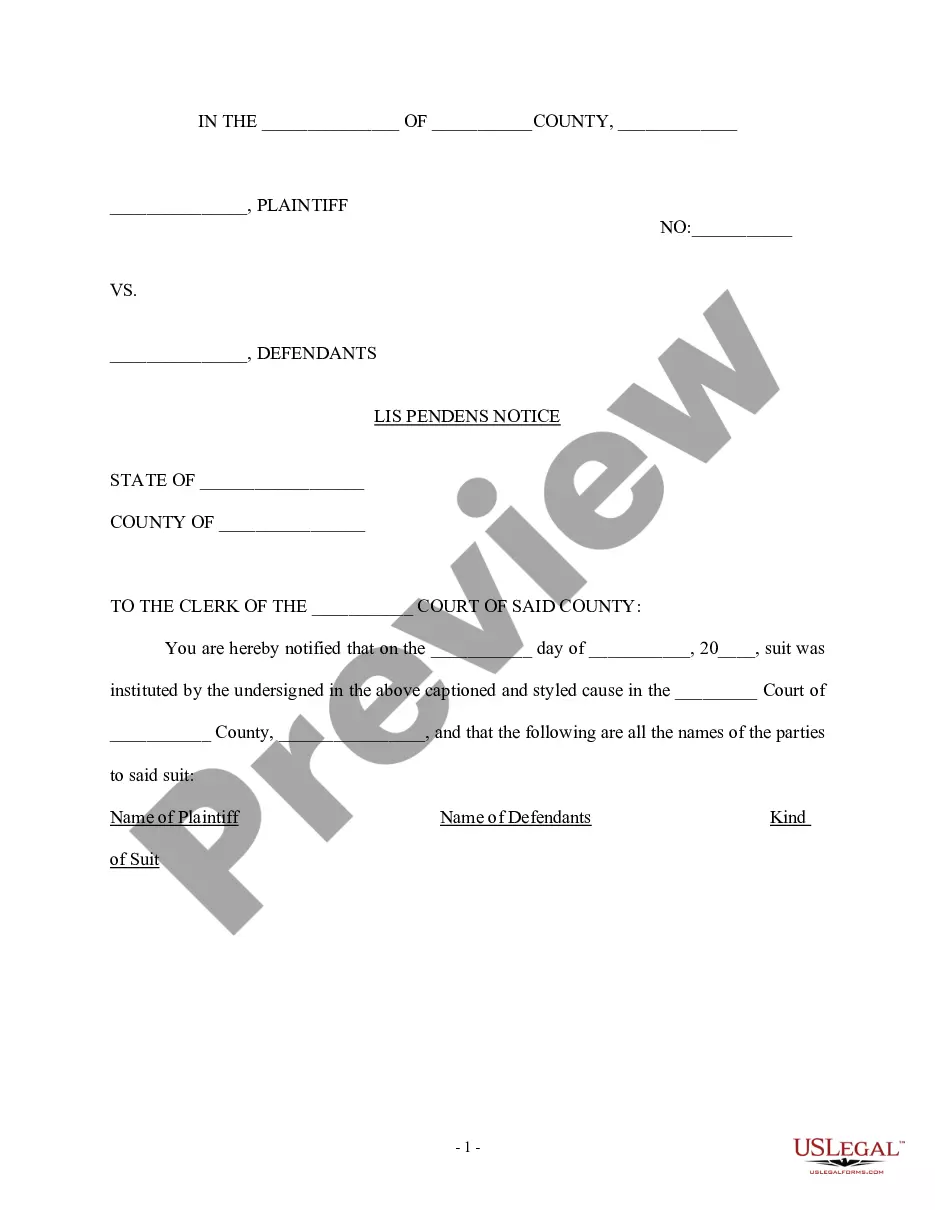

Get your form ready online
Our built-in tools help you complete, sign, share, and store your documents in one place.
Make edits, fill in missing information, and update formatting in US Legal Forms—just like you would in MS Word.
Download a copy, print it, send it by email, or mail it via USPS—whatever works best for your next step.
Sign and collect signatures with our SignNow integration. Send to multiple recipients, set reminders, and more. Go Premium to unlock E-Sign.
If this form requires notarization, complete it online through a secure video call—no need to meet a notary in person or wait for an appointment.
We protect your documents and personal data by following strict security and privacy standards.

Make edits, fill in missing information, and update formatting in US Legal Forms—just like you would in MS Word.

Download a copy, print it, send it by email, or mail it via USPS—whatever works best for your next step.

Sign and collect signatures with our SignNow integration. Send to multiple recipients, set reminders, and more. Go Premium to unlock E-Sign.

If this form requires notarization, complete it online through a secure video call—no need to meet a notary in person or wait for an appointment.

We protect your documents and personal data by following strict security and privacy standards.
Looking for another form?










Form popularity
FAQ
Generally, filing fees for legal documents, including Lis Pendens, are determined by the local government or court where the filing takes place. These fees can range from a relatively low amount to several hundred dollars.
A lis pendens is an official, public notice that a property has a pending lawsuit or claim attached to it. Lis pendens can only be filed if a claim is related specifically to the property; however, most laws specify that the property owner must assume any litigation associated with it.
The importance of Lis Pendens in real estate cannot be overstated. It safeguards claimants (those asserting a legal right to the property) by preventing sales or transfers that could undermine their claims. For buyers and lenders, it provides transparency, ensuring they have all the facts before making decisions.
When a lis pendens is filed, any future transfers of the property are affected by the pending action if it were to be awarded. A lis pendens puts a “cloud” on the title. It doesn't prevent you from selling your home, but it does make the title uncertain, which could affect your ability to sell.
One option for removing a lis pendens in Missouri is resolving the underlying legal matter. Work with an attorney to negotiate with the party that filed the lis pendens notice to have the lawsuit dismissed, reach a settlement agreement or obtain a final judgment from the courts.
Lis pendens means “pending lawsuit.” Under common law, filing a complaint “concerning real property” was constructive notice to buyers that they would take subject to the suit. Oregon now requires plaintiffs to record a separate Notice of Lis Pendens to secure their interest in the property.
A lis pendens gives notice to any future persons who may acquire an interest in the property that there is a pending lawsuit on the real property which could affect the real property's title.
However, once any litigation has been resolved, a lis pendens can be removed through a Florida Release of Lis Pendens. This legal document will formally remove the lis pendens so that the property title is clear.
Initial, a claim must be documented that will decide the privilege to possess as well as have land. Second, one of the gatherings to the claim (more often than not a gathering's lawyer) will set up a composed lis pendens and document the lis pendens with the court.
(2) A notice of lis pendens is not effectual for any purpose beyond 1 year from the commencement of the action and will expire at that time, unless the relief sought is disclosed by the pending pleading to be founded on a duly recorded instrument or on a lien claimed under part I of chapter 713 against the property ...

