Filing A Lis Pendens In California In Pima
Description

Get your form ready online
Our built-in tools help you complete, sign, share, and store your documents in one place.
Make edits, fill in missing information, and update formatting in US Legal Forms—just like you would in MS Word.
Download a copy, print it, send it by email, or mail it via USPS—whatever works best for your next step.
Sign and collect signatures with our SignNow integration. Send to multiple recipients, set reminders, and more. Go Premium to unlock E-Sign.
If this form requires notarization, complete it online through a secure video call—no need to meet a notary in person or wait for an appointment.
We protect your documents and personal data by following strict security and privacy standards.

Make edits, fill in missing information, and update formatting in US Legal Forms—just like you would in MS Word.

Download a copy, print it, send it by email, or mail it via USPS—whatever works best for your next step.

Sign and collect signatures with our SignNow integration. Send to multiple recipients, set reminders, and more. Go Premium to unlock E-Sign.

If this form requires notarization, complete it online through a secure video call—no need to meet a notary in person or wait for an appointment.

We protect your documents and personal data by following strict security and privacy standards.
Looking for another form?









Form popularity
FAQ
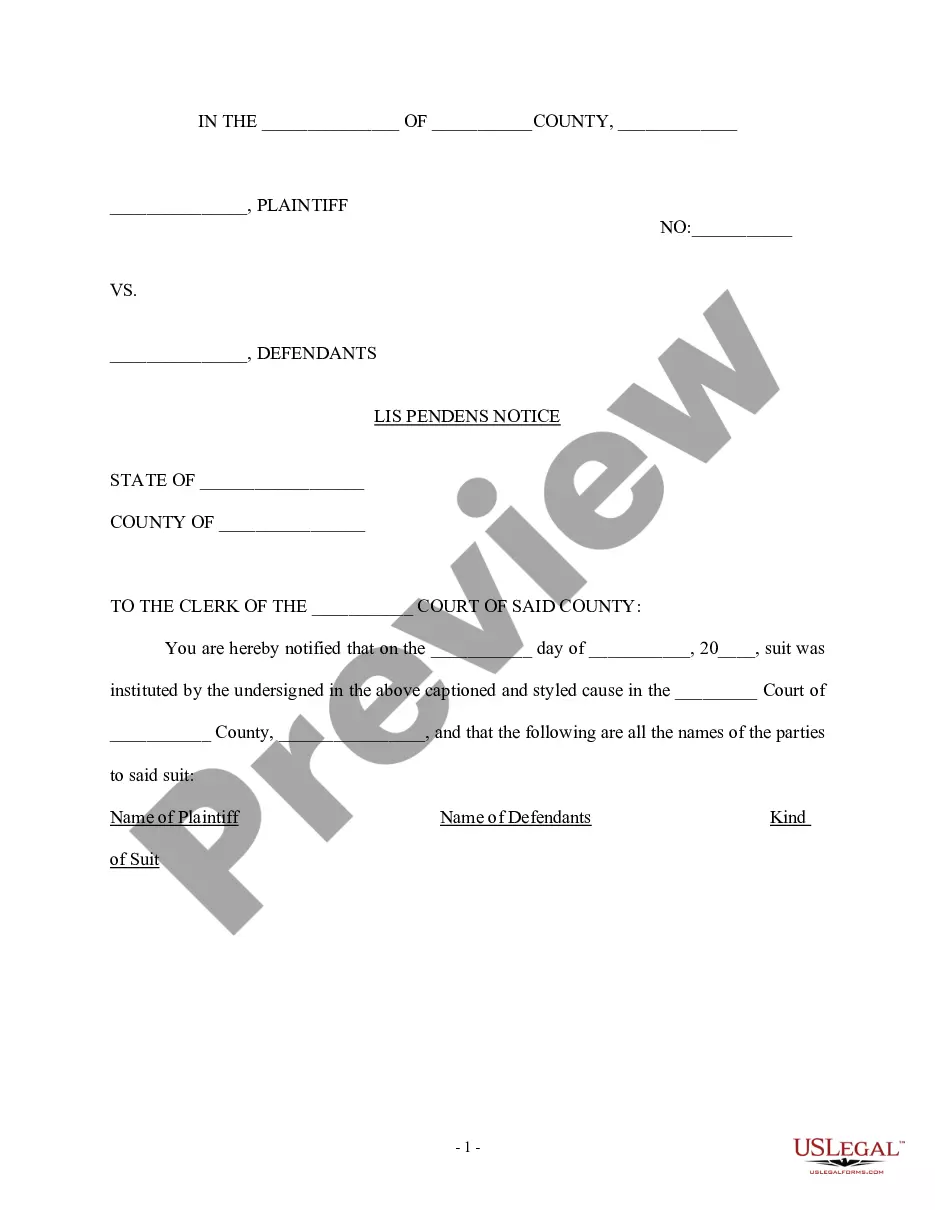
What is a lis pendens? (CCP § 405.21) A lis pendens – also called a notice of pendency of action – is a special type of legal document filed with a county recorder. Though its use is limited to lawsuits involving real property claims, its effect is powerful.
Once a Notice of State Tax Lien is recorded or filed against you, the lien: Becomes public record. Attaches to any California real or personal property you currently own or may acquire in the future. Is effective for at least 10 years (may be extended)
There is no specific time frame for how long a lis pendens is valid. Rather, a lis pendens is valid until it is expunged or the underlying case is resolved. If not expunged, a lis pendens is often removed as part of a settlement agreement reached between the parties.
1. Malicious Prosecution Defined. The tort of malicious prosecution is a civil cause of action in California designed to go after individuals who file frivolous lawsuits and cause damages as a result. To prove these causes of action, the plaintiff (the injured party) must prove certain elements.
Lis pendens means “pending lawsuit.” Under common law, filing a complaint “concerning real property” was constructive notice to buyers that they would take subject to the suit. Oregon now requires plaintiffs to record a separate Notice of Lis Pendens to secure their interest in the property.
A lis pendens must be filed with both the county recorder and the circuit court clerk. After the action has reached pending status, the lis pendens must be drafted and submitted to the county recorder to be recorded for public record. This does not end this part of the process.
Removing a Lis Pendens in California Other than resolution of the pending lawsuit, the only way to remove a lis pendens is by expungement, which requires a court order from a circuit judge.
Starting July 1, 2025, California courts will be required to provide ongoing notice of CARE Act proceedings to original petitioners (SB 42). In continuing the council's commitment to access to justice, AB 170 will extend remote proceedings in juvenile and civil cases.
A lis pendens must be filed with both the county recorder and the circuit court clerk. After the action has reached pending status, the lis pendens must be drafted and submitted to the county recorder to be recorded for public record. This does not end this part of the process.
If you've been married less than five years and have no children, you may qualify for a simpler way to get divorced (summary dissolution).
