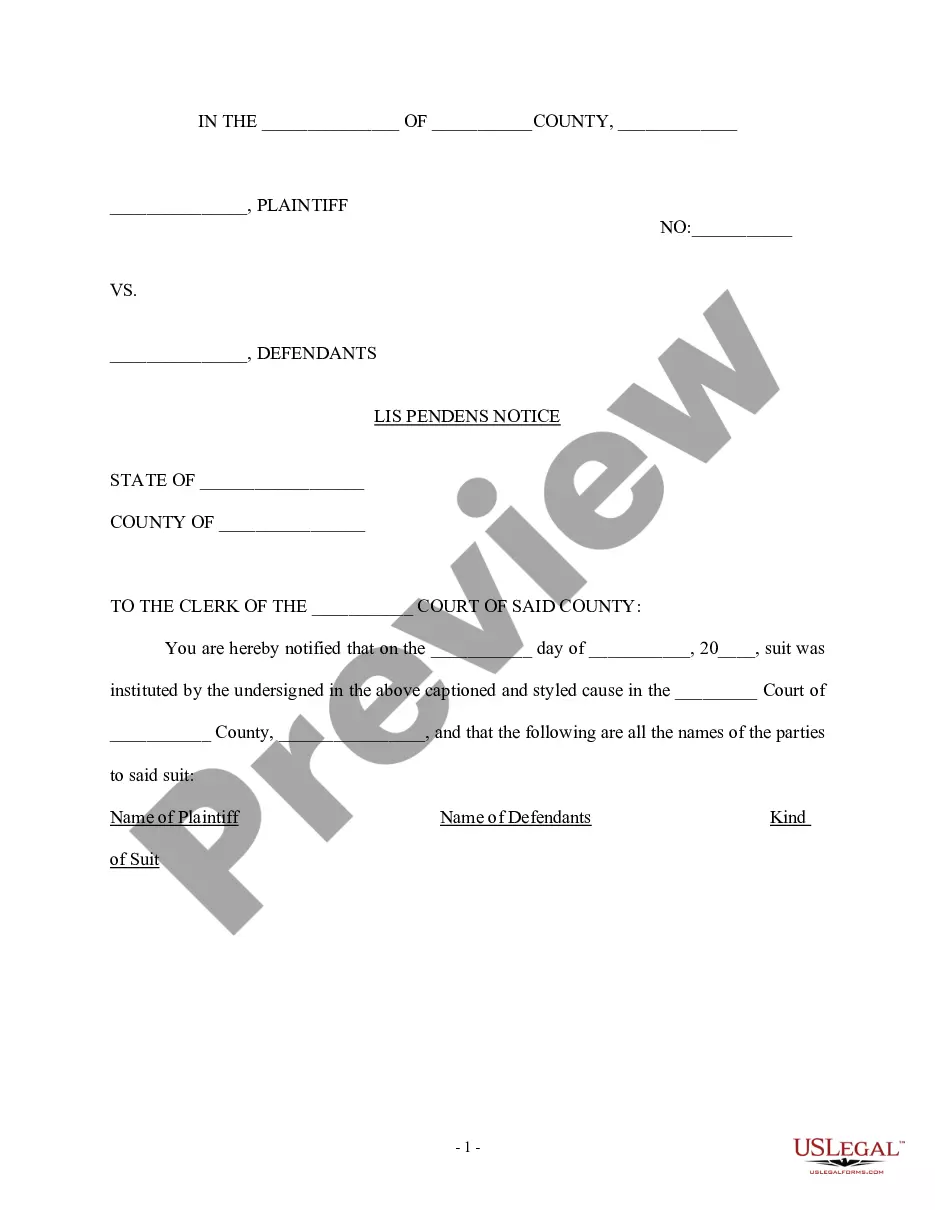
Filed Lis Pendens On In Ohio
Description

Get your form ready online
Our built-in tools help you complete, sign, share, and store your documents in one place.
Make edits, fill in missing information, and update formatting in US Legal Forms—just like you would in MS Word.
Download a copy, print it, send it by email, or mail it via USPS—whatever works best for your next step.
Sign and collect signatures with our SignNow integration. Send to multiple recipients, set reminders, and more. Go Premium to unlock E-Sign.
If this form requires notarization, complete it online through a secure video call—no need to meet a notary in person or wait for an appointment.
We protect your documents and personal data by following strict security and privacy standards.

Make edits, fill in missing information, and update formatting in US Legal Forms—just like you would in MS Word.

Download a copy, print it, send it by email, or mail it via USPS—whatever works best for your next step.

Sign and collect signatures with our SignNow integration. Send to multiple recipients, set reminders, and more. Go Premium to unlock E-Sign.

If this form requires notarization, complete it online through a secure video call—no need to meet a notary in person or wait for an appointment.

We protect your documents and personal data by following strict security and privacy standards.
Looking for another form?







Form popularity
FAQ
Lis pendens is a formal notice that there is a pending action, or lawsuit, that could affect the title of the property. However, it serves an even bigger purpose. When a lis pendens is filed, any future transfers of the property are affected by the pending action if it were to be awarded.
"Any person who wishes to file a Mechanic's Lien shall make and file for record in the office of the county recorder in the counties in which the improved property is located, an affidavit showing the amount due over and above all legal setoffs, a description of the property to be charged with the lien, the name and ...
The doctrine of lis pendens prevents parties who acquired an interest during the pendency of a foreclosure from challenging a trial court's judgment. Nationstar Mortgage, L.L.C. v. Scarville, 2024-Ohio-1580, at ¶ 12.
After a Lis Pendens is filed, it becomes part of the public record, warning anyone interested in the property that it is involved in a legal dispute. The property owner may challenge the Lis Pendens in court, seeking to have it removed if it was improperly filed.
Submit the completed notice to the local recording office. It should identify the parties, the subject property, details about the lawsuit, including the court, case number(s), relevant dates, and other information as needed for the situation.
Lien due 75 days from last furnishing labor or materials, 60 days on residential. In Ohio, an action to enforce a mechanics lien must be initiated within 6 years from filing of lien. Notice of furnishing due within 21 days of first furnishing labor or materials - or 21 days from filing of notice of commencement.
A judgment lien in Ohio will remain attached to the debtor's property (even if the property changes hands) for five years.
For lawsuits over damage to personal property (including vehicle damage), Ohio Revised Code section 2305.10 says this kind of civil case must be filed within two years.
This means that although Ohio's statute of limitations for judgment enforcement is at least fifteen years, in reality the best practice is to act at least once every five years so that your judgment does not become dormant. Often judgments are against more than one judgment debtor.
Attorney General's Office need only refile a tax lien every 15 years in Common Pleas Court to keep the lien operative against the tax debtor. A lien must be canceled after 40 years per Oh.

