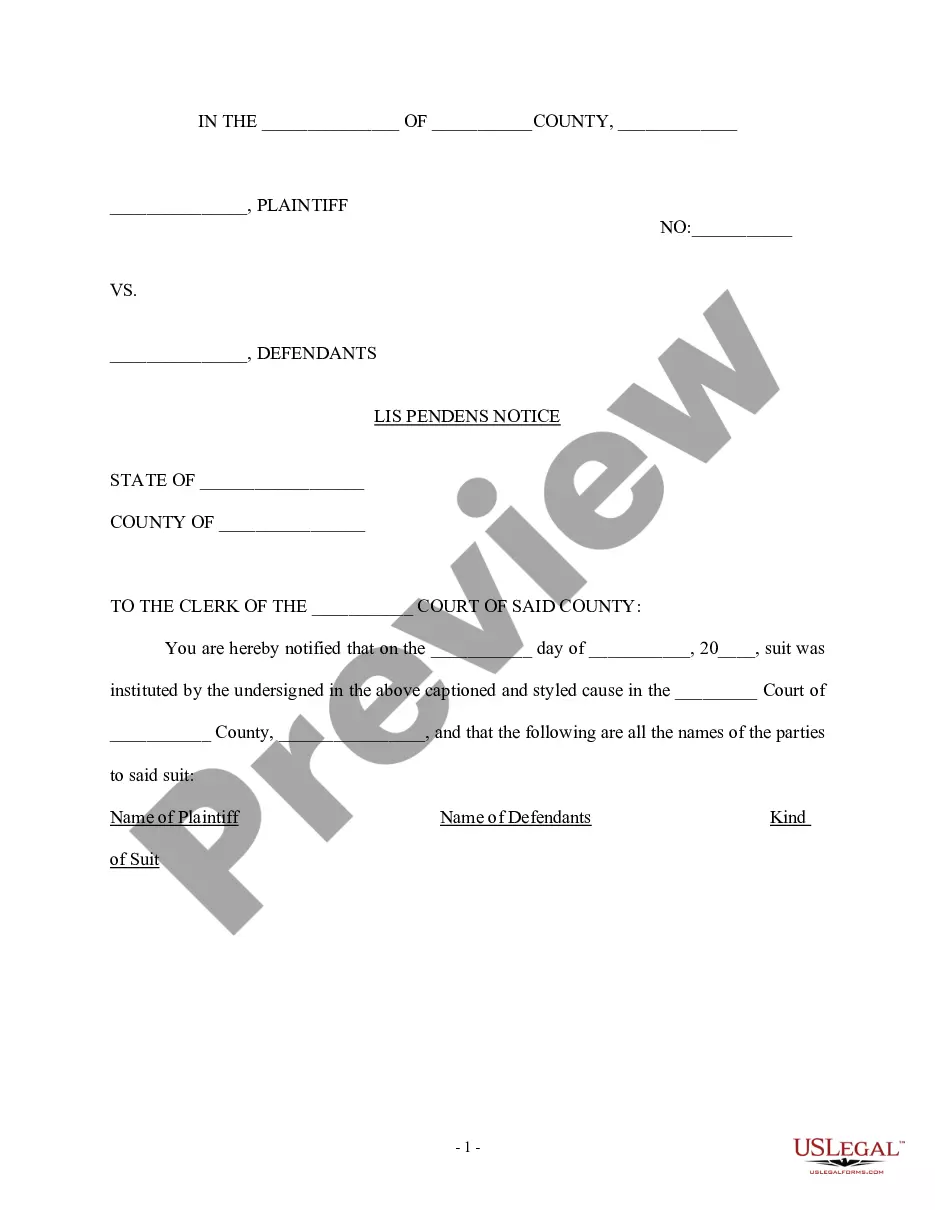
File Notice Lis Pendens Withdrawal In North Carolina
Description

Get your form ready online
Our built-in tools help you complete, sign, share, and store your documents in one place.
Make edits, fill in missing information, and update formatting in US Legal Forms—just like you would in MS Word.
Download a copy, print it, send it by email, or mail it via USPS—whatever works best for your next step.
Sign and collect signatures with our SignNow integration. Send to multiple recipients, set reminders, and more. Go Premium to unlock E-Sign.
If this form requires notarization, complete it online through a secure video call—no need to meet a notary in person or wait for an appointment.
We protect your documents and personal data by following strict security and privacy standards.

Make edits, fill in missing information, and update formatting in US Legal Forms—just like you would in MS Word.

Download a copy, print it, send it by email, or mail it via USPS—whatever works best for your next step.

Sign and collect signatures with our SignNow integration. Send to multiple recipients, set reminders, and more. Go Premium to unlock E-Sign.

If this form requires notarization, complete it online through a secure video call—no need to meet a notary in person or wait for an appointment.

We protect your documents and personal data by following strict security and privacy standards.
Looking for another form?


Form popularity
FAQ
Lis pendens (a pending suit), in general terms, is a notice filed on public records for the purpose of warning all persons that the title to certain property is in litigation, and they are in danger of being bound by an adverse judgment.
North Carolina Civil Statute of Limitations Laws: At a Glance Injury to personThree years (N.C.G.S. § 1-52(16)) Collection of rent Three years (N.C.G.S. § 1-52) Libel/slander One year (N.C.G.S. § 1-54(3)) Fraud Three years (N.C.G.S. § 1-52(9)) Injury to personal property Three years (N.C.G.S. § 1-52(4))5 more rows
Expunging a Lis Pendens This can happen if the party believes that the lis pendens was improperly filed or if the underlying lawsuit has been resolved. Court Hearing: If a party seeks expungement, the court will conduct a hearing to determine whether the lis pendens should be canceled.
The reason for a Lis Pendens is to alert the world that the house is subject to legal action. That means the house is "frozen" or cannot be sold, refinanced, transferred, until the lawsuit is settled, or the case is tried with a final judgment signed by the judge.
Upon the issuance of a complaint and notice of hearing or order pursuant thereto, a notice of lis pendens, with a copy of the complaint and notice of hearing or order attached thereto, may be filed by the Officer in the Office of the Clerk of Superior Court for the county, as provided in G.S. § 1-120.2.
How to File a Property Lien in North Carolina. The North Carolina county where the judgment is entered automatically establishes a lien on the debtor's property within that county. If the debtor owns property outside the county, the creditor must file it with the county clerk where the property is situated.
The Massachusetts lis pendens statute serves to protect the rights of the property owner as well. A memorandum of lis pendens associated with a parcel of real estate creates a “cloud on title” to the property, which can have harsh consequences.
The notice of lis pendens remains in full force and effect until cancelled. The ordinance may authorize the cancellation of the notice of lis pendens under certain circumstances. Upon receipt of notice from the city, the clerk of superior court shall cancel the notice of lis pendens.
In North Carolina, whether your potential case involves damage to real property (your house or your land, for example) or personal property (including vehicle damage), it usually must be brought to the state's civil court system within three years. This rule can be found at North Carolina General Statutes section 1-52.

