Filing A Lis Pendens In Texas In New York
Description

Get your form ready online
Our built-in tools help you complete, sign, share, and store your documents in one place.
Make edits, fill in missing information, and update formatting in US Legal Forms—just like you would in MS Word.
Download a copy, print it, send it by email, or mail it via USPS—whatever works best for your next step.
Sign and collect signatures with our SignNow integration. Send to multiple recipients, set reminders, and more. Go Premium to unlock E-Sign.
If this form requires notarization, complete it online through a secure video call—no need to meet a notary in person or wait for an appointment.
We protect your documents and personal data by following strict security and privacy standards.

Make edits, fill in missing information, and update formatting in US Legal Forms—just like you would in MS Word.

Download a copy, print it, send it by email, or mail it via USPS—whatever works best for your next step.

Sign and collect signatures with our SignNow integration. Send to multiple recipients, set reminders, and more. Go Premium to unlock E-Sign.

If this form requires notarization, complete it online through a secure video call—no need to meet a notary in person or wait for an appointment.

We protect your documents and personal data by following strict security and privacy standards.
Looking for another form?







Form popularity
FAQ
The reason for a Lis Pendens is to alert the world that the house is subject to legal action. That means the house is "frozen" or cannot be sold, refinanced, transferred, until the lawsuit is settled, or the case is tried with a final judgment signed by the judge.
Homeowners can sell properties with liens. For a buyer to take possession of the property, the seller will need to clear title and satisfy all outstanding liens.
A lis pendens has no life of its own apart from the lawsuit that underlies it. If there is no lawsuit, there can be no valid lis pendens. “A lis pendens operates only during the pendency of the underlying suit, and only as to those matters that are involved in the suit.
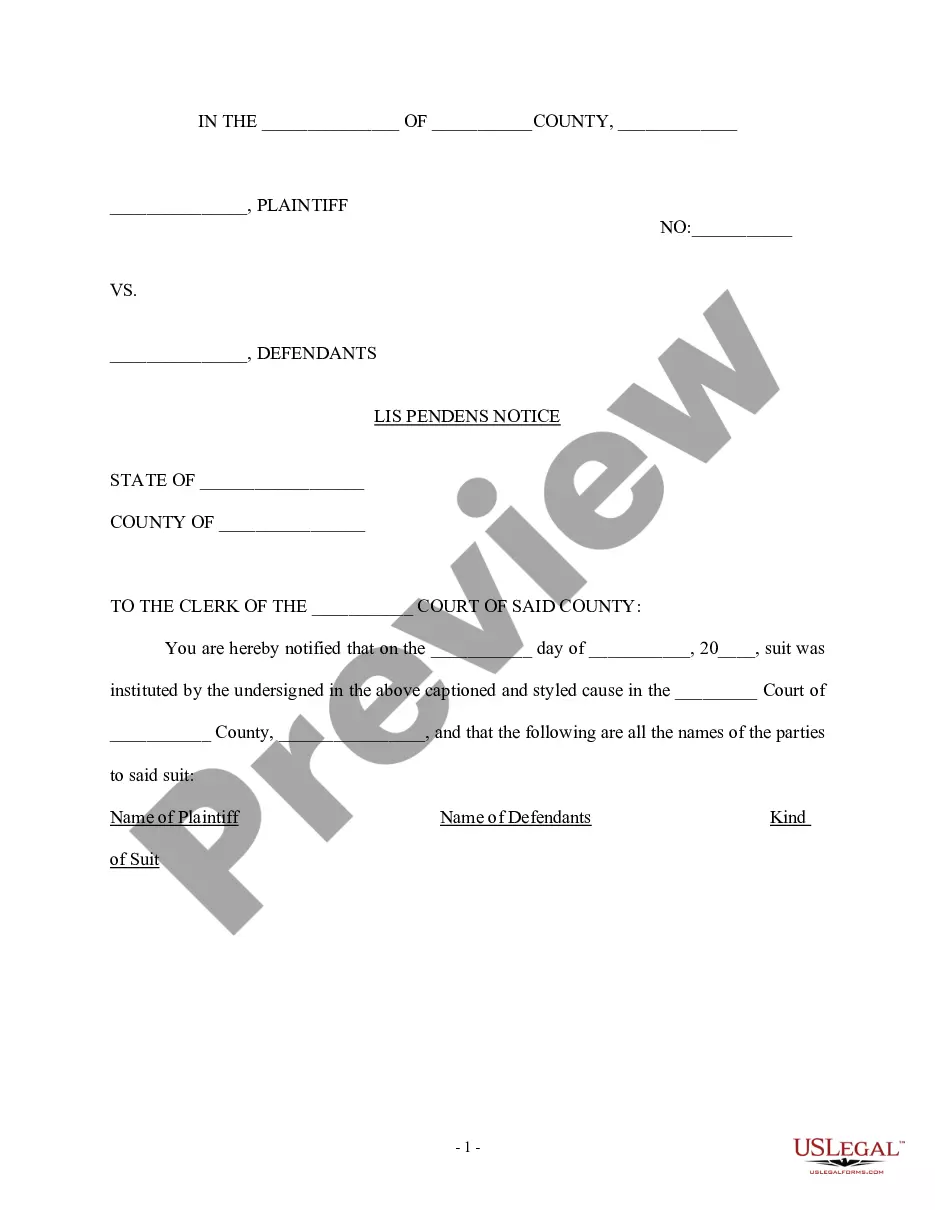
To file a Lis Pendens in Texas, the party initiating the lawsuit must follow procedures outlined in the Texas Property Code. This includes submitting a declarative affidavit to the county clerk's office where the property is located. The affidavit must generally contain: Names of the parties involved.
Lis pendens: Latin for “a pending suit.” 1. Jurisdiction of a court over property until the final decision of a case. 2. A notice filed against public records warning the public that title to the property is in litigation (in court and not final).
File a request with the court to remove the lis pendens. Provide the legal reasons the lis pendens is improper, offering proof, for example, that the lis pendens affects real estate that is not connected to the litigation. If the lawsuit is frivolous and merely intended to harass the property owner, offer proof.

