Form Lis Pendens For Personal Property In Michigan
Description

Get your form ready online
Our built-in tools help you complete, sign, share, and store your documents in one place.
Make edits, fill in missing information, and update formatting in US Legal Forms—just like you would in MS Word.
Download a copy, print it, send it by email, or mail it via USPS—whatever works best for your next step.
Sign and collect signatures with our SignNow integration. Send to multiple recipients, set reminders, and more. Go Premium to unlock E-Sign.
If this form requires notarization, complete it online through a secure video call—no need to meet a notary in person or wait for an appointment.
We protect your documents and personal data by following strict security and privacy standards.

Make edits, fill in missing information, and update formatting in US Legal Forms—just like you would in MS Word.

Download a copy, print it, send it by email, or mail it via USPS—whatever works best for your next step.

Sign and collect signatures with our SignNow integration. Send to multiple recipients, set reminders, and more. Go Premium to unlock E-Sign.

If this form requires notarization, complete it online through a secure video call—no need to meet a notary in person or wait for an appointment.

We protect your documents and personal data by following strict security and privacy standards.
Looking for another form?







Form popularity
FAQ
RECORDING REQUIREMENTS Documents must be on white paper with black ink and have a 10-point minimum type size. The title or type of document must be identified on the first line of print. The property tax identification number and the commonly known address of the property should be on the document.
(1) Unless subsection (2) or (3) applies, a judgment lien expires 5 years after the date it is recorded. (2) Unless subsection (3) applies, if a judgment lien is rerecorded under subsection (4), the judgment lien expires 5 years after the date it is rerecorded.
Sign and date the quitclaim deed in a notary's presence, then file it with the county Register of Deeds Office in the property's county, not the county where you live. Once the deed is filed and recorded, the transfer is deemed legal.
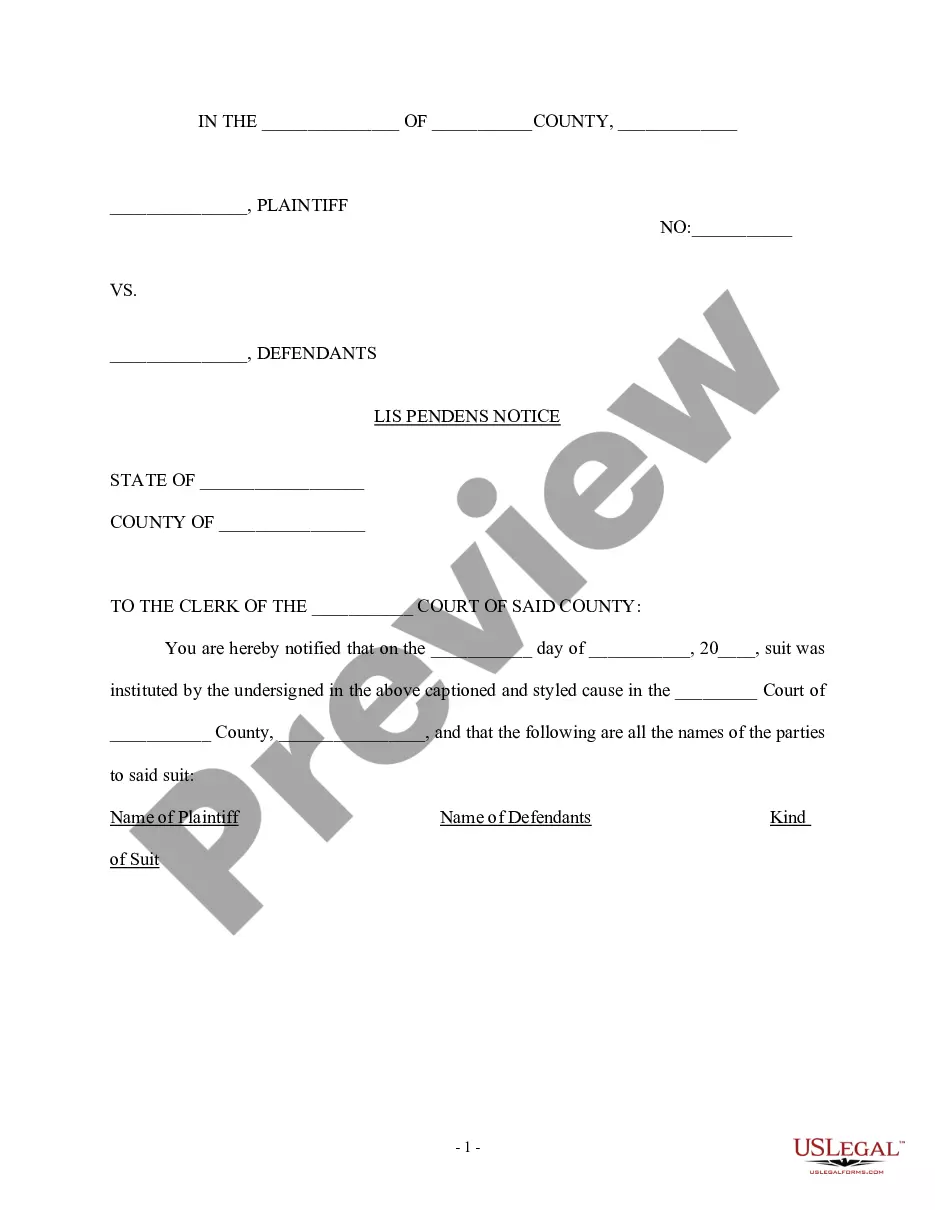
A Notice of Lis Pendens is a document that gives constructive notice of a pending suit to a purchaser of any real estate. The plaintiff files the notice with the register of deeds in counties where affected property are located.
A lis pendens does not have a statute of limitations per se. All a lis pendens is, is a notice to the "world" (assuming it is properly recorded with the appropriate recorder's office) that there is pending litigation which could affect title of the property.
“To render the filing of a complaint constructive notice to a purchaser of any real estate, the plaintiff shall file for record, with the register of deeds of the county in which the lands to be affected by such constructive notice are situated, a notice of the pendency of such action, setting forth the title of the ...
600.2715 Notice lis pendens; duration; extension. (1) A notice of pendency hereafter filed for record shall be effective as notice for a period of 3 years from the date of filing.
How do I add someone to my deed? We recommend that you consult an attorney or real estate professional for assistance in preparing the proper document that will convey the type of interest you want a particular person or entity to have in your property.
