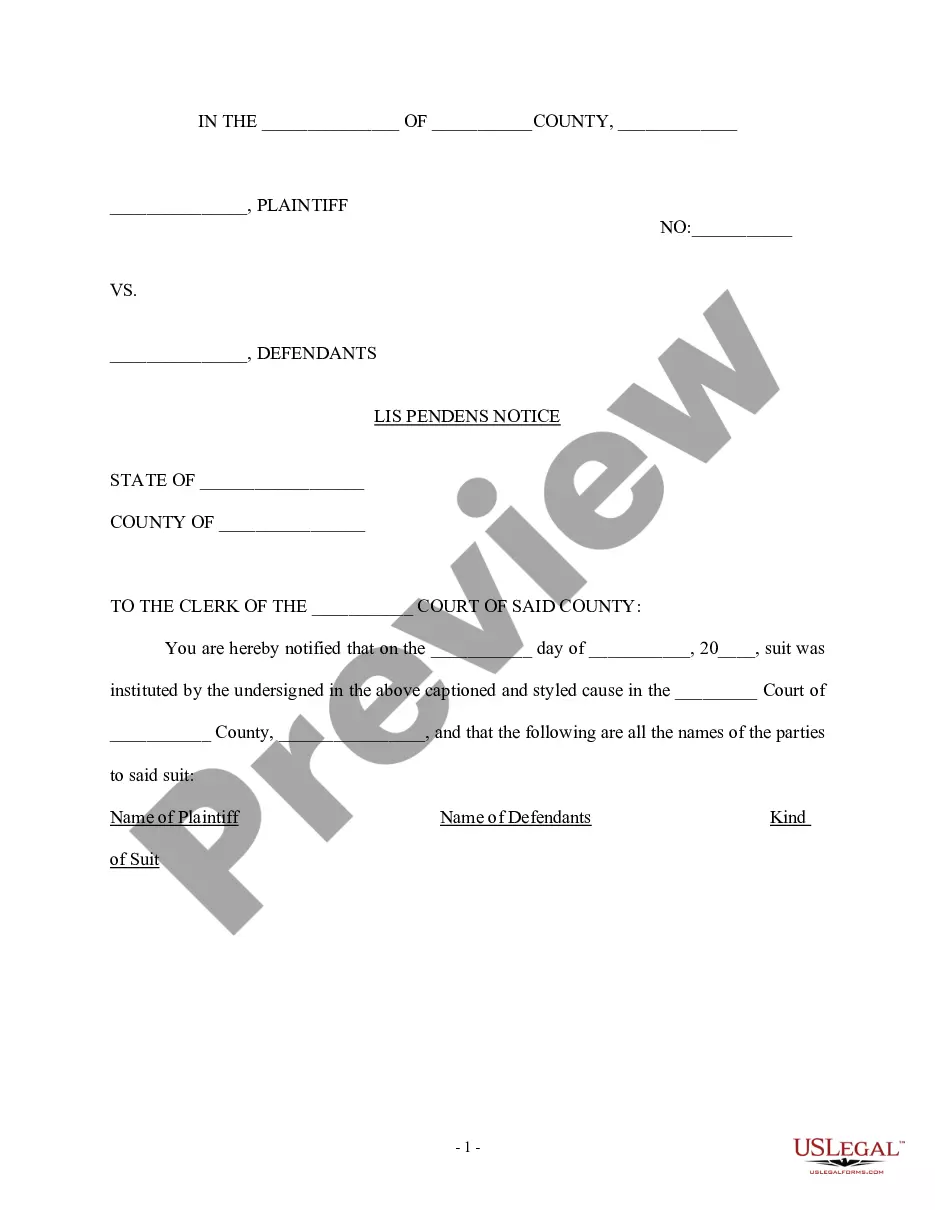
Lis Pendens Form Blank With Blank Phosphates In Los Angeles
Description

Get your form ready online
Our built-in tools help you complete, sign, share, and store your documents in one place.
Make edits, fill in missing information, and update formatting in US Legal Forms—just like you would in MS Word.
Download a copy, print it, send it by email, or mail it via USPS—whatever works best for your next step.
Sign and collect signatures with our SignNow integration. Send to multiple recipients, set reminders, and more. Go Premium to unlock E-Sign.
If this form requires notarization, complete it online through a secure video call—no need to meet a notary in person or wait for an appointment.
We protect your documents and personal data by following strict security and privacy standards.

Make edits, fill in missing information, and update formatting in US Legal Forms—just like you would in MS Word.

Download a copy, print it, send it by email, or mail it via USPS—whatever works best for your next step.

Sign and collect signatures with our SignNow integration. Send to multiple recipients, set reminders, and more. Go Premium to unlock E-Sign.

If this form requires notarization, complete it online through a secure video call—no need to meet a notary in person or wait for an appointment.

We protect your documents and personal data by following strict security and privacy standards.
Looking for another form?



Form popularity
FAQ
Under California Penal Code § 1538.5(a)(1), a defendant may challenge the lawfulness of a search warrant and to suppress evidence that was gathered as a consequence.
A party making a peremptory challenge by motion or affidavit of prejudice regarding an assigned judge must submit it in writing to the assigned judge within 20 days after service of the order assigning the judge to the coordination proceeding.
As stated above, “a writ of mandate may be issued by any court to any inferior tribunal, corporation, board, or person, to compel the performance of an act which the law specially enjoins, as a duty resulting from an office, trust, or station, or to compel the admission of a party to the use and enjoyment of a right ...
LASC CIV 301 - Amendment to Cross-Complaint (Corrected Name). This form is used when the cross-complainant files a cross-complaint with an incorrect name for the cross-defendant. The form allows for the correction of the cross-complaint by substituting the true name for the incorrect one, with options for both cases.
Filing a motion to quash automatically excuses the custodian and deposition officer from producing the subpoenaed records until the court orders their production or the parties stipulate thereto. CCP § 1985.3 (g); CCP § 1985.6 (f) (amended eff 1/1/13).

