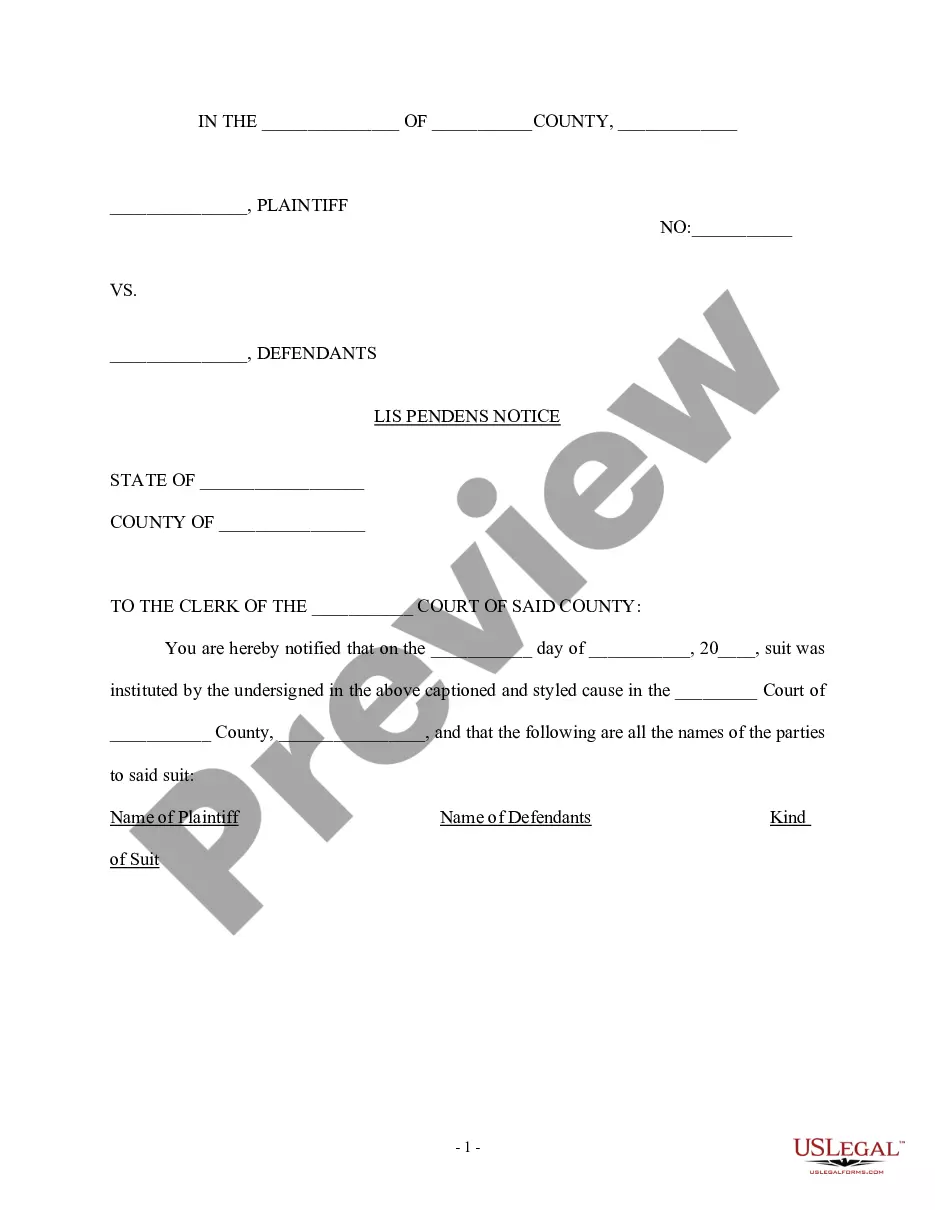
Filed Lis Pendens On In Illinois
Description

Get your form ready online
Our built-in tools help you complete, sign, share, and store your documents in one place.
Make edits, fill in missing information, and update formatting in US Legal Forms—just like you would in MS Word.
Download a copy, print it, send it by email, or mail it via USPS—whatever works best for your next step.
Sign and collect signatures with our SignNow integration. Send to multiple recipients, set reminders, and more. Go Premium to unlock E-Sign.
If this form requires notarization, complete it online through a secure video call—no need to meet a notary in person or wait for an appointment.
We protect your documents and personal data by following strict security and privacy standards.

Make edits, fill in missing information, and update formatting in US Legal Forms—just like you would in MS Word.

Download a copy, print it, send it by email, or mail it via USPS—whatever works best for your next step.

Sign and collect signatures with our SignNow integration. Send to multiple recipients, set reminders, and more. Go Premium to unlock E-Sign.

If this form requires notarization, complete it online through a secure video call—no need to meet a notary in person or wait for an appointment.

We protect your documents and personal data by following strict security and privacy standards.
Looking for another form?








Form popularity
FAQ
In United States law, a lis pendens (Latin for 'suit pending' ) is a written notice that a lawsuit has been filed concerning real estate, involving either the title to the property or a claimed ownership interest in it.
The importance of Lis Pendens in real estate cannot be overstated. It safeguards claimants (those asserting a legal right to the property) by preventing sales or transfers that could undermine their claims. For buyers and lenders, it provides transparency, ensuring they have all the facts before making decisions.
Therefore, a notice of pendency effectively freezes the status of the involved property, protecting it from being sold or pledged before the action is resolved. Rules regarding notice of pendency vary by state and each state's civil procedure rules .
The importance of Lis Pendens in real estate cannot be overstated. It safeguards claimants (those asserting a legal right to the property) by preventing sales or transfers that could undermine their claims. For buyers and lenders, it provides transparency, ensuring they have all the facts before making decisions.
When a lis pendens is filed, any future transfers of the property are affected by the pending action if it were to be awarded. A lis pendens puts a “cloud” on the title. It doesn't prevent you from selling your home, but it does make the title uncertain, which could affect your ability to sell.
A notice of lis pendens under Illinois law for filing in the public records (the office of the county recorder) to provide constructive notice to third parties of a pending legal proceeding affecting or involving Illinois real property.
What is a lis pendens? (CCP § 405.21) A lis pendens – also called a notice of pendency of action – is a special type of legal document filed with a county recorder. Though its use is limited to lawsuits involving real property claims, its effect is powerful.
A lis pendens is a written notice that a lawsuit has been filed concerning real estate, involving either the title to the property or a claimed ownership interest in it.
There is no specific time frame for how long a lis pendens is valid. Rather, a lis pendens is valid until it is expunged or the underlying case is resolved. If not expunged, a lis pendens is often removed as part of a settlement agreement reached between the parties.
Lis pendens is a formal notice that there is a pending action, or lawsuit, that could affect the title of the property. However, it serves an even bigger purpose. When a lis pendens is filed, any future transfers of the property are affected by the pending action if it were to be awarded.

