File Notice Lis Pendens Fort Worth In Harris
Description
Get your form ready online
Our built-in tools help you complete, sign, share, and store your documents in one place.
Make edits, fill in missing information, and update formatting in US Legal Forms—just like you would in MS Word.
Download a copy, print it, send it by email, or mail it via USPS—whatever works best for your next step.
Sign and collect signatures with our SignNow integration. Send to multiple recipients, set reminders, and more. Go Premium to unlock E-Sign.
If this form requires notarization, complete it online through a secure video call—no need to meet a notary in person or wait for an appointment.
We protect your documents and personal data by following strict security and privacy standards.

Make edits, fill in missing information, and update formatting in US Legal Forms—just like you would in MS Word.

Download a copy, print it, send it by email, or mail it via USPS—whatever works best for your next step.

Sign and collect signatures with our SignNow integration. Send to multiple recipients, set reminders, and more. Go Premium to unlock E-Sign.

If this form requires notarization, complete it online through a secure video call—no need to meet a notary in person or wait for an appointment.

We protect your documents and personal data by following strict security and privacy standards.
Looking for another form?









Form popularity
FAQ
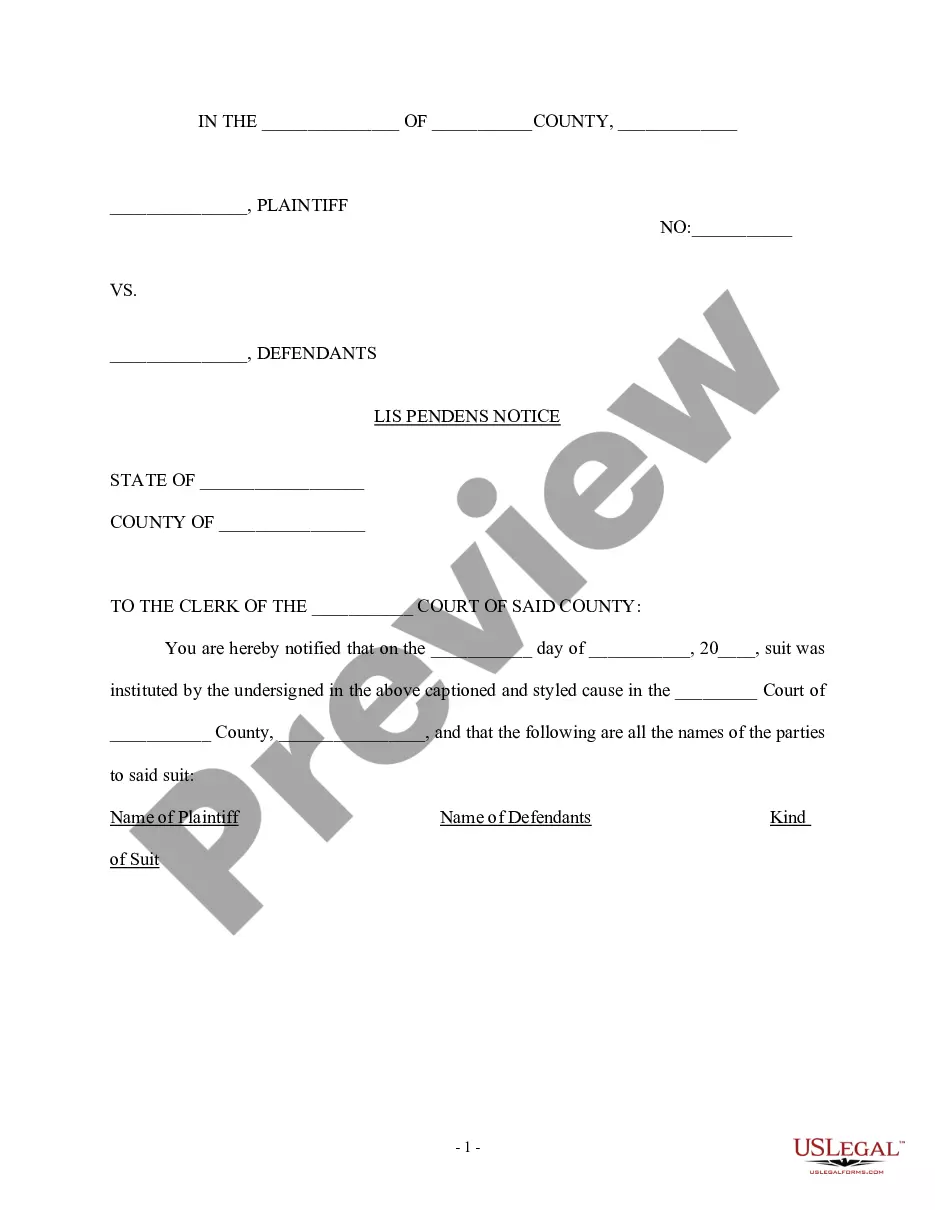
To file a Lis Pendens in Texas, the party initiating the lawsuit must follow procedures outlined in the Texas Property Code. This includes submitting a declarative affidavit to the county clerk's office where the property is located. The affidavit must generally contain: Names of the parties involved.
After a Lis Pendens is filed, it becomes part of the public record, warning anyone interested in the property that it is involved in a legal dispute. The property owner may challenge the Lis Pendens in court, seeking to have it removed if it was improperly filed.
To file a lien claim, you will need: Property owner's name (or company name) and mailing address. Project address and the county where it is located. The amount owed for each month you performed the work that remains unpaid. A brief description of the work you performed.
Section 12.0071 - Motion to Expunge Lis Pendens (a) A party to an action in connection with which a notice of lis pendens has been filed may: (1) apply to the court to expunge the notice; and (2) file evidence, including declarations, with the motion to expunge the notice.
(b) The party filing a lis pendens or the party's agent or attorney shall sign the lis pendens, which must state: (1) the style and number, if any, of the proceeding; (2) the court in which the proceeding is pending; (3) the names of the parties; (4) the kind of proceeding; and (5) a description of the property ...
A lis pendens has no life of its own apart from the lawsuit that underlies it. If there is no lawsuit, there can be no valid lis pendens. “A lis pendens operates only during the pendency of the underlying suit, and only as to those matters that are involved in the suit.
A Lis Pendens creates a “cloud” on the property's title, making it difficult to transfer ownership. Sellers facing this issue may need to negotiate a settlement, obtain a court order to remove the Lis Pendens, or provide legal assurances to the buyer before closing.
PENDENS'- § 52 OF THE TRANSFER OF PROPERTY ACT, 1882 1) There is a pendency of a suit or proceeding. 2) The suit or proceeding must be pending in a Court of competent jurisdiction. 3) A right to immovable property is directly and specifically involved in the suit.

