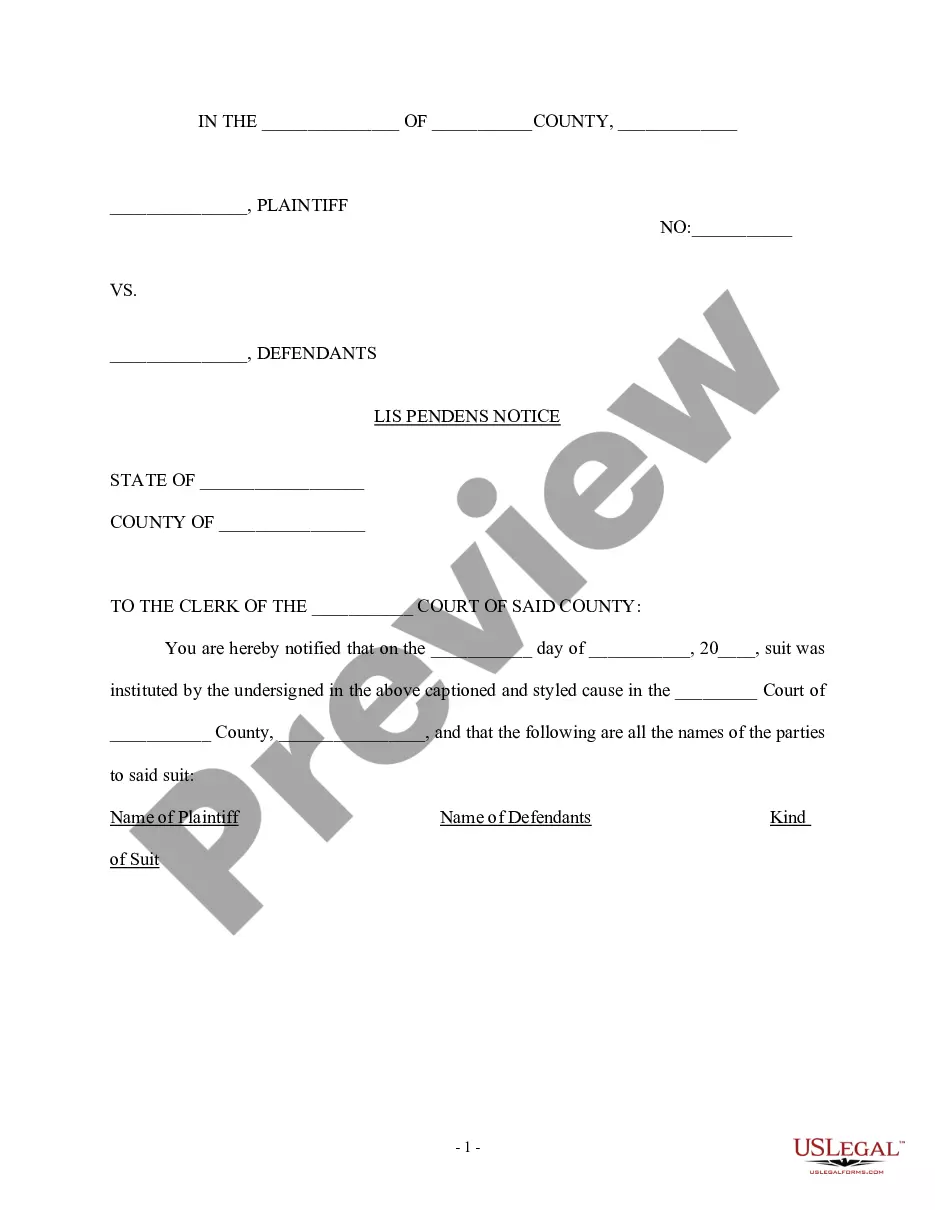
Lis Pendens In Missouri In Cuyahoga
Description

Get your form ready online
Our built-in tools help you complete, sign, share, and store your documents in one place.
Make edits, fill in missing information, and update formatting in US Legal Forms—just like you would in MS Word.
Download a copy, print it, send it by email, or mail it via USPS—whatever works best for your next step.
Sign and collect signatures with our SignNow integration. Send to multiple recipients, set reminders, and more. Go Premium to unlock E-Sign.
If this form requires notarization, complete it online through a secure video call—no need to meet a notary in person or wait for an appointment.
We protect your documents and personal data by following strict security and privacy standards.

Make edits, fill in missing information, and update formatting in US Legal Forms—just like you would in MS Word.

Download a copy, print it, send it by email, or mail it via USPS—whatever works best for your next step.

Sign and collect signatures with our SignNow integration. Send to multiple recipients, set reminders, and more. Go Premium to unlock E-Sign.

If this form requires notarization, complete it online through a secure video call—no need to meet a notary in person or wait for an appointment.

We protect your documents and personal data by following strict security and privacy standards.
Looking for another form?





Form popularity
FAQ
Preservation of Rights: Lis pendens helps preserve the rights of parties involved in the dispute by establishing priority over subsequent claims or interests in the property. It effectively puts the world on notice that any transfer of the property may be subject to the outcome of the pending legal action.
• Any action or proceeding which is pending in any court of law is. said to be lis pendens. • The maxim representing this doctrine means that 'during the. pendency of litigation, nothing new should be introduced and to maintain the status quo, to abstain from doing anything which may affect any party to the litigation.
The suit or proceeding must be pending before a competent court of jurisdiction. A right to immovable property is directly or specifically involved in the suit. The suit or proceeding must not be collusive. The property in dispute must be transferred or otherwise dealt with by any party to suit.
The filing and releasing of a Notice of Lis Pendens (certified copy) should be filed with the Recorder's Office of the county where the property resides. 1. Real estate must be located within this judicial district unless the Court otherwise orders.
11.0 HEARING AND SUBMISSION OF MOTIONS If the motion requires consideration of facts not appearing of record, the movant shall serve and file copies of all affidavits, depositions, photographs or documentary evidence which the movant desires to submit in support of the motion.
R. 11 governs the signing of pleadings, motions and other documents. For a “willful” violation of this rule, an attorney or pro se party, upon motion of a party or upon the court's own motion, may be subjected to appropriate action, including an award to the opposing party of expenses and reasonable attorney fees.
Work with an attorney to negotiate with the party that filed the lis pendens notice to have the lawsuit dismissed, reach a settlement agreement or obtain a final judgment from the courts. Once the litigation has ended, you can file a release of lis pendens with the county recorder along with proof of the resolution.
The Personnel Review Commission (PRC) was established by the Cuyahoga County Charter in 2010. The agency has a wide range of authority and responsibilities, including hearing appeals, conducting civil service testing, and administering the classification and compensation systems.
This rule sets a minimum level of disclosure that will be required in all cases, even if one or more parties have not formally requested such disclosure in written discovery.

