Registering A Lis Pendens In The Land Registry In Bronx
Description
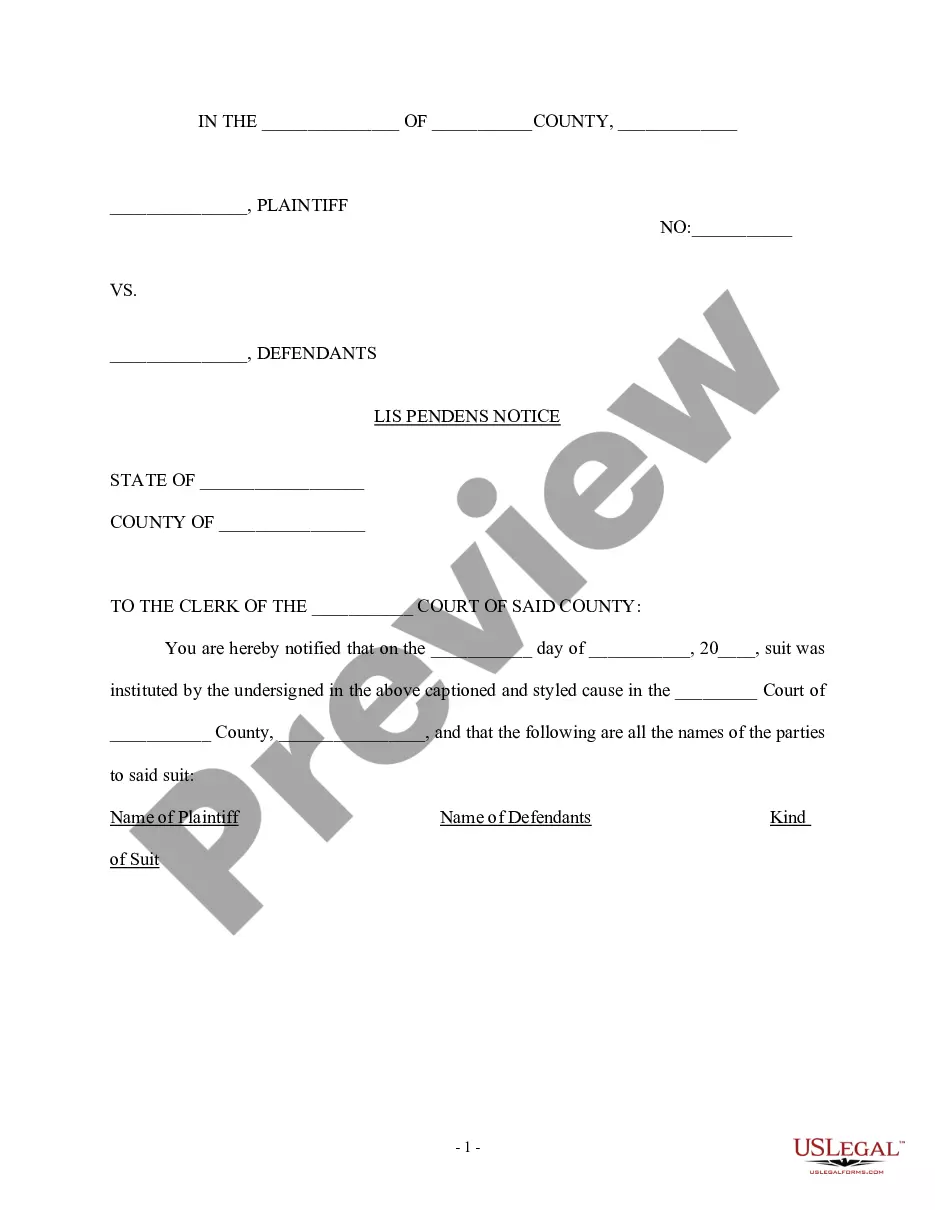

Get your form ready online
Our built-in tools help you complete, sign, share, and store your documents in one place.
Make edits, fill in missing information, and update formatting in US Legal Forms—just like you would in MS Word.
Download a copy, print it, send it by email, or mail it via USPS—whatever works best for your next step.
Sign and collect signatures with our SignNow integration. Send to multiple recipients, set reminders, and more. Go Premium to unlock E-Sign.
If this form requires notarization, complete it online through a secure video call—no need to meet a notary in person or wait for an appointment.
We protect your documents and personal data by following strict security and privacy standards.

Make edits, fill in missing information, and update formatting in US Legal Forms—just like you would in MS Word.

Download a copy, print it, send it by email, or mail it via USPS—whatever works best for your next step.

Sign and collect signatures with our SignNow integration. Send to multiple recipients, set reminders, and more. Go Premium to unlock E-Sign.

If this form requires notarization, complete it online through a secure video call—no need to meet a notary in person or wait for an appointment.

We protect your documents and personal data by following strict security and privacy standards.
Looking for another form?









Form popularity
FAQ
To file a notice of lien, you must complete the Public Improvement Lien Form. You must also sign and notarize both the Lien Form and the Affidavit of Service. You can submit everything to DOF by mail or in person.
If you believe your lien is not valid and the creditor will not rectify the situation, you can file a motion in court and ask a judge to remove the lien. This can be difficult to prove, so clear evidence will be required.
A mechanic's lien can be filed during the course of a construction project when payment becomes due, or it can be filed after the project is completed. However, it must be filed no later than 8 months from the last day that the party asserting the lien (the lienor) performed work or furnished materials for the project.
Homeowners can sell properties with liens. For a buyer to take possession of the property, the seller will need to clear title and satisfy all outstanding liens.
The following parties are entitled to mechanics lien rights in New York: direct contractors, subcontractors, material suppliers, equipment lessors, laborers, design professionals, and landscape gardeners who performs labor or furnishes materials for the improvement of real property.
To file a notice of lien, you must complete the Public Improvement Lien Form. You must also sign and notarize both the Lien Form and the Affidavit of Service. You can submit everything to DOF by mail or in person. Learn more about the Manhattan Business Center.
In a case specified in section 6501, the notice of pendency shall be filed in the office of the clerk of any county where property affected is situated, before or after service of summons and at any time prior to judgment.
If you are selling a property that is subject to a lis pendens, you must disclose this fact to potential buyers. Failure to do so could result in legal liability. Additionally, a lis pendens can make it difficult to sell a property as it may deter potential buyers who do not want to become involved in a legal dispute.
A notice of pendency shall be effective for a period of three years from the date of filing. Before expiration of a period or extended period, the court, upon motion of the plaintiff and upon such notice as it may require, for good cause shown, may grant an extension for a like additional period.
