Registering A Lis Pendens In The Registry Of Deeds In Arizona
Description
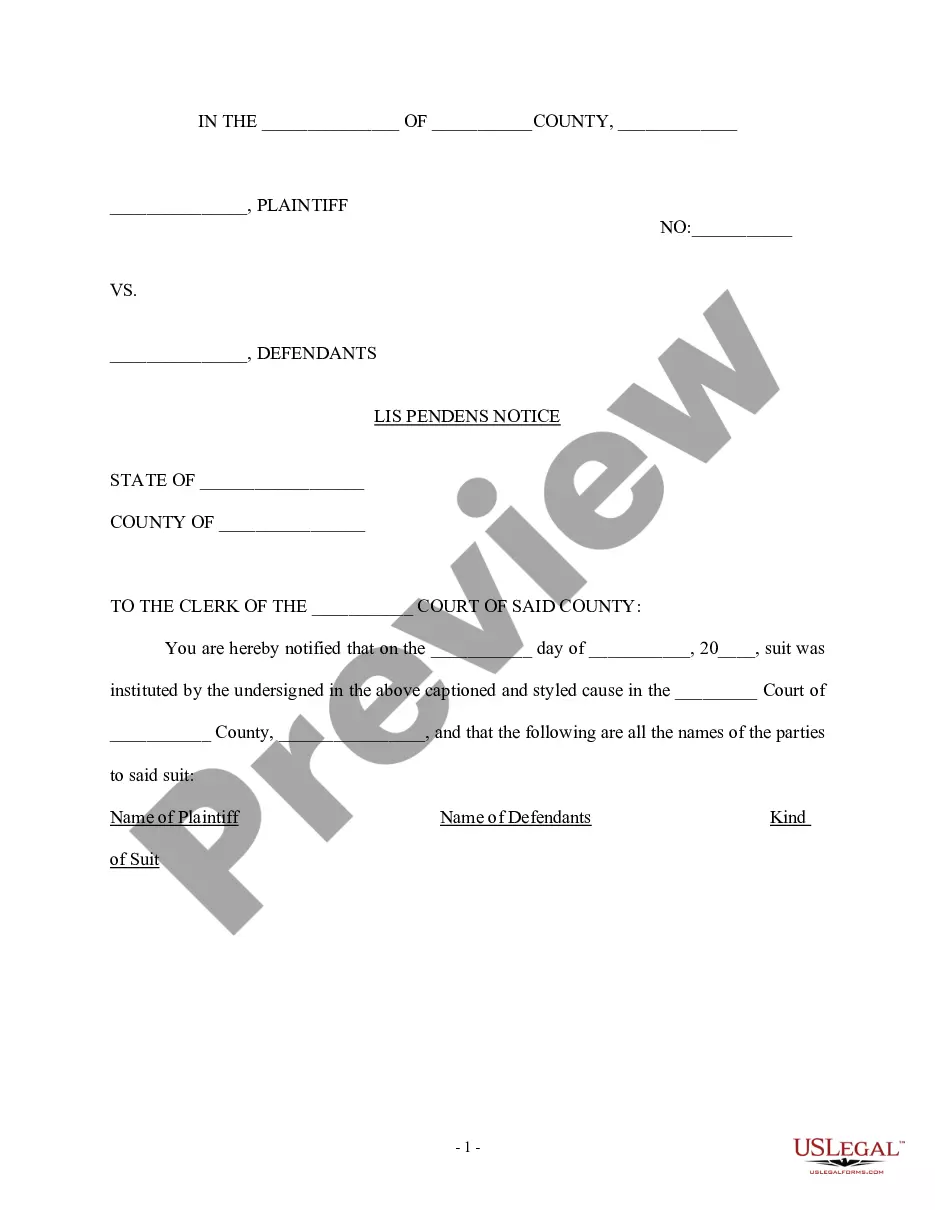

Get your form ready online
Our built-in tools help you complete, sign, share, and store your documents in one place.
Make edits, fill in missing information, and update formatting in US Legal Forms—just like you would in MS Word.
Download a copy, print it, send it by email, or mail it via USPS—whatever works best for your next step.
Sign and collect signatures with our SignNow integration. Send to multiple recipients, set reminders, and more. Go Premium to unlock E-Sign.
If this form requires notarization, complete it online through a secure video call—no need to meet a notary in person or wait for an appointment.
We protect your documents and personal data by following strict security and privacy standards.

Make edits, fill in missing information, and update formatting in US Legal Forms—just like you would in MS Word.

Download a copy, print it, send it by email, or mail it via USPS—whatever works best for your next step.

Sign and collect signatures with our SignNow integration. Send to multiple recipients, set reminders, and more. Go Premium to unlock E-Sign.

If this form requires notarization, complete it online through a secure video call—no need to meet a notary in person or wait for an appointment.

We protect your documents and personal data by following strict security and privacy standards.
Looking for another form?







Form popularity
FAQ
Basically, a Lis Pendens is written notice that's recorded in the county recorder's records where the real estate is located and that gives notice than an action, a lawsuit involving title to the real estate is pending.
First, search by your address or parcel number to locate your property. The current deed will be located under the "Deed Number" under the section "Owner Information". Once you locate your document, you may view an unofficial copy online. Select the colored box under the section "Pages" to view your document.
You will find a recorded deed through the local county government office in which your property is located. The correct office or division will vary from county to county, but it is typically along the lines of your county register, registrar, clerk, or recorder's office.
Documents evidencing a transfer of title of real property must include a complete legal description and be accompanied by an "Affidavit of Property Value," as set forth in A.R.S. 11-1133 .
First, search by your address or parcel number to locate your property. The current deed will be located under the "Deed Number" under the section "Owner Information". Once you locate your document, you may view an unofficial copy online. Select the colored box under the section "Pages" to view your document.
Lis pendens is a legal means for serving notice to anyone concerned with a piece of real estate that there is a claim and pending legal action against the property. It is important because it notifies potential buyers that another party has a claim to the property.
To file a lis pendens, the party filing must have or show one of two things: That there is a recorded instrument, usually some mortgage or encumbrance, or perhaps something related to a construction mechanics lien—that potentially provides the filer the right to the property on or in the document.
Basically, a Lis Pendens is written notice that's recorded in the county recorder's records where the real estate is located and that gives notice than an action, a lawsuit involving title to the real estate is pending.
File a request with the court to remove the lis pendens. Provide the legal reasons the lis pendens is improper, offering proof, for example, that the lis pendens affects real estate that is not connected to the litigation. If the lawsuit is frivolous and merely intended to harass the property owner, offer proof.
In the realm of law, the term pending refers to a situation where a legal matter, such as a lawsuit or a legal action, has been initiated but is yet to be resolved or concluded.

