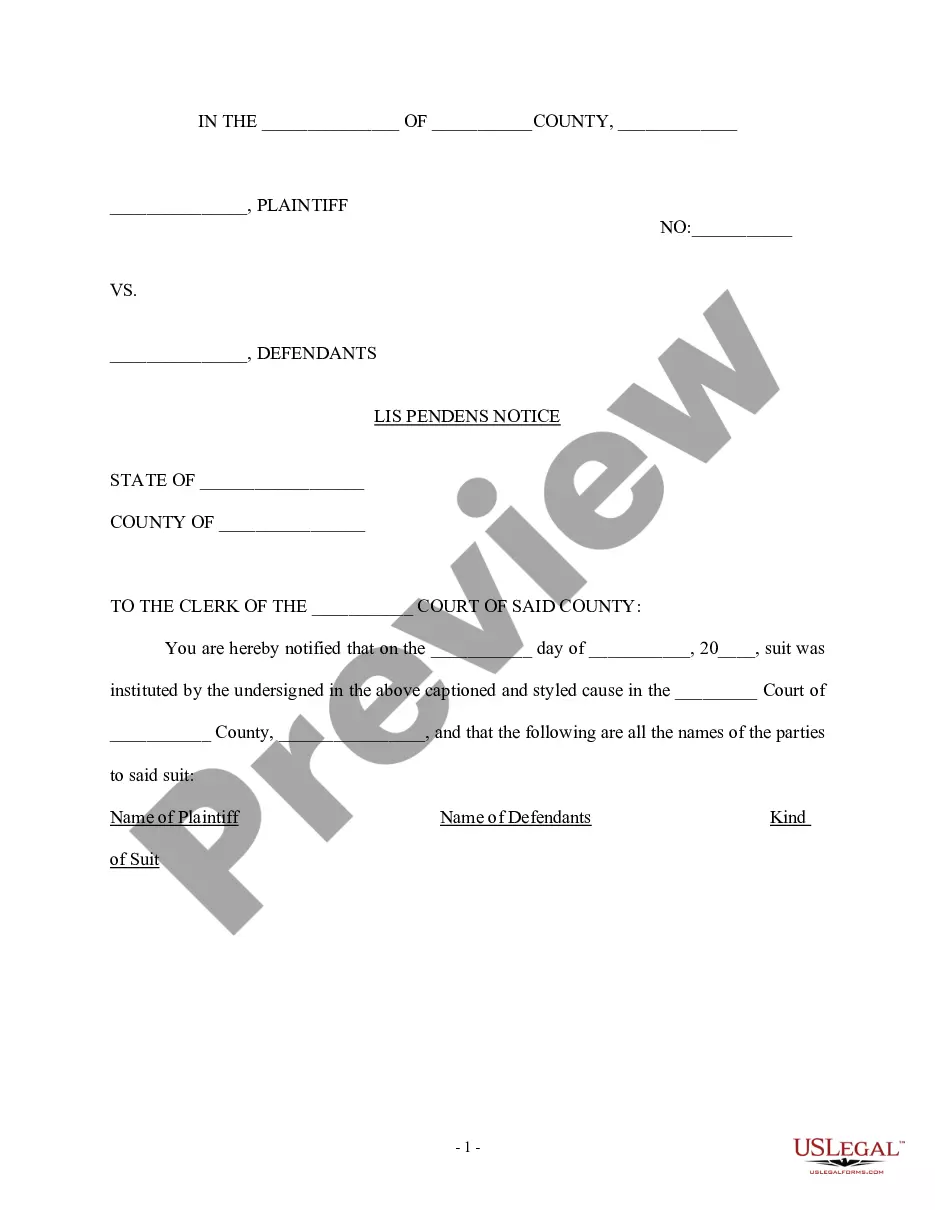
Lis Pendens In Missouri In Allegheny
Description

Get your form ready online
Our built-in tools help you complete, sign, share, and store your documents in one place.
Make edits, fill in missing information, and update formatting in US Legal Forms—just like you would in MS Word.
Download a copy, print it, send it by email, or mail it via USPS—whatever works best for your next step.
Sign and collect signatures with our SignNow integration. Send to multiple recipients, set reminders, and more. Go Premium to unlock E-Sign.
If this form requires notarization, complete it online through a secure video call—no need to meet a notary in person or wait for an appointment.
We protect your documents and personal data by following strict security and privacy standards.

Make edits, fill in missing information, and update formatting in US Legal Forms—just like you would in MS Word.

Download a copy, print it, send it by email, or mail it via USPS—whatever works best for your next step.

Sign and collect signatures with our SignNow integration. Send to multiple recipients, set reminders, and more. Go Premium to unlock E-Sign.

If this form requires notarization, complete it online through a secure video call—no need to meet a notary in person or wait for an appointment.

We protect your documents and personal data by following strict security and privacy standards.
Looking for another form?








Form popularity
FAQ
To file a lis pendens, the party filing must have or show one of two things: That there is a recorded instrument, usually some mortgage or encumbrance, or perhaps something related to a construction mechanics lien—that potentially provides the filer the right to the property on or in the document.
After the action is resolved, the attorney for the plaintiff should file a praecipe to remove the lis pendens and resulting cloud on title. Note that if a defendant believes a lis pendens has been filed improperly, it may make a motion with the court to have it stricken.
File a request with the court to remove the lis pendens. Provide the legal reasons the lis pendens is improper, offering proof, for example, that the lis pendens affects real estate that is not connected to the litigation. If the lawsuit is frivolous and merely intended to harass the property owner, offer proof.
How Long Does a Lis Pendens Last in Pennsylvania? Under Pennsylvania law, a Lis Pendens typically remains recorded for a period of fifteen years. This duration provides adequate notice to interested parties about ongoing litigation or other legal actions involving the real property.
In Pennsylvania, Lis Pendens is a legal term meaning “lawsuit pending” and serves as a public notice filed against a property involved in litigation. It signals to prospective buyers that the property is subject to a claim.
Sign the lis pendens document in the presence of a notary. File the lis pendens with the courthouse in the county where the property is located. Serve a notice of the lis pendens on involved parties, such as the property owner, if required.
Other than resolution of the pending lawsuit, the only way to remove a lis pendens is by expungement, which requires a court order from a circuit judge. If you refuse service or the action is otherwise delayed, the lis pendens remains intact, making it difficult to sell or otherwise transfer a property.
But, courts allow a maximum of 10 years to discover an injury. In cases involving wrongful death, Missouri typically gives a three-year window to file a lawsuit. The longest time limit, 10 years, is for civil suits related to fraud, rent collection, debt collection, and judgments.
Lis pendens means “pending lawsuit.” Under common law, filing a complaint “concerning real property” was constructive notice to buyers that they would take subject to the suit. Oregon now requires plaintiffs to record a separate Notice of Lis Pendens to secure their interest in the property.

