Stock Issuance Formula
Description




Get your form ready online
Our built-in tools help you complete, sign, share, and store your documents in one place.
Make edits, fill in missing information, and update formatting in US Legal Forms—just like you would in MS Word.
Download a copy, print it, send it by email, or mail it via USPS—whatever works best for your next step.
Sign and collect signatures with our SignNow integration. Send to multiple recipients, set reminders, and more. Go Premium to unlock E-Sign.
If this form requires notarization, complete it online through a secure video call—no need to meet a notary in person or wait for an appointment.
We protect your documents and personal data by following strict security and privacy standards.

Make edits, fill in missing information, and update formatting in US Legal Forms—just like you would in MS Word.

Download a copy, print it, send it by email, or mail it via USPS—whatever works best for your next step.

Sign and collect signatures with our SignNow integration. Send to multiple recipients, set reminders, and more. Go Premium to unlock E-Sign.

If this form requires notarization, complete it online through a secure video call—no need to meet a notary in person or wait for an appointment.

We protect your documents and personal data by following strict security and privacy standards.
Looking for another form?








How to fill out Issue Capital Stock - Resolution Form - Corporate Resolutions?
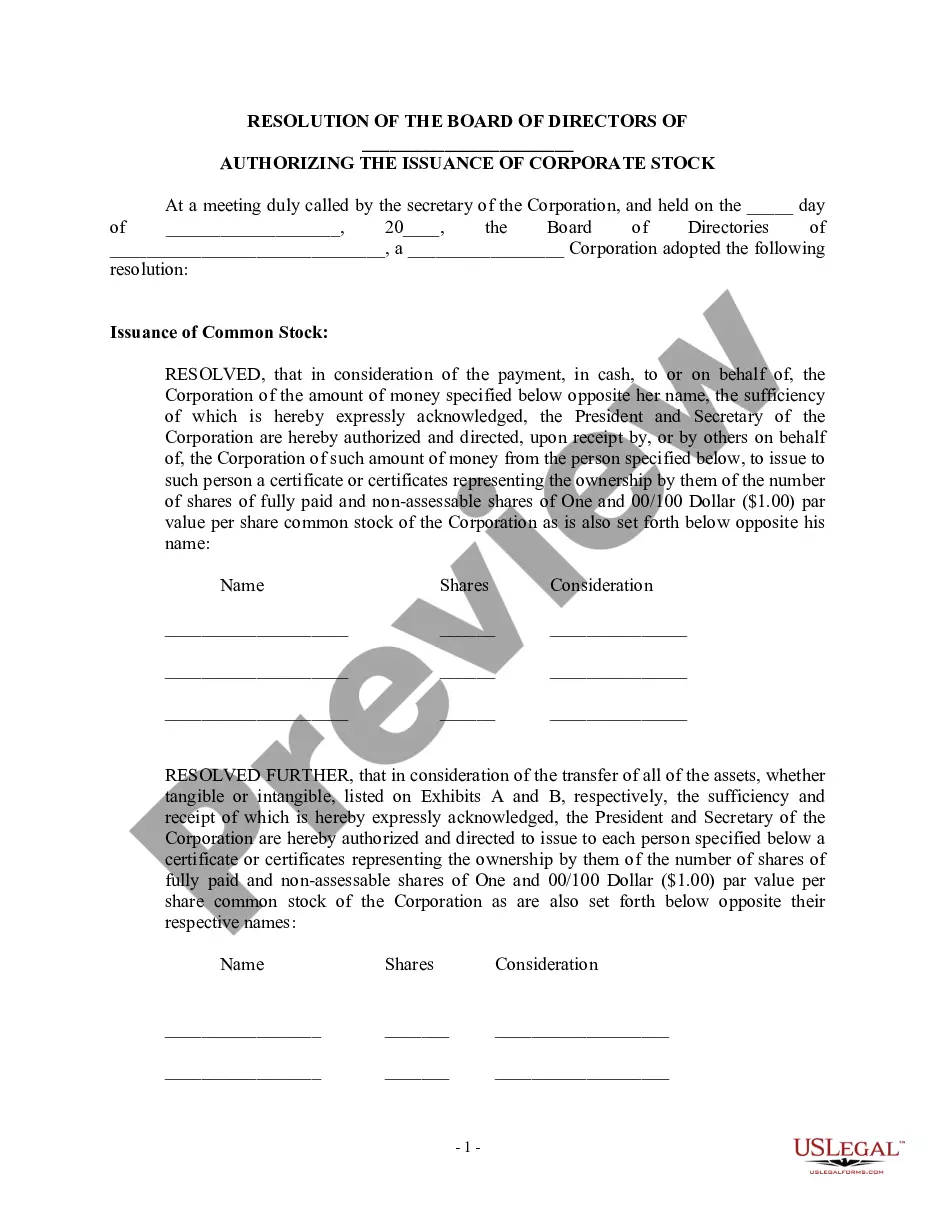
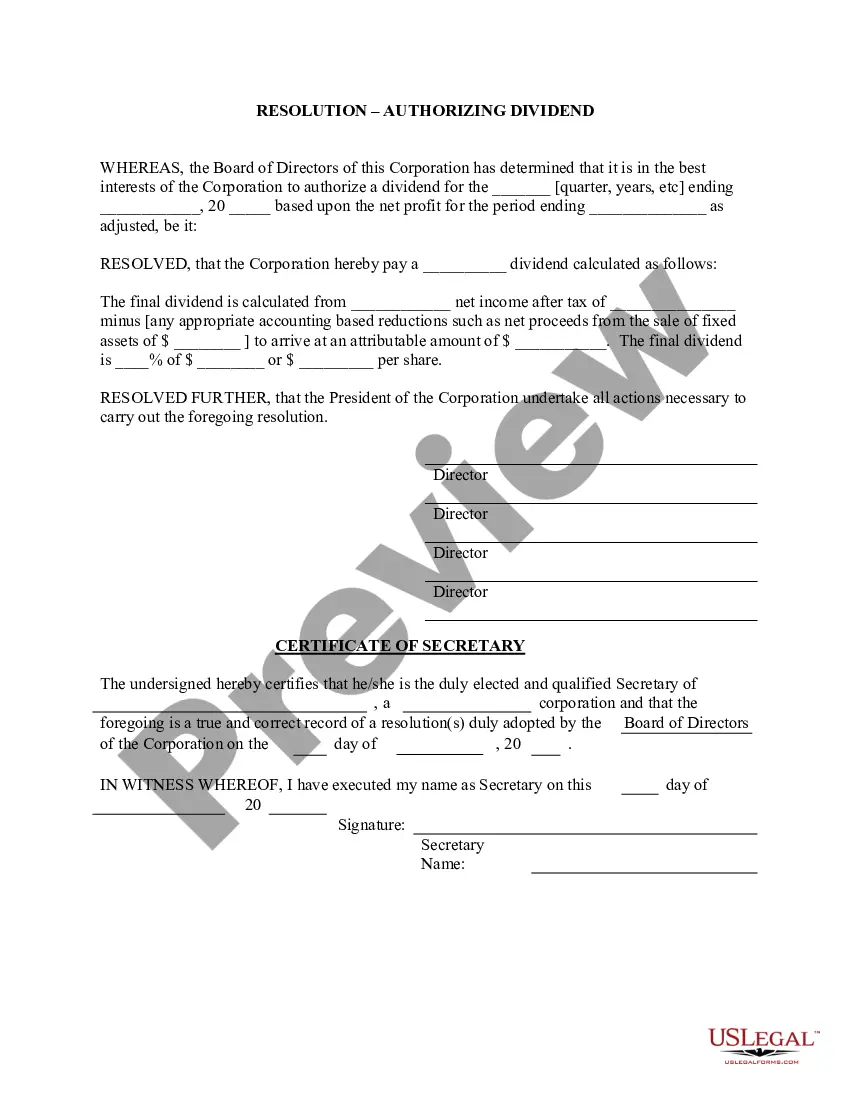
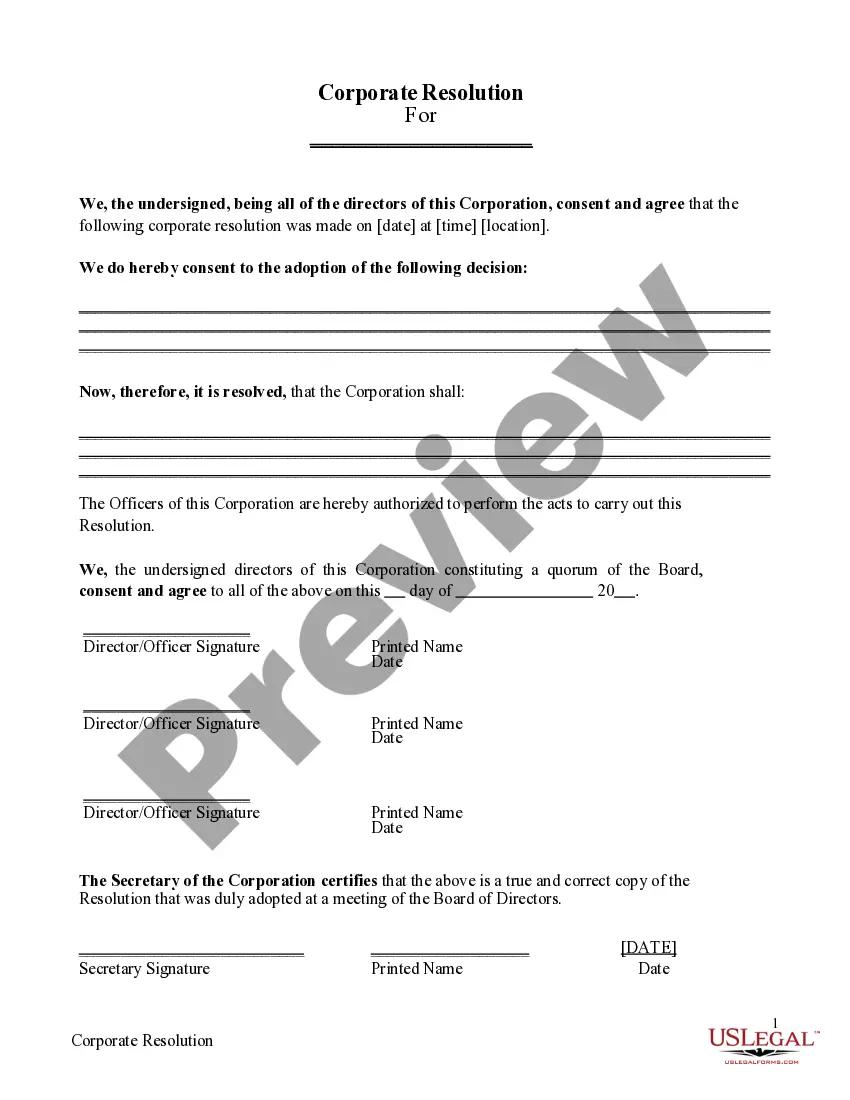
Legal papers management may be frustrating, even for skilled experts. When you are searching for a Stock Issuance Formula and do not get the a chance to spend looking for the correct and up-to-date version, the procedures could be demanding. A strong web form library can be a gamechanger for everyone who wants to handle these situations efficiently. US Legal Forms is a market leader in web legal forms, with more than 85,000 state-specific legal forms accessible to you at any moment.
With US Legal Forms, you are able to:
- Access state- or county-specific legal and organization forms. US Legal Forms handles any needs you could have, from personal to business papers, in one location.
- Use advanced tools to complete and handle your Stock Issuance Formula
- Access a resource base of articles, guides and handbooks and resources related to your situation and requirements
Save time and effort looking for the papers you will need, and make use of US Legal Forms’ advanced search and Preview tool to discover Stock Issuance Formula and get it. In case you have a membership, log in for your US Legal Forms profile, search for the form, and get it. Take a look at My Forms tab to view the papers you previously saved as well as to handle your folders as you see fit.
Should it be the first time with US Legal Forms, create an account and get unrestricted usage of all advantages of the library. Here are the steps to take after downloading the form you want:
- Confirm this is the proper form by previewing it and looking at its information.
- Be sure that the sample is accepted in your state or county.
- Choose Buy Now once you are all set.
- Select a subscription plan.
- Pick the format you want, and Download, complete, sign, print and deliver your document.
Enjoy the US Legal Forms web library, backed with 25 years of expertise and stability. Change your daily document management into a easy and easy-to-use process right now.
Form popularity
FAQ
The number of issued shares is recorded on a company's balance sheet as capital stock, or owners' equity, while shares outstanding (issued shares minus any shares in the treasury) are listed on the company's quarterly filings with the Securities and Exchange Commission (SEC).
Stock issuances DebitCash or other item received(shares issued x price paid per share) or market value of item receivedCreditCommon (or Preferred) Stock(shares issued x PAR value)CreditPaid in capital in excess of par value, common (or preferred) stock(difference between value received and par value of stock)
1. If the IPO is successful/approved, the cost of issuing the shares will reduce the additional paid-in capital/share premium; 2. If the IPO fails / is not approved, then the cost of issuing the shares must be classified as an expense.
How is common stock calculated? The formula for calculating common stock is Common Stock = Total Equity ? Preferred Stock ? Additional Paid-in Capital ? Retained Earnings + Treasury Stock.
A company issues common stock to raise money, so the debit will always be to cash. There will always be a credit to common stock for the # of shares issued x the par value. Additional paid-in capital (APIC) is the plug.