Patent Trademark Law For Dummies In Washington
Description

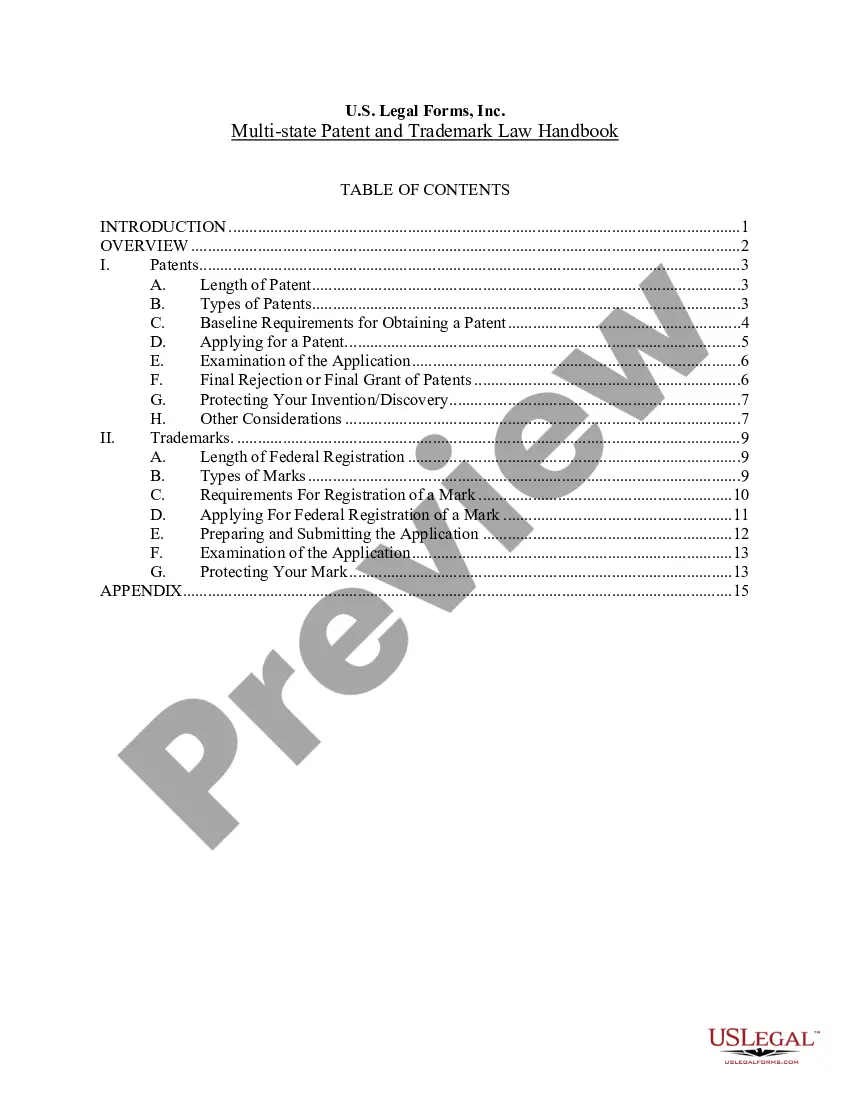
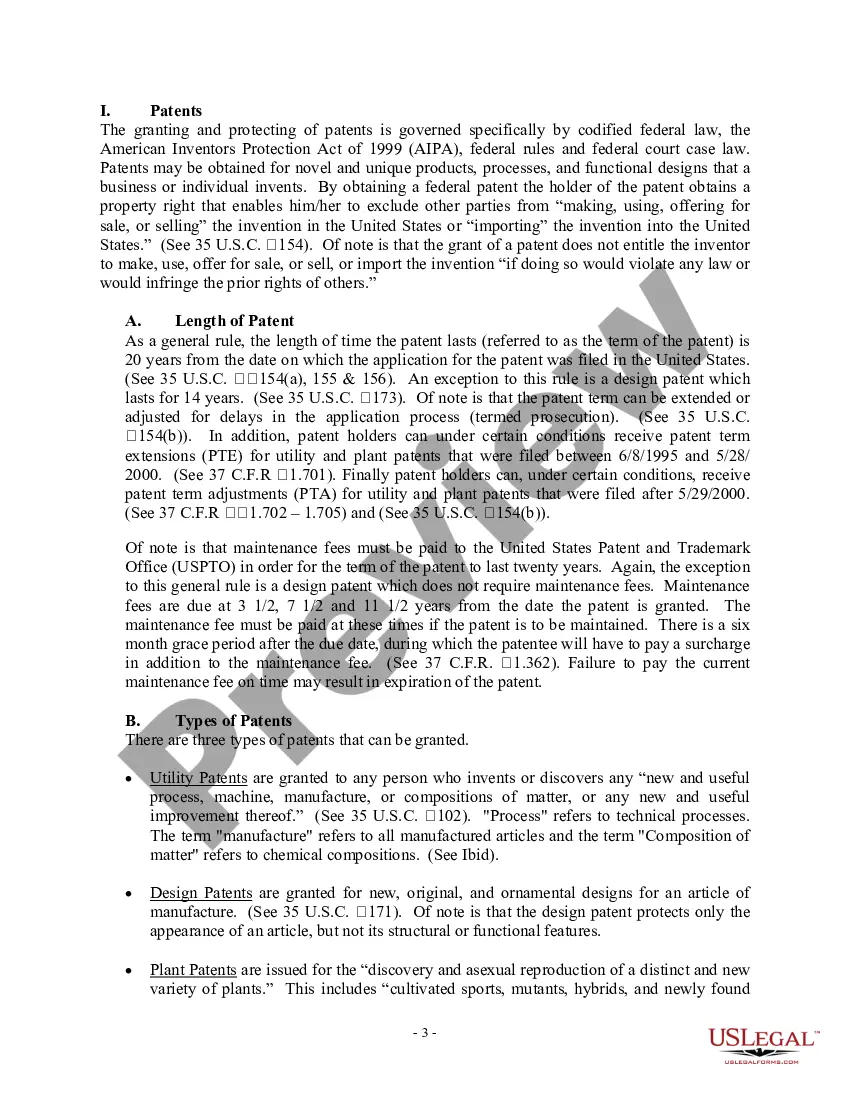



Get your form ready online
Our built-in tools help you complete, sign, share, and store your documents in one place.
Make edits, fill in missing information, and update formatting in US Legal Forms—just like you would in MS Word.
Download a copy, print it, send it by email, or mail it via USPS—whatever works best for your next step.
Sign and collect signatures with our SignNow integration. Send to multiple recipients, set reminders, and more. Go Premium to unlock E-Sign.
If this form requires notarization, complete it online through a secure video call—no need to meet a notary in person or wait for an appointment.
We protect your documents and personal data by following strict security and privacy standards.

Make edits, fill in missing information, and update formatting in US Legal Forms—just like you would in MS Word.

Download a copy, print it, send it by email, or mail it via USPS—whatever works best for your next step.

Sign and collect signatures with our SignNow integration. Send to multiple recipients, set reminders, and more. Go Premium to unlock E-Sign.

If this form requires notarization, complete it online through a secure video call—no need to meet a notary in person or wait for an appointment.

We protect your documents and personal data by following strict security and privacy standards.
Looking for another form?






Form popularity
FAQ
Understanding the different types of intellectual property is an important knowledge that all in-house counsel should master. Patents, trademarks, copyrights, and trade secrets are valuable assets of the company and understanding how they work and how they are created is critical to knowing how to protect them.
Instead, patent attorneys aim to settle IP disputes outside of court through means such as cease and desist letters, opposition proceedings and revocation actions. Conversely, IP lawyers specialise in the legal and commercial issues that are associated with IP.
Instead, patent attorneys aim to settle IP disputes outside of court through means such as cease and desist letters, opposition proceedings and revocation actions. Conversely, IP lawyers specialise in the legal and commercial issues that are associated with IP.
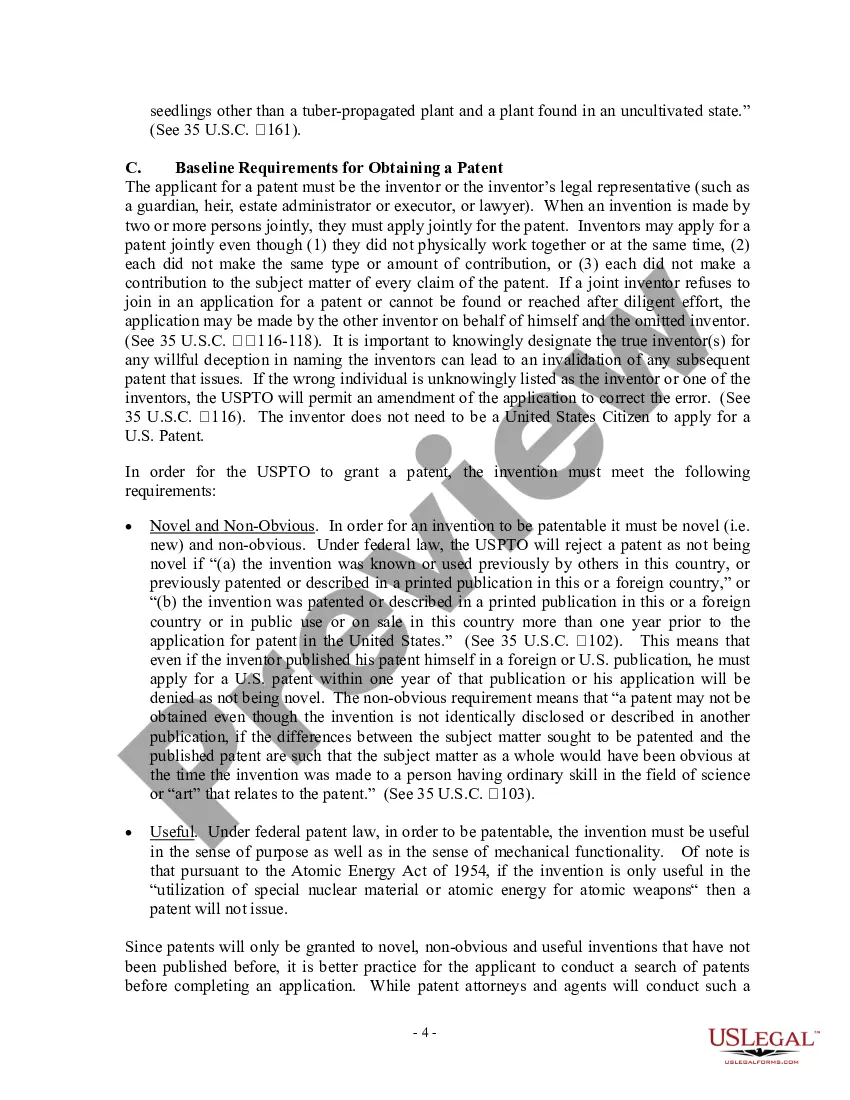
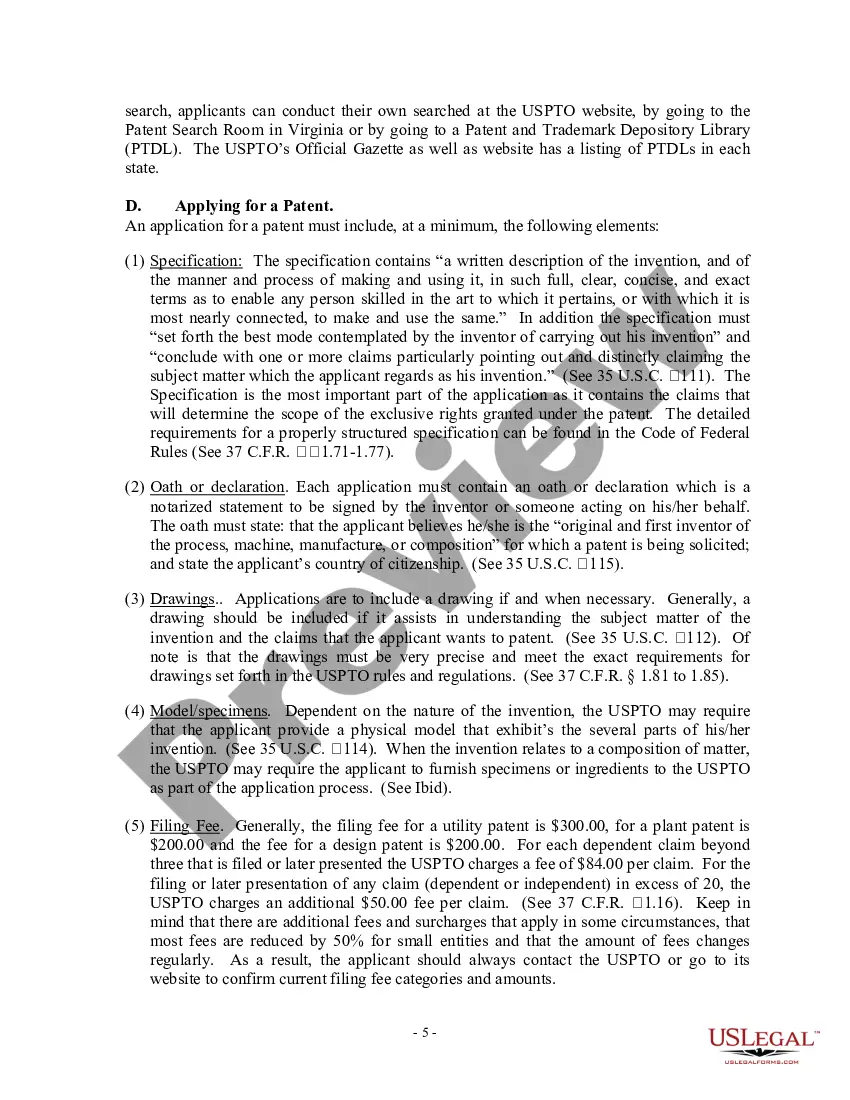
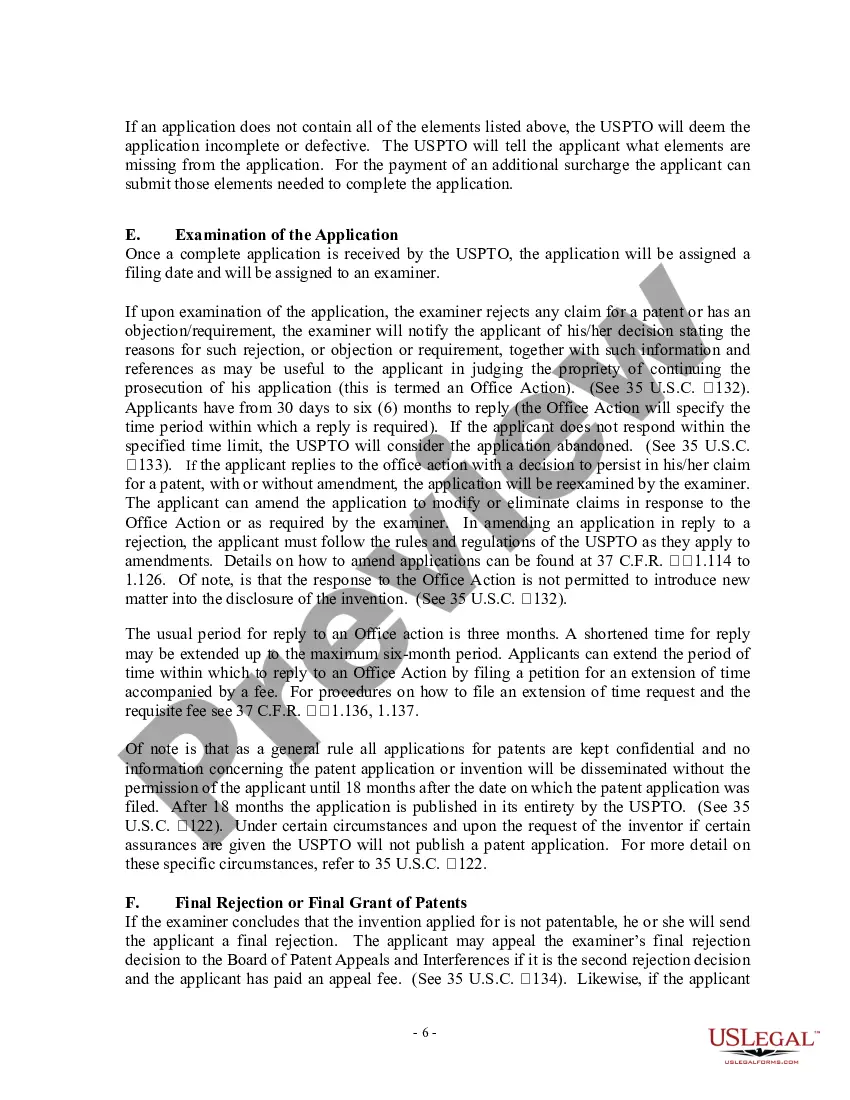
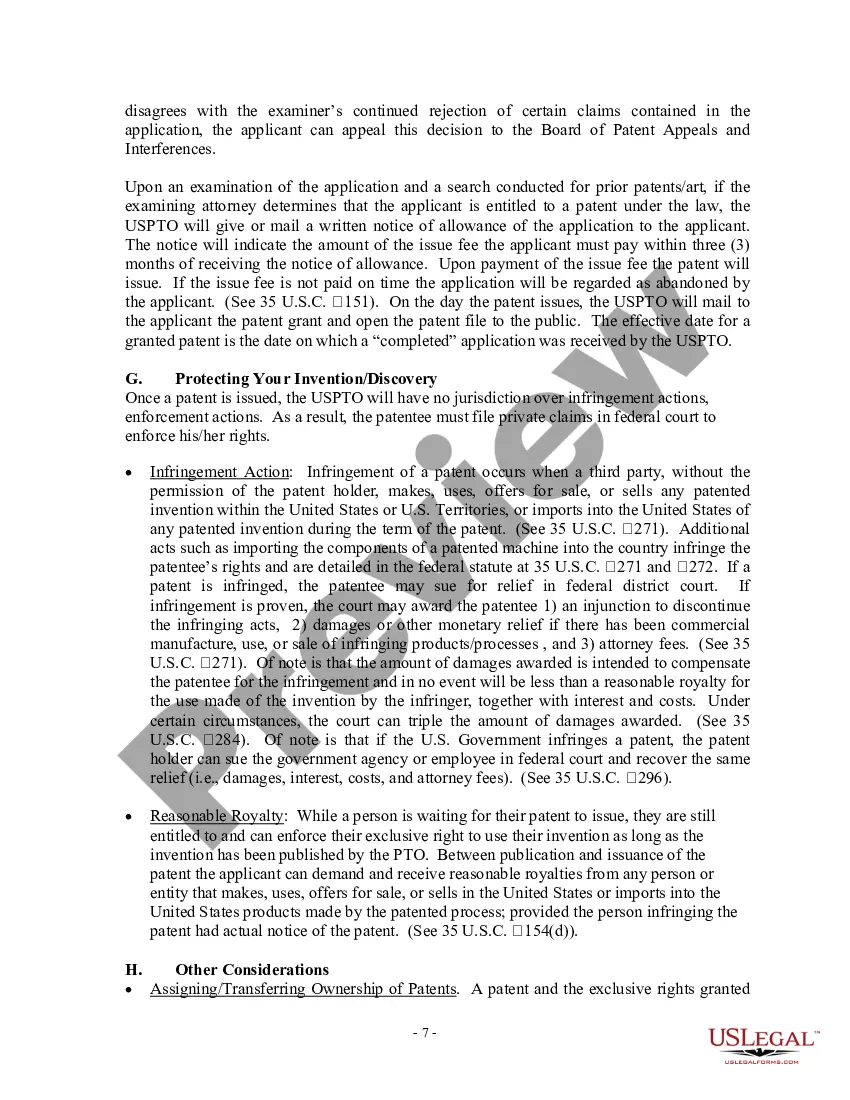
Patents can protect the functional features of a process, machine, manufactured item, asexually reproduced plant, or composition of matter, for example. TRADEMARK LAW. Trademark law protects words, phrases, logos or symbols used to distinguish one product from another.
Key Differences Between Patent Prosecution and Litigation Focus: Patent prosecution focuses on obtaining patent rights from the patent office, while patent litigation is adversarial involving the enforcement, validity, or defense of rights in court or before an administrative board.
In short, a patent attorney obtains the IP rights for a client helps in asserting or defending those rights; and an IP solicitor deals with in-depth litigation of IP rights. If you have an idea or invention which needs protecting, you need to speak with a patent attorney rather than an IP lawyer/solicitor.
Copyright is a mechanisms that can be used to protect the tangible expressions of your intellectual property. Copyright applies to particular literary and artistic works, but doesn't cover ideas, methods, designs or other intangible ideas. These may be protected by other aspects of IP law.
The Patent Process Determine the type of intellectual property you need. Determine if your invention is patentable. Determine what kind of patent you need. Get ready to apply. Submit your application. Work with your examiner. Receive your approval. Maintain your patent.
You can have both a trademark and a patent, though they won't be for exactly the same thing. A trademark can protect a creation's name, for example, and a patent can protect the actual creation itself.
The cheapest way to get a trademark is to file a state trademark application, which is typically less expensive than a federal trademark application.