Patent Trademark Law For Engineers And Scientists In Travis

State:
Multi-State
County:
Travis
Control #:
US-003HB
Format:
Word; 
PDF; 
Rich Text
187 downloads

Description

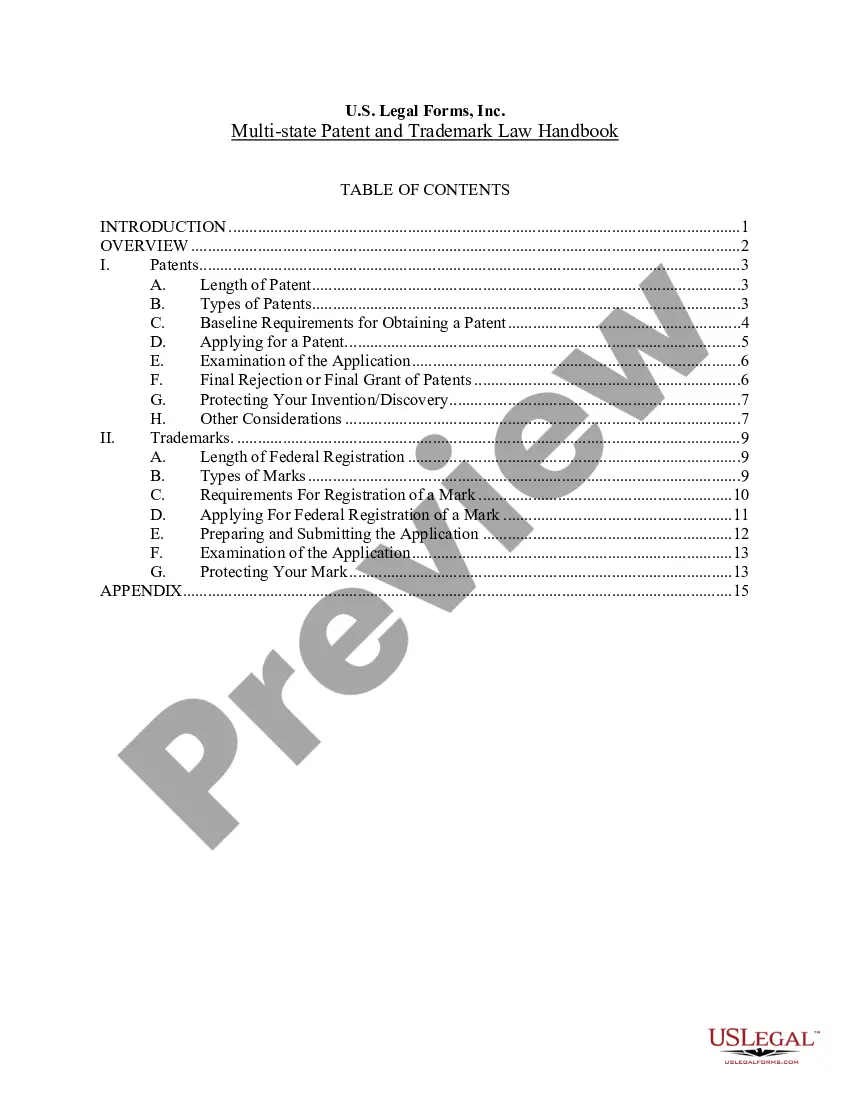
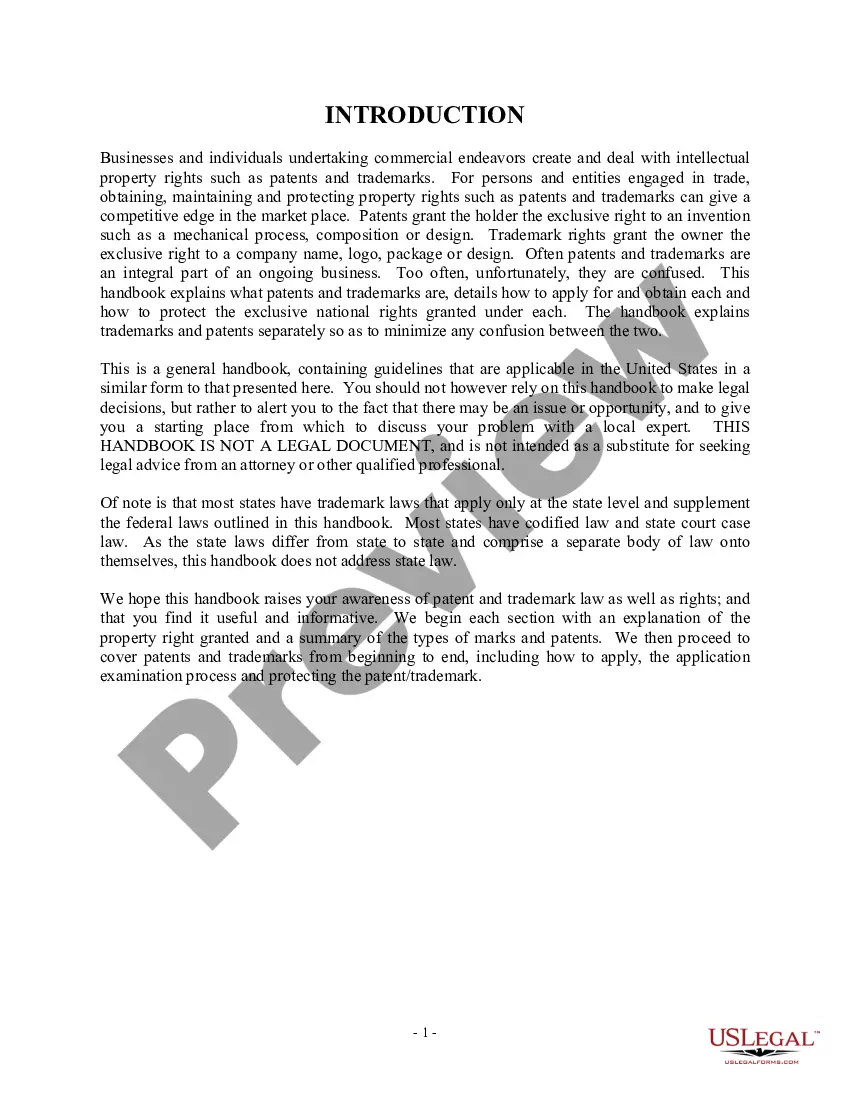
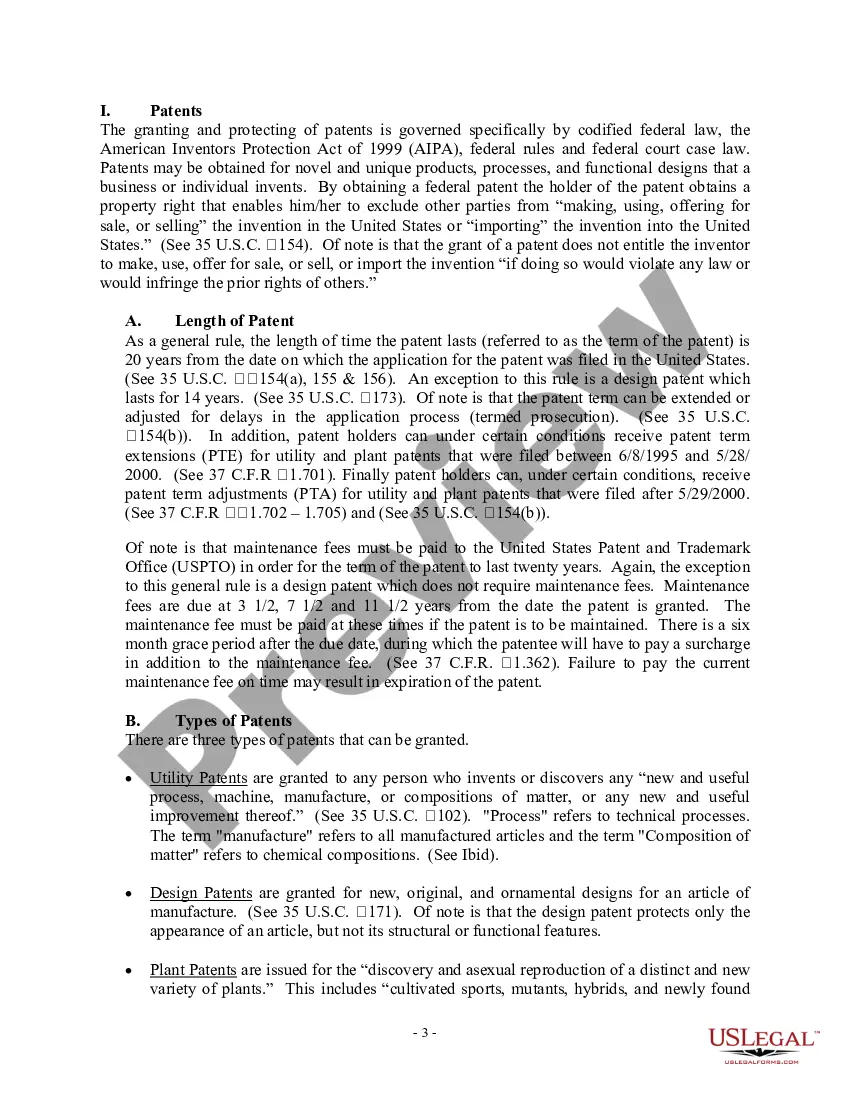
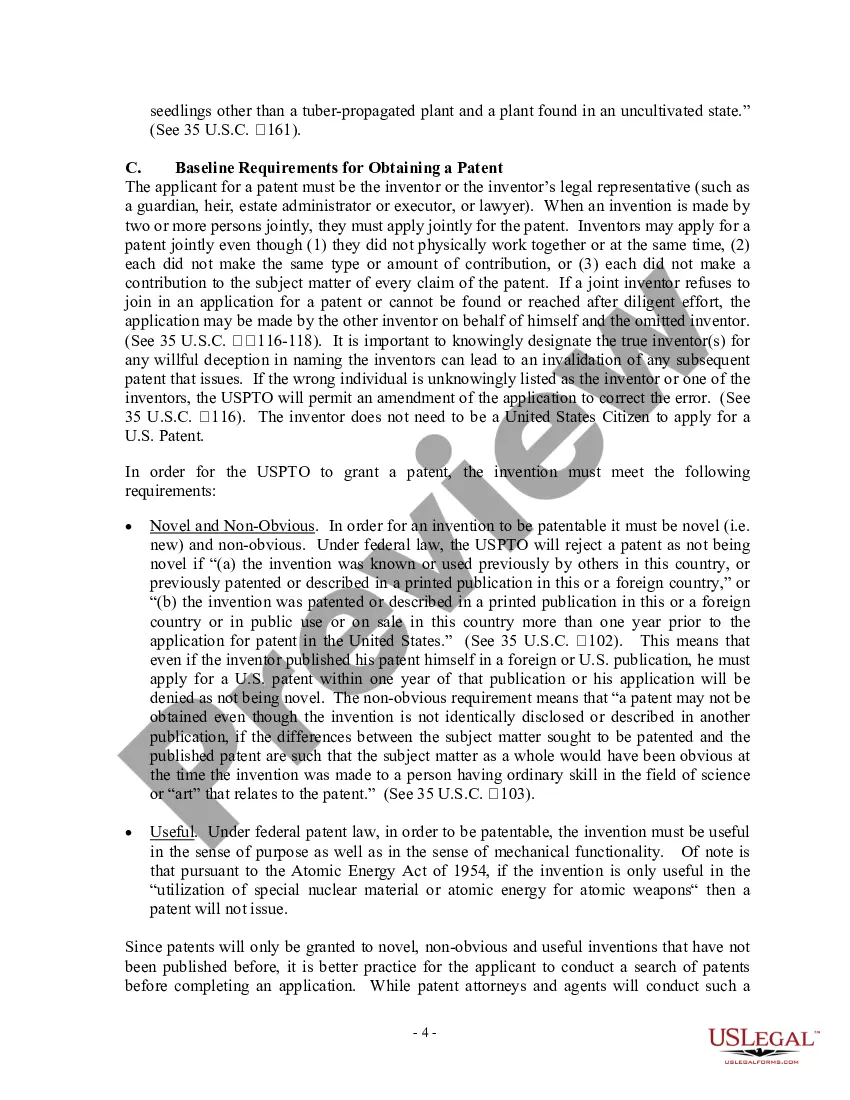
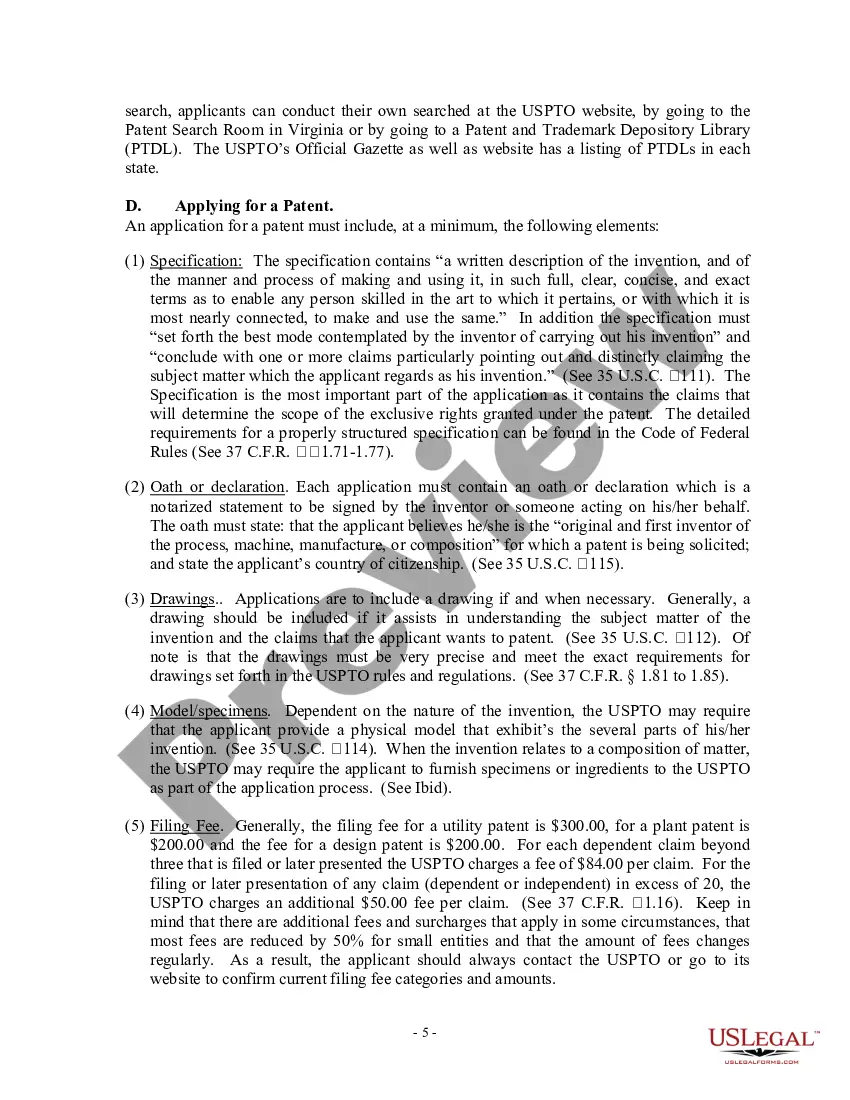
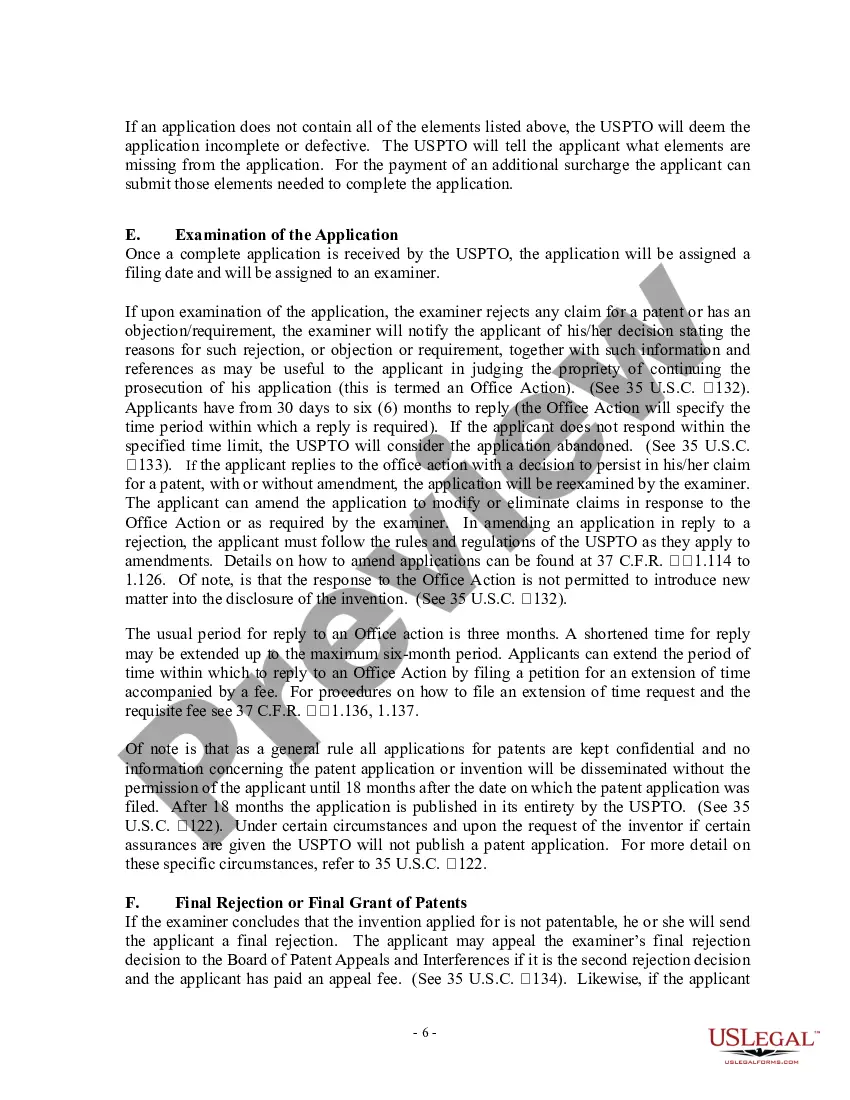
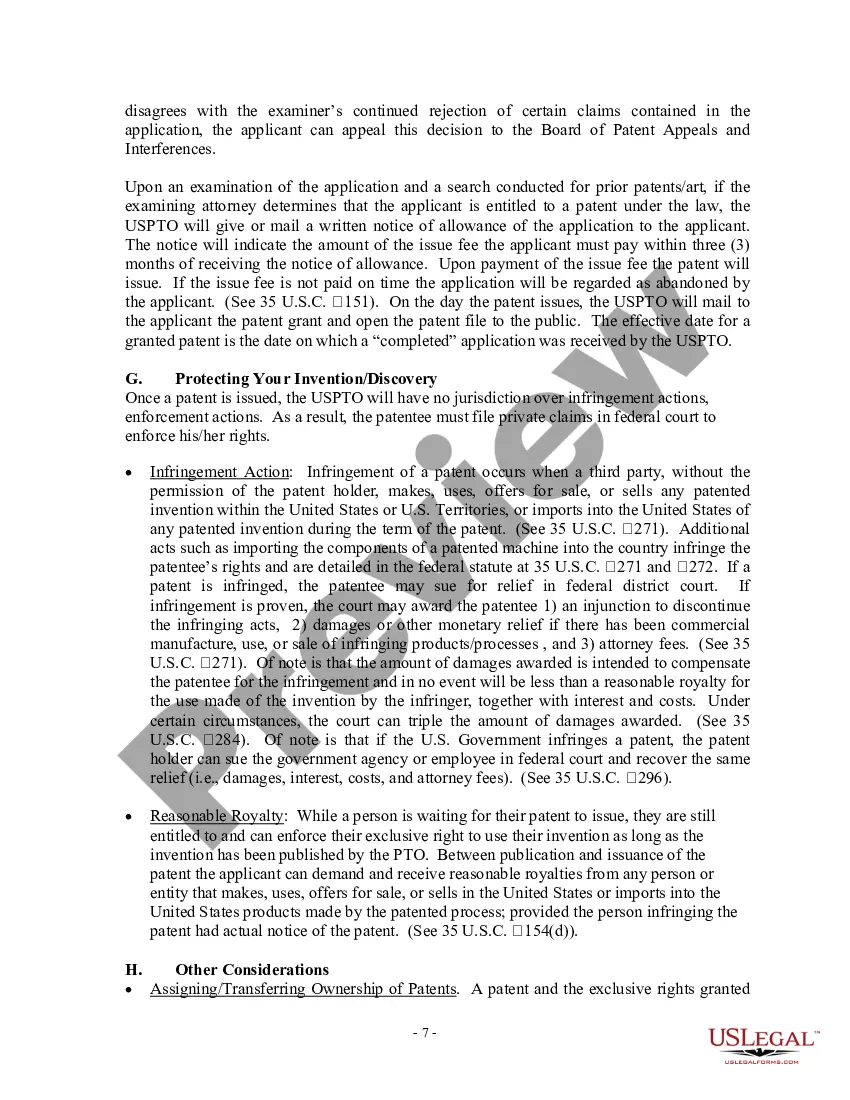
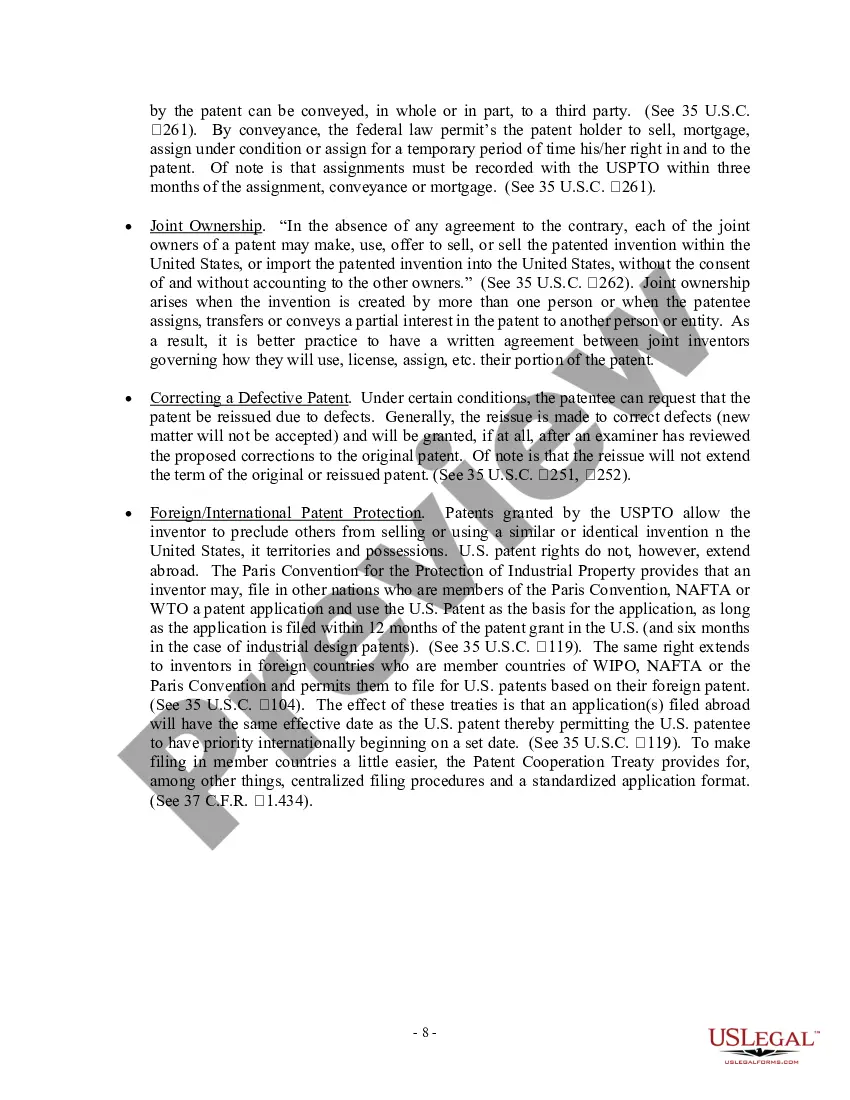
The Multi-State Patent and Trademark Law Handbook provides an essential overview of the laws surrounding patents and trademarks in the United States, specifically tailored for engineers and scientists in Travis. It outlines the types of patents available, including utility, design, and plant patents, along with the requirements for obtaining them. The handbook details necessary steps for filing a patent application, such as providing a written specification, drawings, and filing fees, ensuring that users understand the implications of patenting their inventions. For trademarks, it explains the different types of marks, such as service marks and certification marks, as well as the federal registration process, including the importance of maintaining goodwill and the duration of trademarks. The guide empowers users, particularly attorneys, paralegals, and legal assistants, by simplifying complex legal jargon and providing a comprehensive roadmap for protecting intellectual property. Specific utilities include guidance on maintaining patents and trademarks, responding to USPTO inquiries, and understanding infringement actions. This resource assists legal professionals in advising their clients accurately while navigating inventorship, application processes, and enforcement actions.
Free preview
  • Preview USLF Multistate Patent and Trademark Law Handbook - Guide
  • Preview USLF Multistate Patent and Trademark Law Handbook - Guide
  • Preview USLF Multistate Patent and Trademark Law Handbook - Guide
  • Preview USLF Multistate Patent and Trademark Law Handbook - Guide
  • Preview USLF Multistate Patent and Trademark Law Handbook - Guide
  • Preview USLF Multistate Patent and Trademark Law Handbook - Guide
  • Preview USLF Multistate Patent and Trademark Law Handbook - Guide
  • Preview USLF Multistate Patent and Trademark Law Handbook - Guide
  • Preview USLF Multistate Patent and Trademark Law Handbook - Guide
  • Preview USLF Multistate Patent and Trademark Law Handbook - Guide
  • Preview USLF Multistate Patent and Trademark Law Handbook - Guide

Get your form ready online

Our built-in tools help you complete, sign, share, and store your documents in one place.

Built-in online Word editor

Make edits, fill in missing information, and update formatting in US Legal Forms—just like you would in MS Word.

Export easily

Download a copy, print it, send it by email, or mail it via USPS—whatever works best for your next step.

E-sign your document

Sign and collect signatures with our SignNow integration. Send to multiple recipients, set reminders, and more. Go Premium to unlock E-Sign.

Notarize online 24/7

If this form requires notarization, complete it online through a secure video call—no need to meet a notary in person or wait for an appointment.

Store your document securely

We protect your documents and personal data by following strict security and privacy standards.

Form selector

Make edits, fill in missing information, and update formatting in US Legal Forms—just like you would in MS Word.

Form selector

Download a copy, print it, send it by email, or mail it via USPS—whatever works best for your next step.

Form selector

Sign and collect signatures with our SignNow integration. Send to multiple recipients, set reminders, and more. Go Premium to unlock E-Sign.

Form selector

If this form requires notarization, complete it online through a secure video call—no need to meet a notary in person or wait for an appointment.

Form selector

We protect your documents and personal data by following strict security and privacy standards.

Looking for another form?

This field is required
Ohio
Select state

Form popularity

FAQ

Patent applications: the three criteria Novelty. This means that your invention must not have been made public – not even by yourself – before the date of the application. Inventive step. This means that your product or process must be an inventive solution. Industrial applicability.

Here are six steps to become a patent attorney: Earn a science or engineering degree. Take the LSAT. Attend law school. Pass the state bar exam. Pass patent bar and register with USPTO. Consider additional specialized education.

Both Patent Agents and Attorneys must either have a degree (B.S., B.A., Masters or PhD) in science or engineering, or have taken a certain amount of science and/or engineering classes to qualify to sit for an exam called the Patent Bar.

Trusted and secure by over 3 million people of the world’s leading companies

Patent Trademark Law For Engineers And Scientists In Travis