Patent Drafting For Beginners Nptel Assignment Answers In Santa Clara
Description



Get your form ready online
Our built-in tools help you complete, sign, share, and store your documents in one place.
Make edits, fill in missing information, and update formatting in US Legal Forms—just like you would in MS Word.
Download a copy, print it, send it by email, or mail it via USPS—whatever works best for your next step.
Sign and collect signatures with our SignNow integration. Send to multiple recipients, set reminders, and more. Go Premium to unlock E-Sign.
If this form requires notarization, complete it online through a secure video call—no need to meet a notary in person or wait for an appointment.
We protect your documents and personal data by following strict security and privacy standards.

Make edits, fill in missing information, and update formatting in US Legal Forms—just like you would in MS Word.

Download a copy, print it, send it by email, or mail it via USPS—whatever works best for your next step.

Sign and collect signatures with our SignNow integration. Send to multiple recipients, set reminders, and more. Go Premium to unlock E-Sign.

If this form requires notarization, complete it online through a secure video call—no need to meet a notary in person or wait for an appointment.

We protect your documents and personal data by following strict security and privacy standards.
Looking for another form?









Form popularity
FAQ
So here just keep on click on your top left corner. So here you can see the progress outline and youMoreSo here just keep on click on your top left corner. So here you can see the progress outline and you have an assignment here so if you click on this assignments.
F) Drafting of Review Petitions. g) Drafting Appeal for Intellectual Property Appellate Board. h) Filing and Prosecuting Design Applications. l) Coordinating with the Patent Office on various aspects of prosecution of Patent Applications till grant and thereafter.
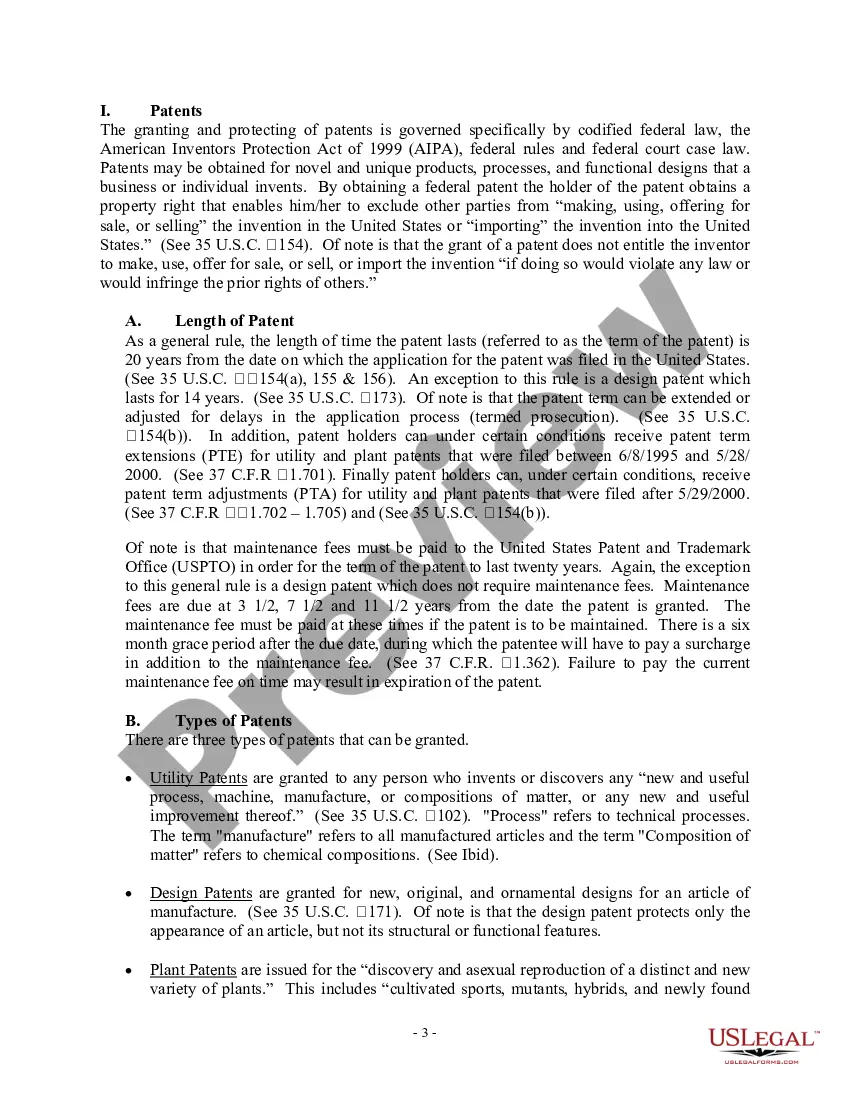
Explore the different types of patents: utility, provisional, design, and plant patents. Patents are legal protections granted for various types of inventions, ensuring inventors exclusive rights to their creations.
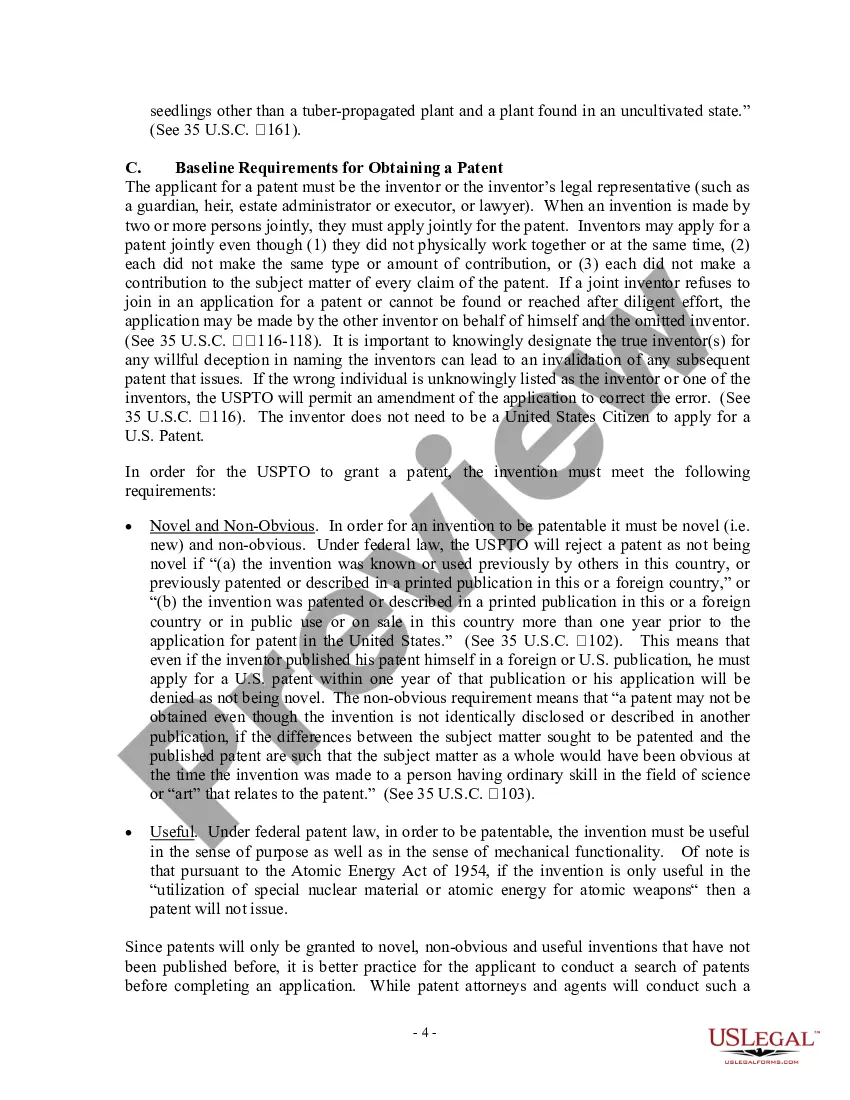
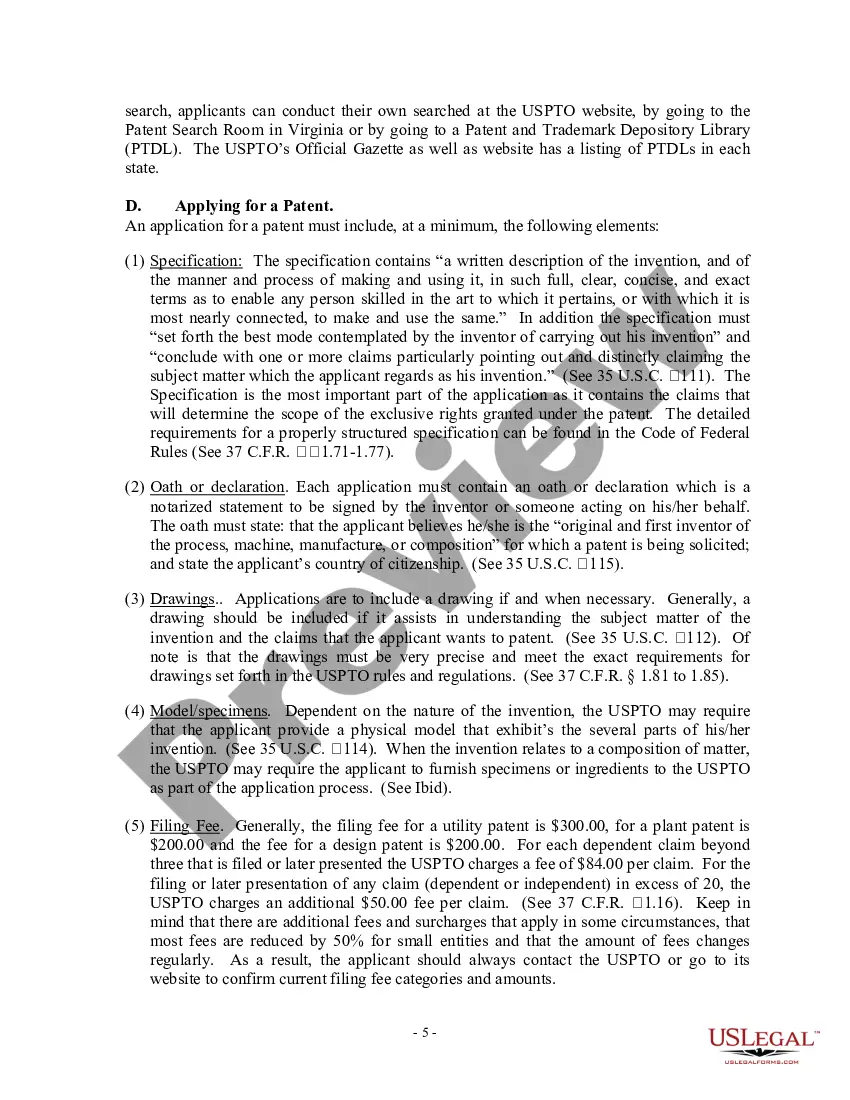
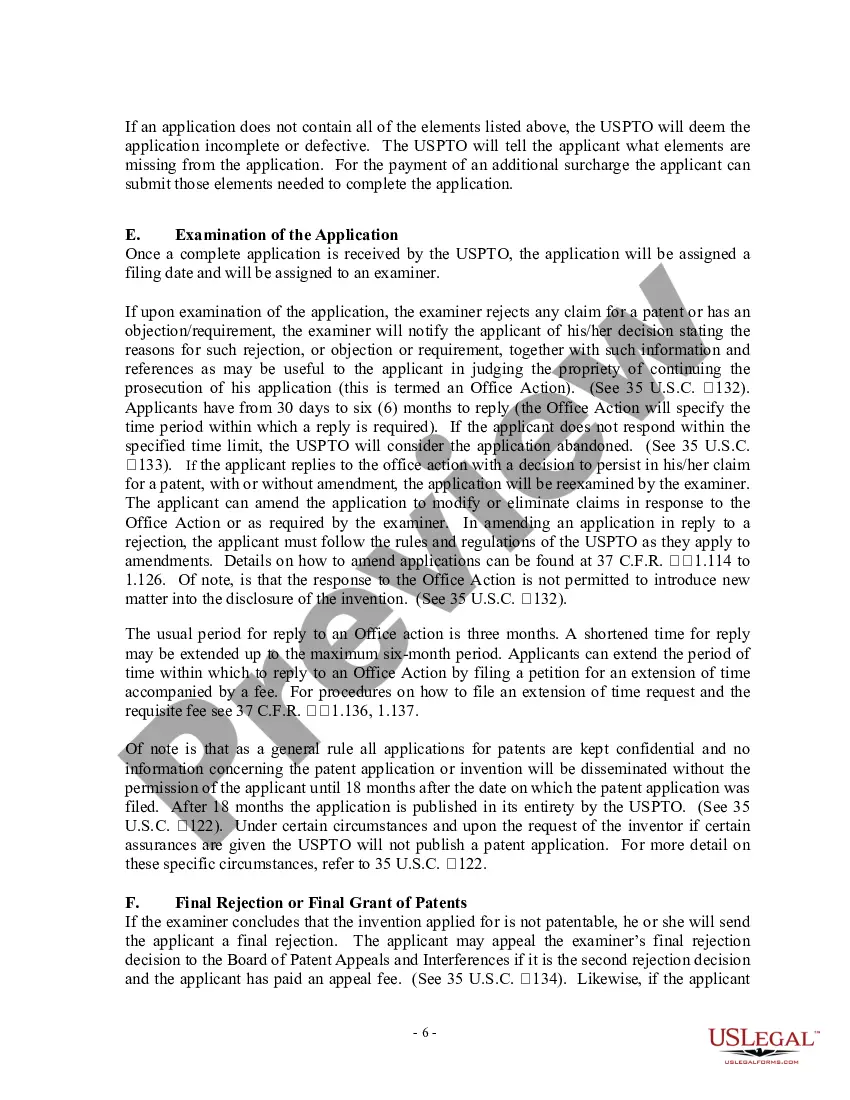
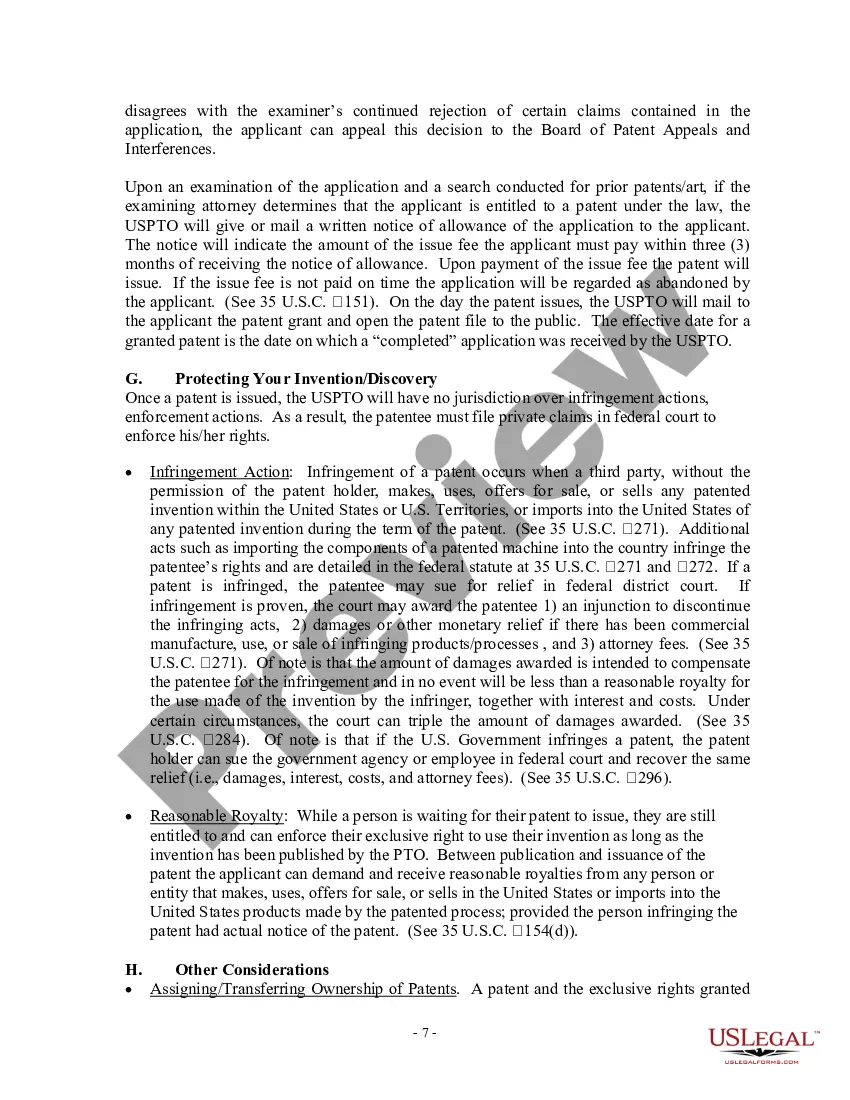
What is a patent? A patent is an exclusive right granted for an invention. Patents benefit inventors by providing them with legal protection of their inventions. However, patents also benefit the society by providing public access to technical information about these inventions, and thus accelerating innovation.
Patent drafting is the process of creating a legal document that describes an invention in detail and is used to apply for a patent. It requires technical expertise, legal knowledge, and the ability to clearly communicate complex ideas.
Patent drafting is the process of preparing a detailed and accurate description of the invention, along with the legal claims that define the scope of protection.
Prior to drafting the patent application, it is advisable to focus on the following points: Understand the given invention disclosure completely. Identify the field of invention and the other possible applications for the invention. Identify the problem, which is solved by the invention.
A patent application often includes the following primary sections: Invention Title. The title's objective is to provide a clear understanding of the invention or idea. Prior Art: Context and Novelty. Invention Summary. Drawings and Descriptions. Detailed Description. Claims. Scope. Characteristics.
For writing the application only (assuming complete disclosure from the inventor and an invention of average complexity) perhaps around 40 hours for an average patent drafter. Of course all of this can be done much faster or slower depending on the particular situation.
