Patent Trademark Law For Engineers In Queens
Description

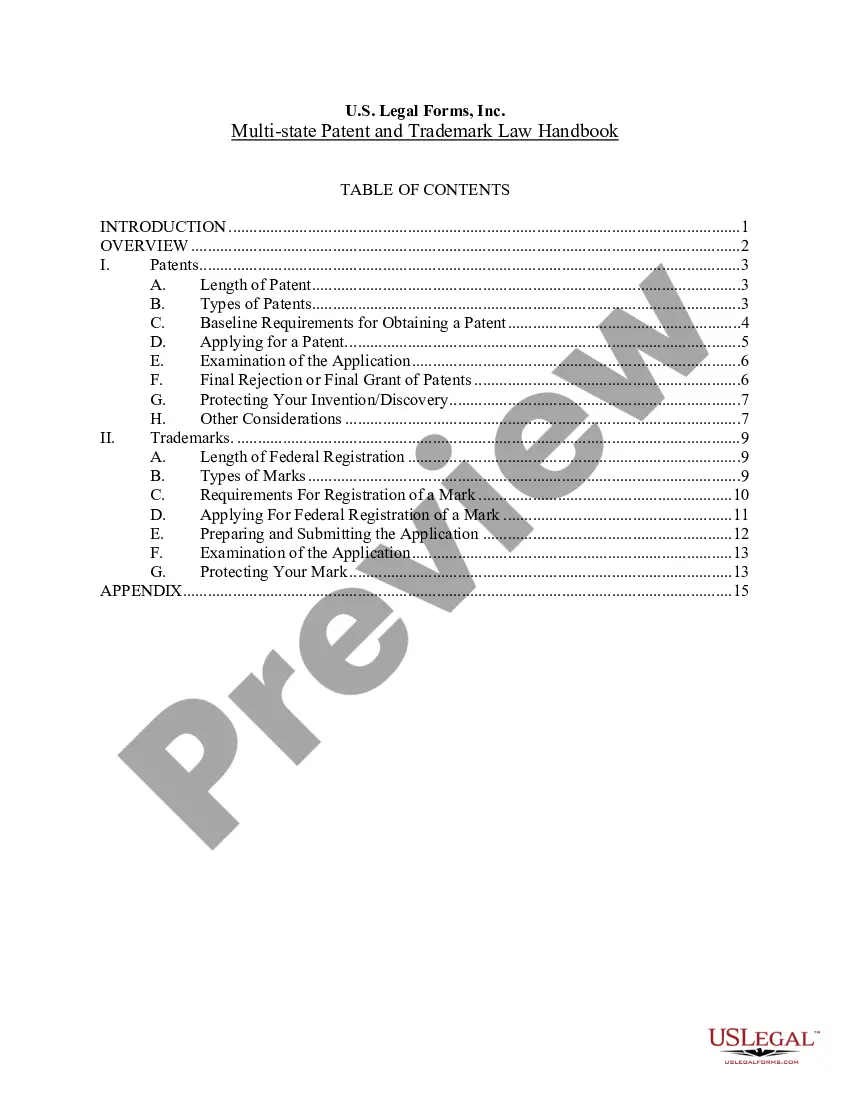
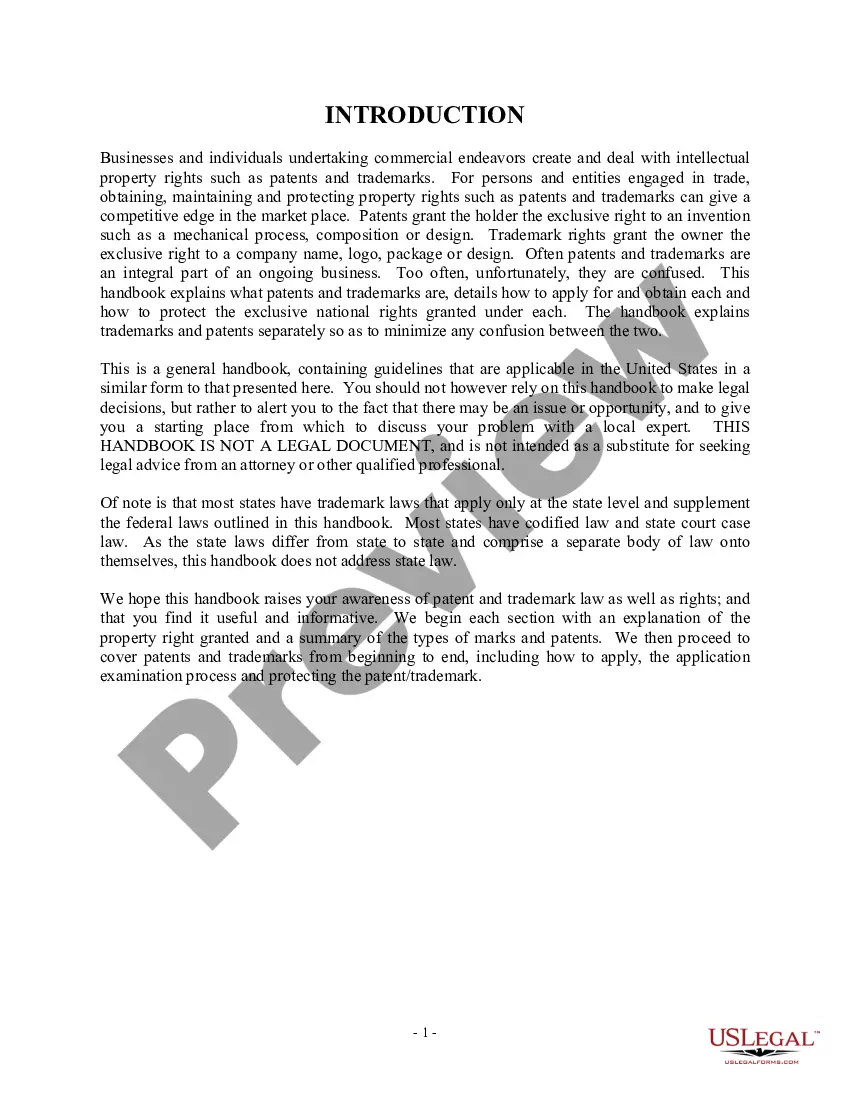
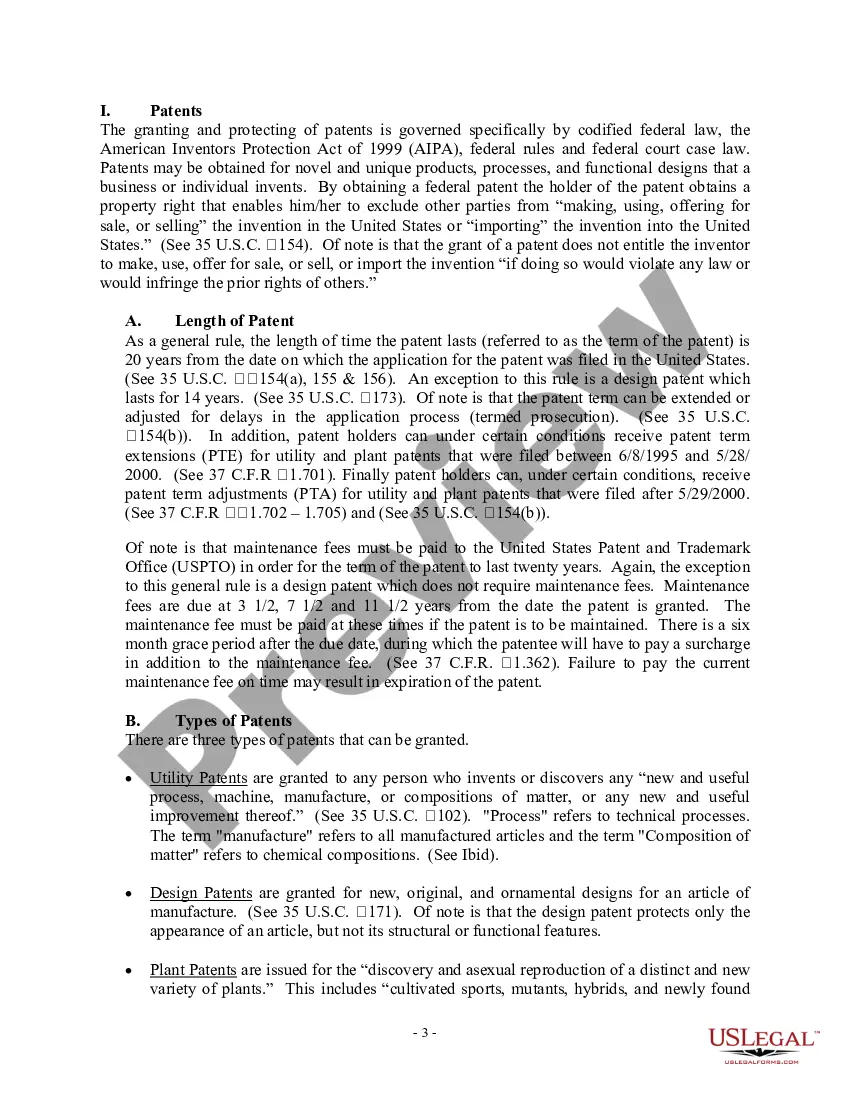



Get your form ready online
Our built-in tools help you complete, sign, share, and store your documents in one place.
Make edits, fill in missing information, and update formatting in US Legal Forms—just like you would in MS Word.
Download a copy, print it, send it by email, or mail it via USPS—whatever works best for your next step.
Sign and collect signatures with our SignNow integration. Send to multiple recipients, set reminders, and more. Go Premium to unlock E-Sign.
If this form requires notarization, complete it online through a secure video call—no need to meet a notary in person or wait for an appointment.
We protect your documents and personal data by following strict security and privacy standards.

Make edits, fill in missing information, and update formatting in US Legal Forms—just like you would in MS Word.

Download a copy, print it, send it by email, or mail it via USPS—whatever works best for your next step.

Sign and collect signatures with our SignNow integration. Send to multiple recipients, set reminders, and more. Go Premium to unlock E-Sign.

If this form requires notarization, complete it online through a secure video call—no need to meet a notary in person or wait for an appointment.

We protect your documents and personal data by following strict security and privacy standards.
Looking for another form?




Form popularity
FAQ
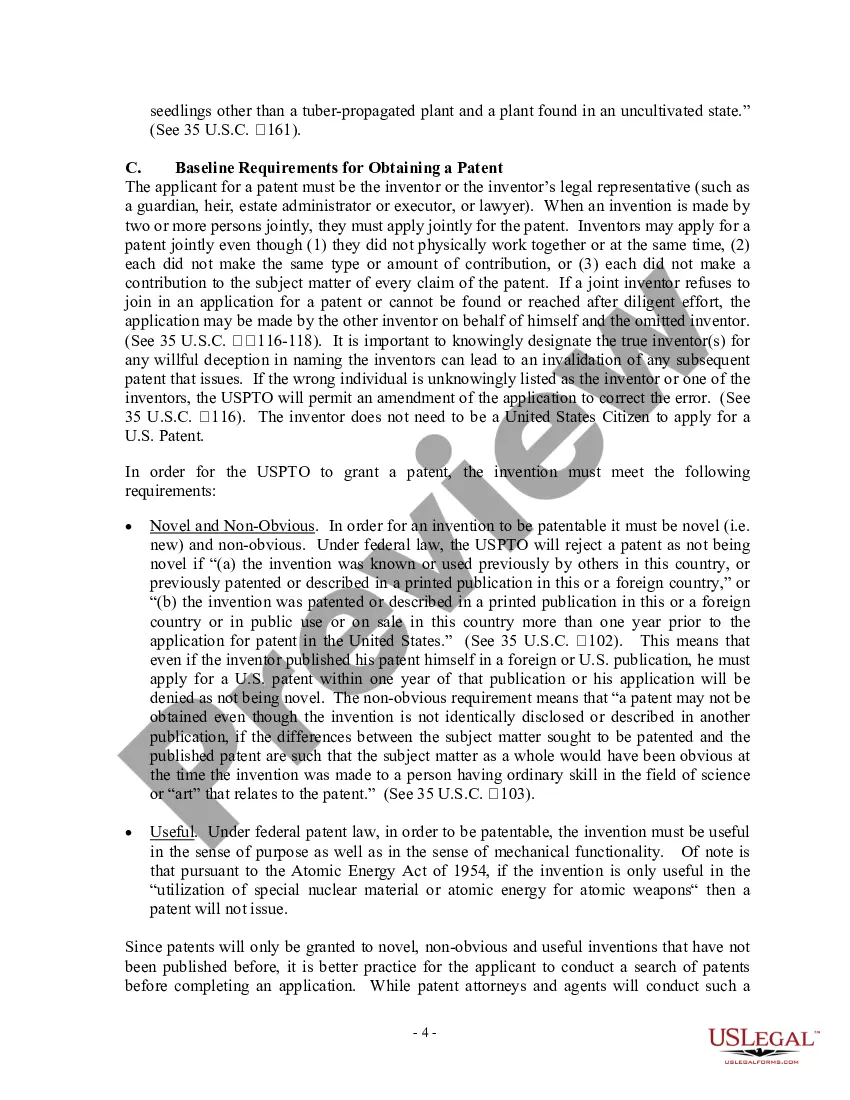
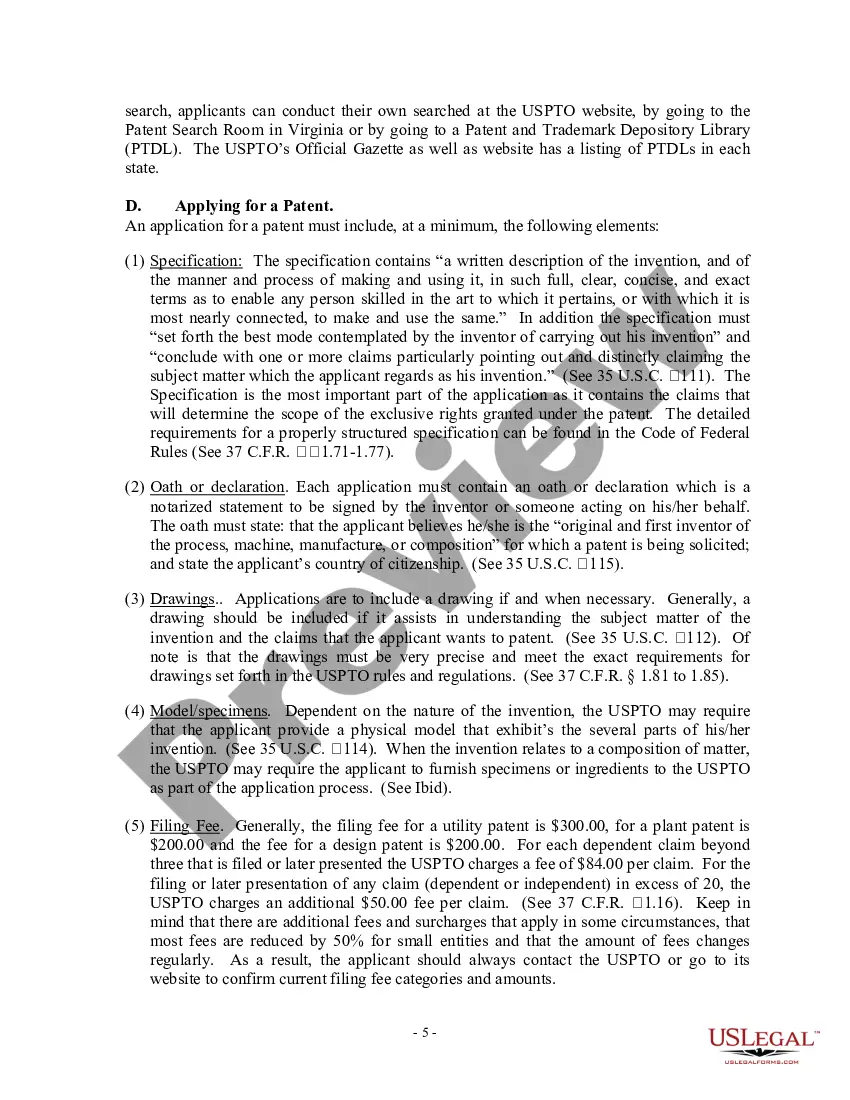
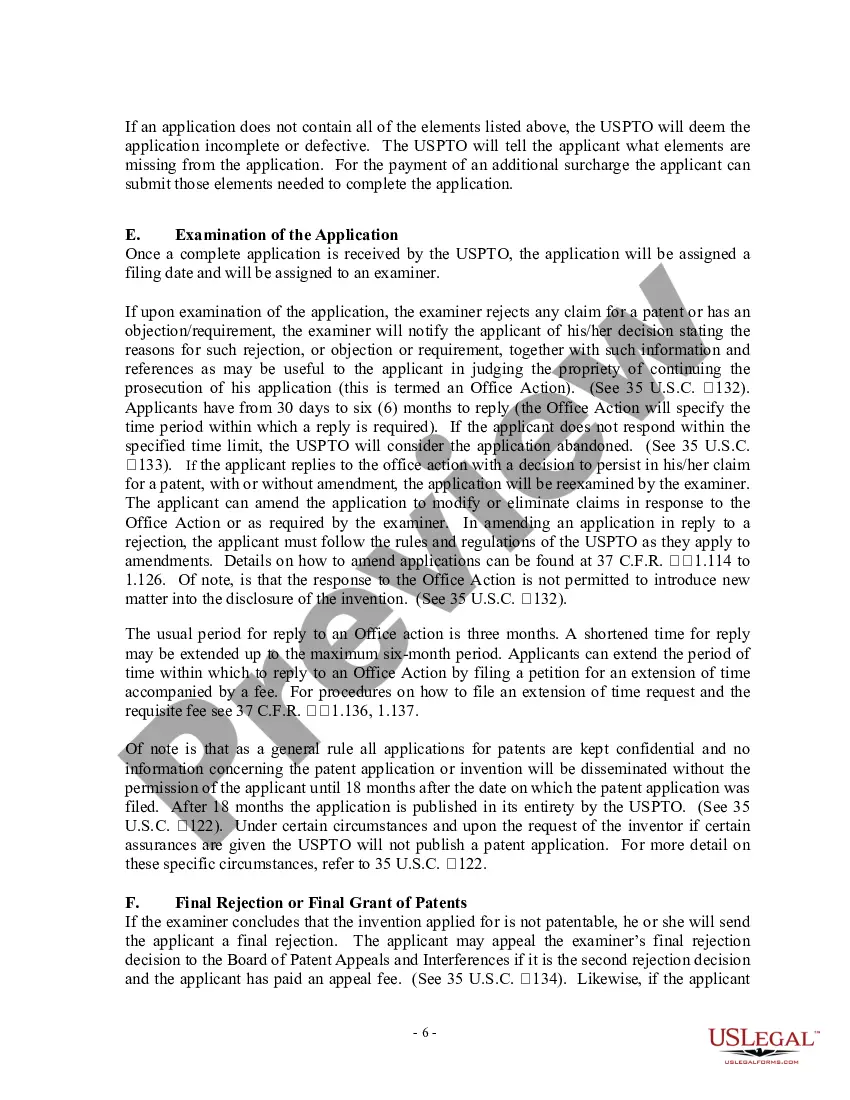
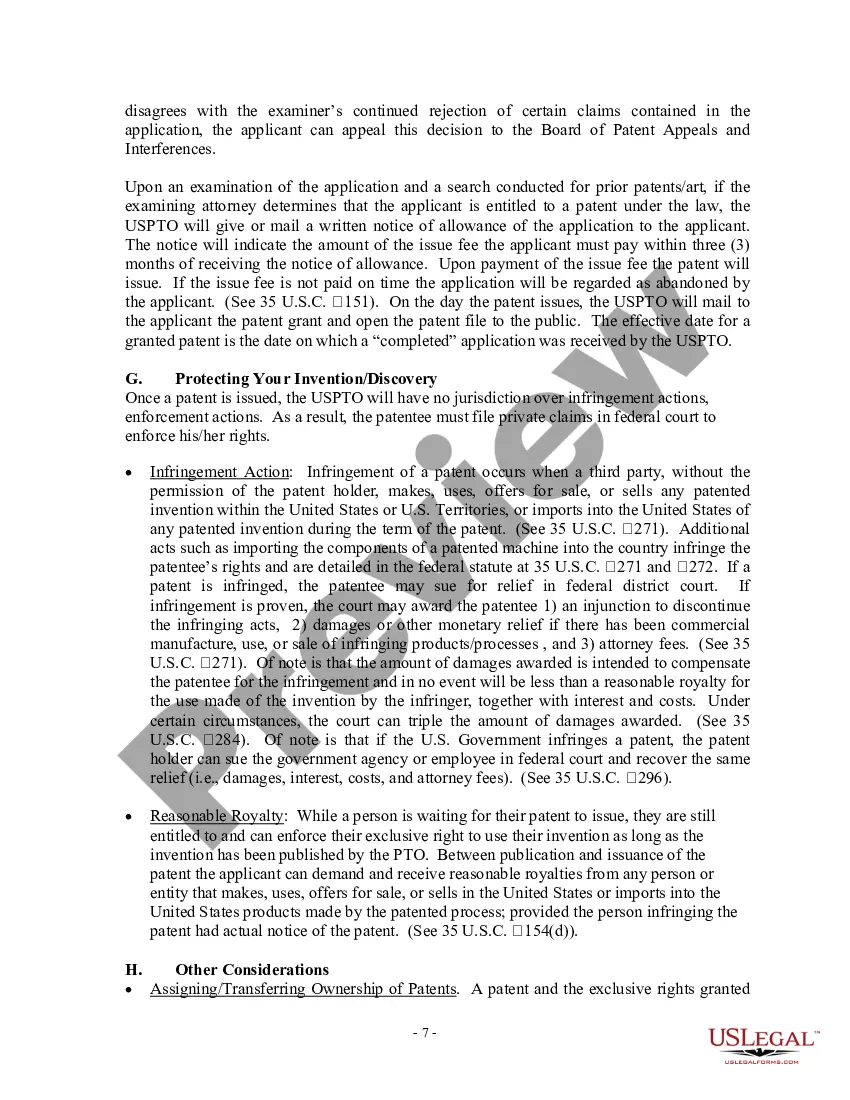
The five primary requirements for patentability are: (1) patentable subject matter; (2) utility; (3) novelty; (4) non-obviousness; and (5) enablement. Like trademarks, patents are territorial, meaning they are enforceable in a specific geographic area.
In his book, Common as Air: Revolution, Art, and Ownership, author Lewis Hyde explains that Franklin believed that any claim to own his ideas and inventions could only lead to the kind of disputes that “sour one's Temper and disturb one's Quiet.” It was for that reason, Franklin never took a patent or registered a ...
The Poor Man's Patent Is Obsolete Being the first to invent will no longer save you is someone else filed first. So even if you did write out the idea for your invention and mailed it to yourself, that date would not matter.
It involves documenting and mailing yourself a description or drawing of your invention in a sealed envelope, to use the postmarked date as the date of invention. Unfortunately, a poor man's patent has limitations because it is not legally recognized and will not hold up in court should a dispute arise.
There are three types of patents: Utility, Design, and Plant. Most engineers will file for a Design Patent.
Format of a Patent Application The Specification. The Title. The Description. The Claims. The Drawings. The Abstract. Sample Specifications. Minimum Requirements for a Filing Date.
Structure of the specification A patent specification normally has the following parts in the order given: A title to identify the invention. A statement as to the field to which the invention relates. An explanation of the background “state of the art” – what was already known prior to the invention.
The detailed description should provide clear support or antecedent basis for all terms used in the claims so that the meaning of the claim terms in the claims may be ascertainable by reference to the description. It can be helpful to draft your claims first.
The Brief Summary is meant to give a quick understanding of the invention, while the Detailed Description provides the full technical disclosure necessary for enablement and written description requirements.
