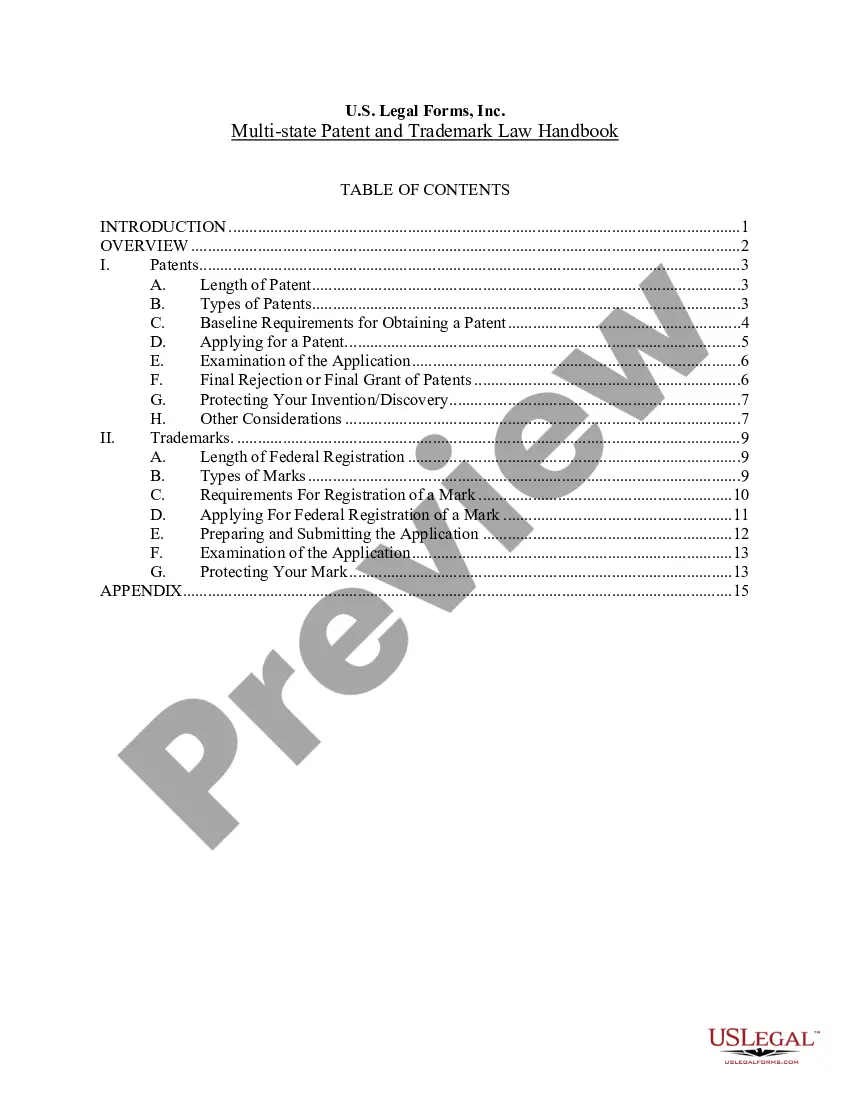
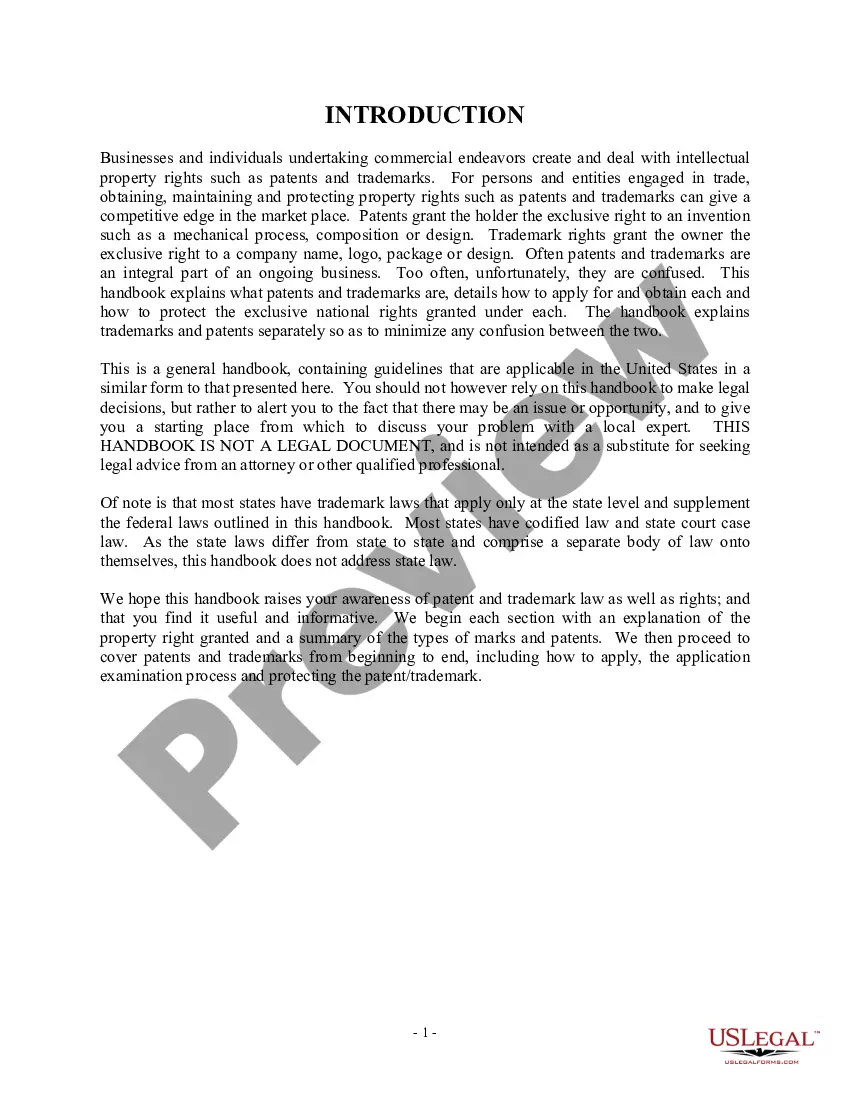
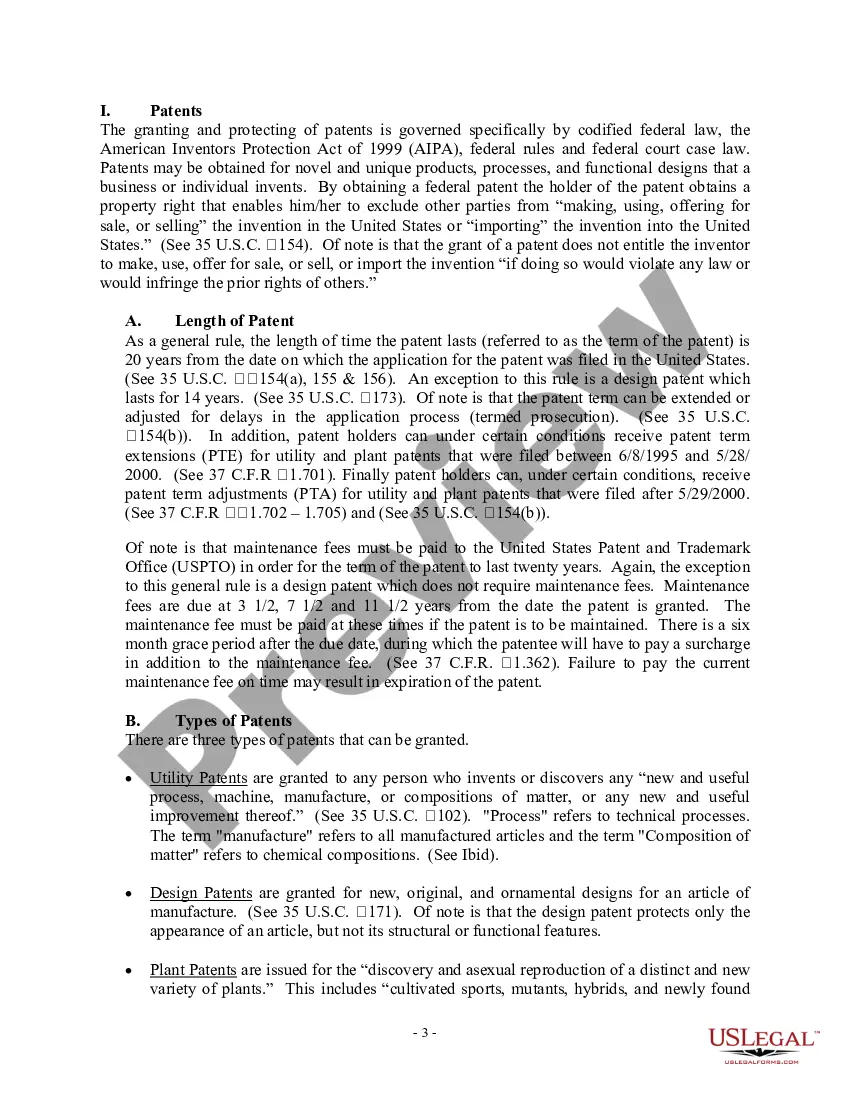
Patent Trademark Application Form Sample In Philadelphia
Description




Get your form ready online
Our built-in tools help you complete, sign, share, and store your documents in one place.
Make edits, fill in missing information, and update formatting in US Legal Forms—just like you would in MS Word.
Download a copy, print it, send it by email, or mail it via USPS—whatever works best for your next step.
Sign and collect signatures with our SignNow integration. Send to multiple recipients, set reminders, and more. Go Premium to unlock E-Sign.
If this form requires notarization, complete it online through a secure video call—no need to meet a notary in person or wait for an appointment.
We protect your documents and personal data by following strict security and privacy standards.

Make edits, fill in missing information, and update formatting in US Legal Forms—just like you would in MS Word.

Download a copy, print it, send it by email, or mail it via USPS—whatever works best for your next step.

Sign and collect signatures with our SignNow integration. Send to multiple recipients, set reminders, and more. Go Premium to unlock E-Sign.

If this form requires notarization, complete it online through a secure video call—no need to meet a notary in person or wait for an appointment.

We protect your documents and personal data by following strict security and privacy standards.
Looking for another form?









Form popularity
FAQ
Usually, the process takes 12 to 18 months. Registering your trademark is a complex procedure that involves your application moving through various stages. Learning about each stage in the process will help you understand why getting a trademark takes as long as it does.
Definition of Trademark A trademark is used to identify goods made by a specific producer. Tom's distinctive logo would be one such example, but trademarks can also take the forms of phrases, words, or symbols. Distinctive sounds, scents, or even shapes and colors can also be registered as trademarks.
Trademark applications can be filed online with the USPTO. The application must provide a description of the goods or services for which the trademark will be used and a specimen showing how the mark is used in commerce.
Non-U.S. citizens can indeed register their trademarks in the United States, ensuring global brand protection. The USPTO allows international applicants to secure their trademarks by demonstrating usage or intent to use in U.S. commerce.
Likelihood of confusion is a common reason for refusal of a trademark application. The USPTO will review your application and compare your mark to any existing trademark applications or registered trademarks.
Or you can email FeesHelp@uspto. Filing assignments online: Email AssignmentCenter@uspto or call the Assignment Services Division Customer Service Desk at 571-272-3350 Monday - Friday a.m. to 5 p.m. ET. Filing submissions to the Trademark Trial and Appeal Board (TTAB): Email ESTTA@uspto.
Nowadays, nearly half (48.3%) of all trademark applications filed in the US with the United States Patent and Trademark Office (USPTO) are rejected.
If a trademark misdescribes a quality, purpose, function, feature, characteristic, ingredient, or use of the goods or services, and the misrepresentation would be credible or plausible to consumer, the mark would be refused as deceptively misdescriptive.
The first is Genericide, a term used when a brand name has become so widely used that it becomes synonymous with a general class of product or service, causing the trademark to lose its distinctiveness. For example, 'Band-Aid' often being used to refer to any adhesive bandage is an instance of genericide.
