Patent Trademark Law For Dummies In Orange
Description

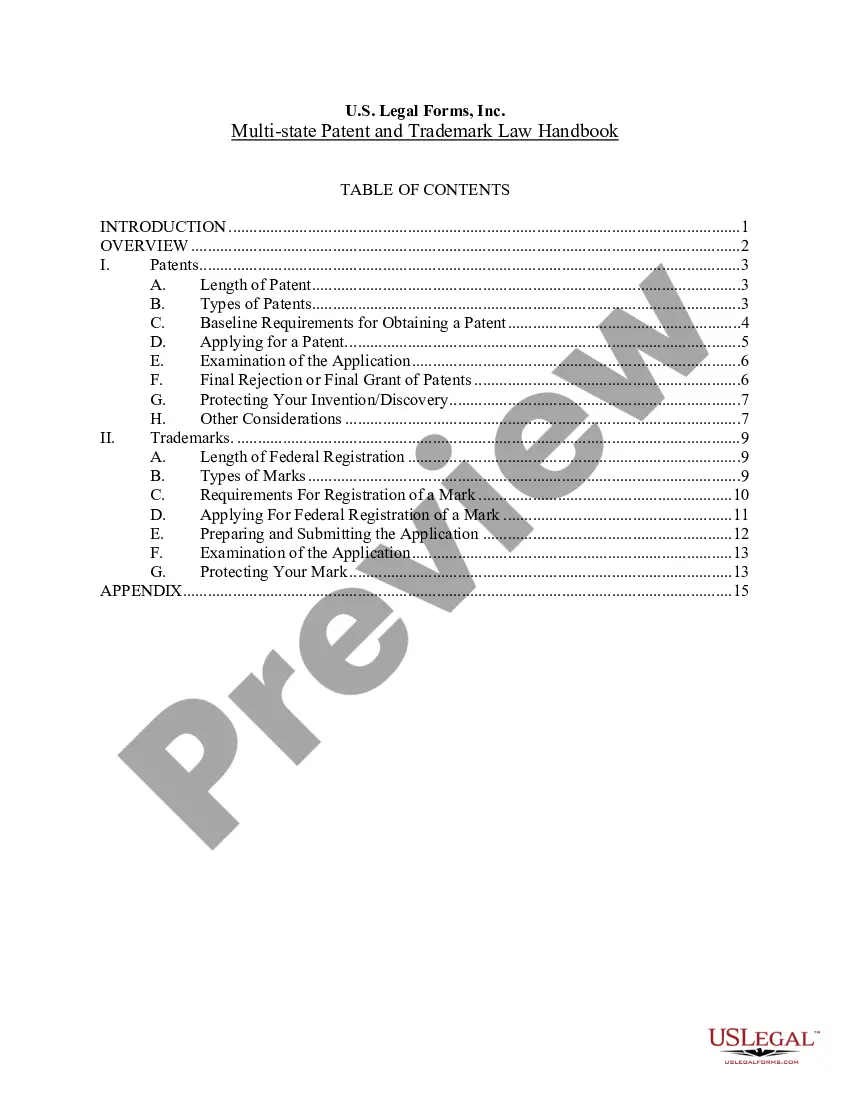
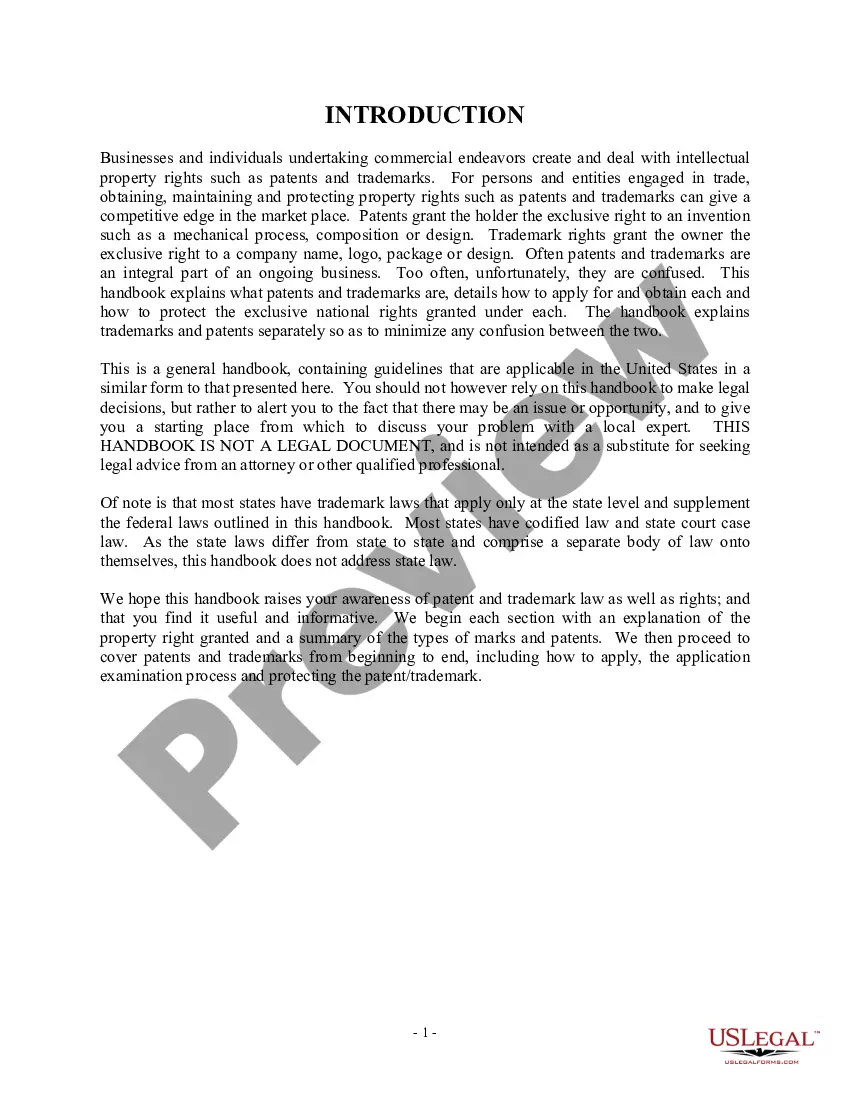
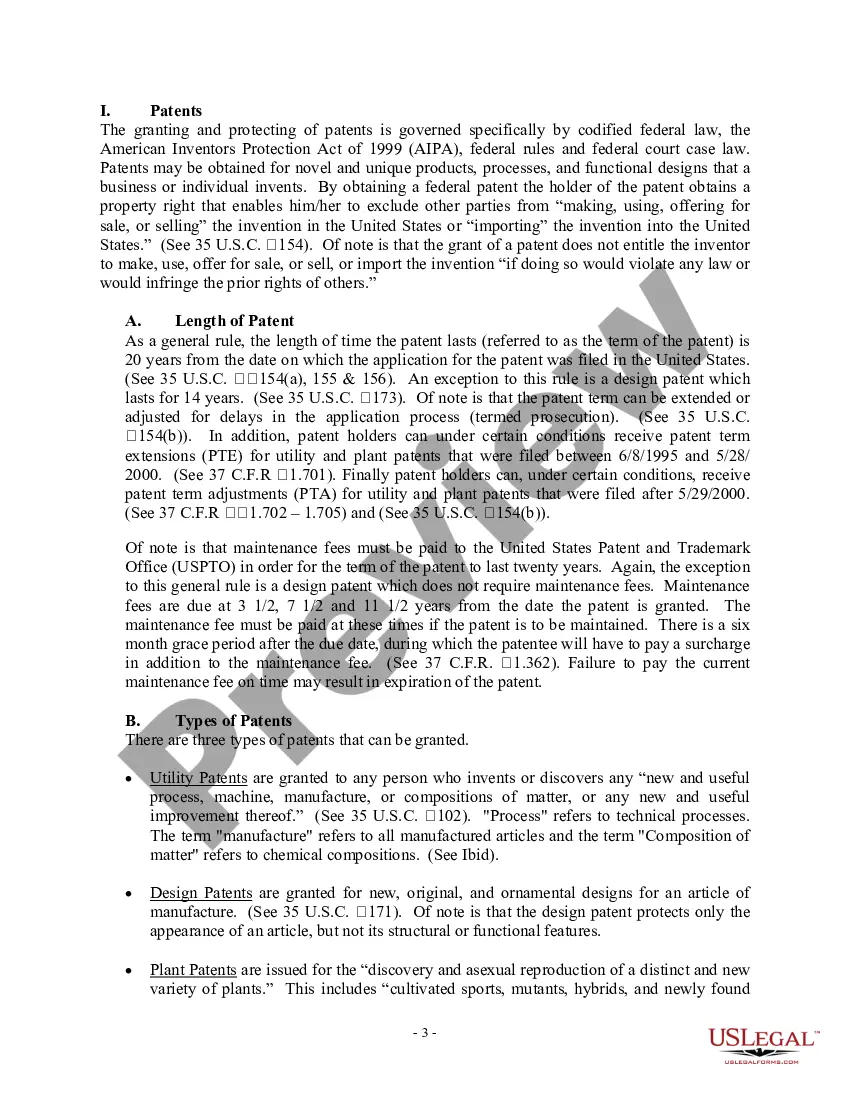


Get your form ready online
Our built-in tools help you complete, sign, share, and store your documents in one place.
Make edits, fill in missing information, and update formatting in US Legal Forms—just like you would in MS Word.
Download a copy, print it, send it by email, or mail it via USPS—whatever works best for your next step.
Sign and collect signatures with our SignNow integration. Send to multiple recipients, set reminders, and more. Go Premium to unlock E-Sign.
If this form requires notarization, complete it online through a secure video call—no need to meet a notary in person or wait for an appointment.
We protect your documents and personal data by following strict security and privacy standards.

Make edits, fill in missing information, and update formatting in US Legal Forms—just like you would in MS Word.

Download a copy, print it, send it by email, or mail it via USPS—whatever works best for your next step.

Sign and collect signatures with our SignNow integration. Send to multiple recipients, set reminders, and more. Go Premium to unlock E-Sign.

If this form requires notarization, complete it online through a secure video call—no need to meet a notary in person or wait for an appointment.

We protect your documents and personal data by following strict security and privacy standards.
Looking for another form?








Form popularity
FAQ
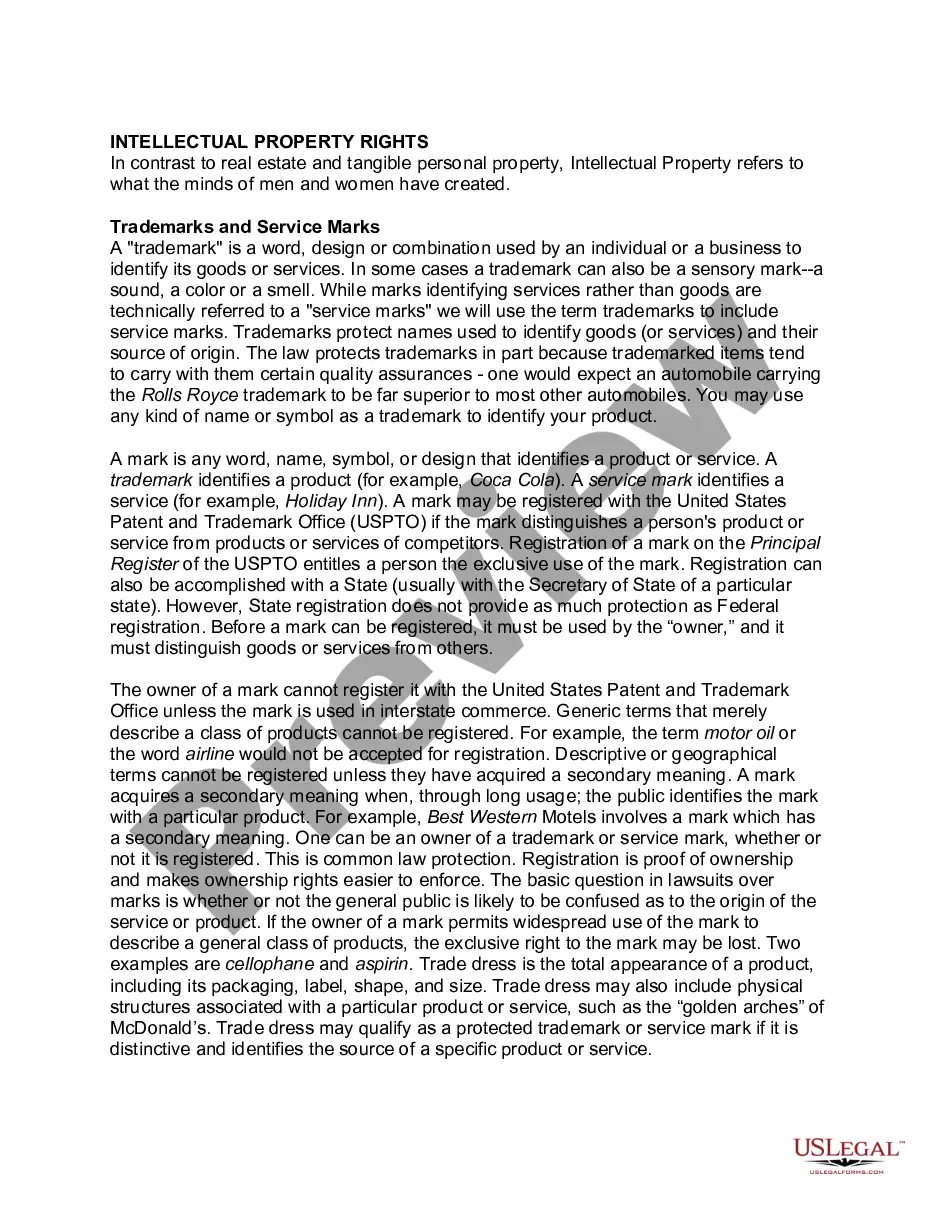
One is not better than the other, as each has its own distinct purpose. In short, copyrights are for creative works, while trademarks are for names, slogans, and symbols associated with a brand. Therefore, in some cases, you may need both to protect your business' branding and its creations.
A patent allows the creator of certain kinds of inventions that contain new ideas to keep others from making commercial use of those ideas without the creator's permission. Trademarks, on the other hand, are not concerned with how a new technology is used.
Patent law is a specialized field of law within the broader scope of intellectual property law. It is a unique legal framework designed to provide exclusive rights to inventors for their novel, new and useful process, or non-obvious inventions.
Patents are intended to protect inventions of a functional or design nature. Trademarks provide protection for indicators of the source of products and services used in commercial trade, such as words or logos. Copyrights provide protection for literary and artistic expressions.
R is a registered trademark, which means you have registered it with the proper authorities TM is a self claimed trademark, which means that you include it on your first use and you continue to claim it via using the TM.
It is your choice whether to protect your brand under trademark law. Many business owners choose to protect their brand names for their main or dominant goods or services. You might also choose to protect a slogan or logo for those goods or services, if you have one.
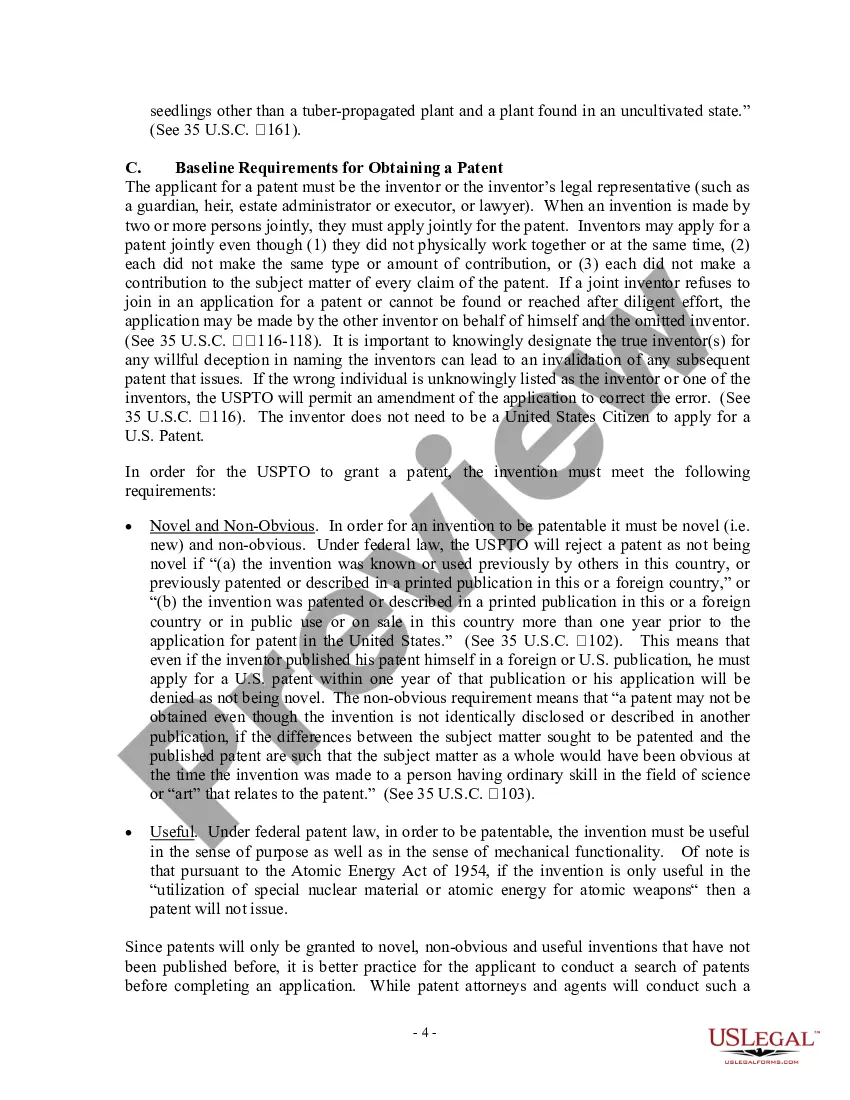
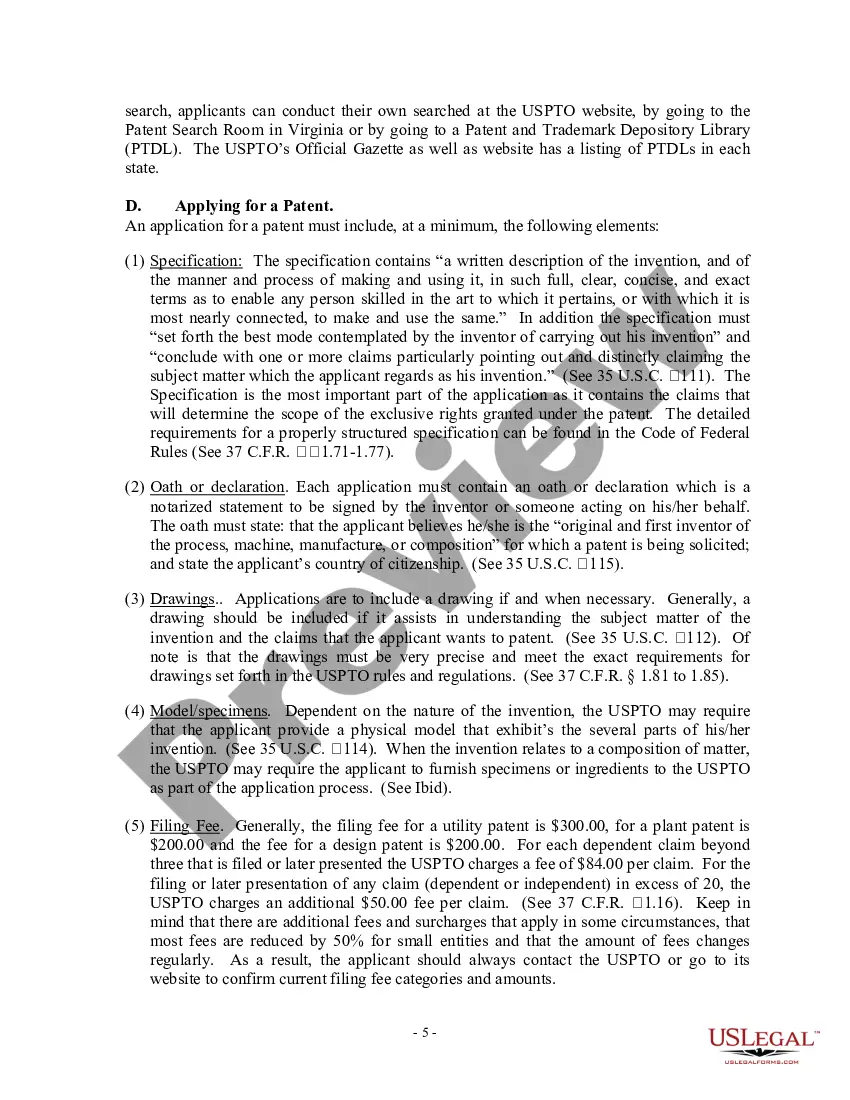
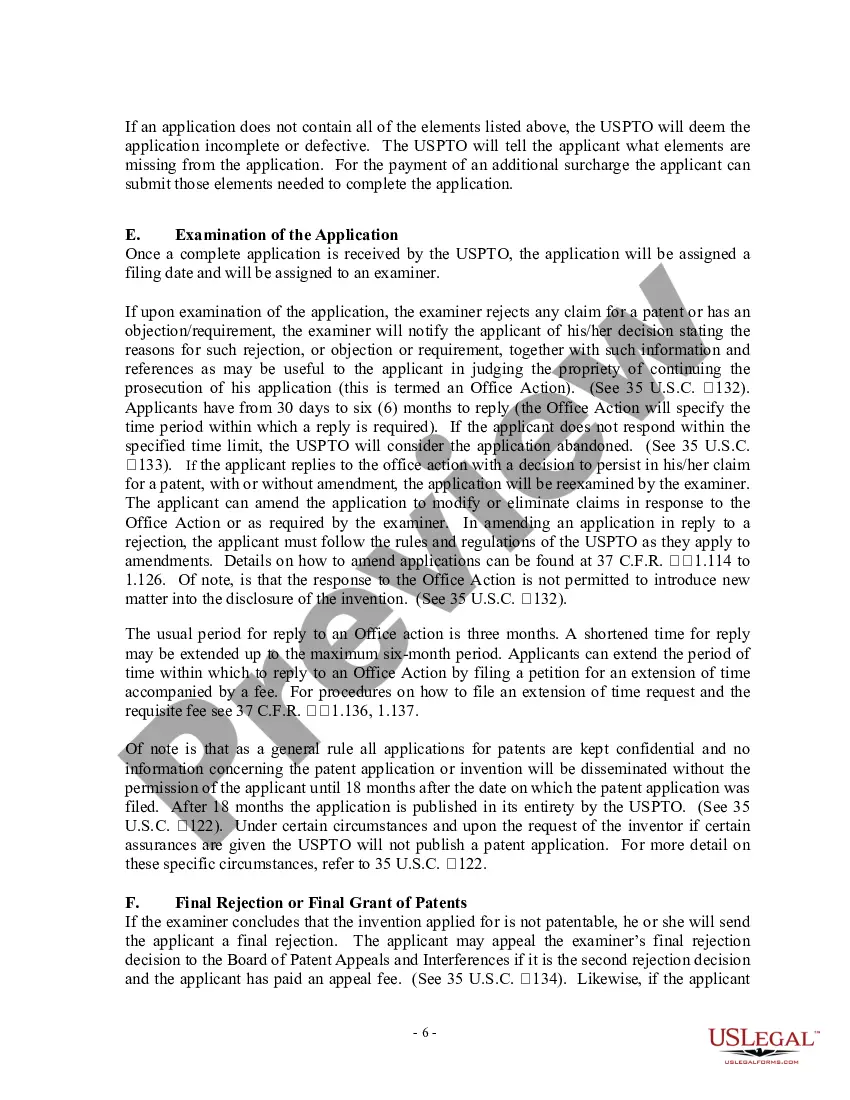
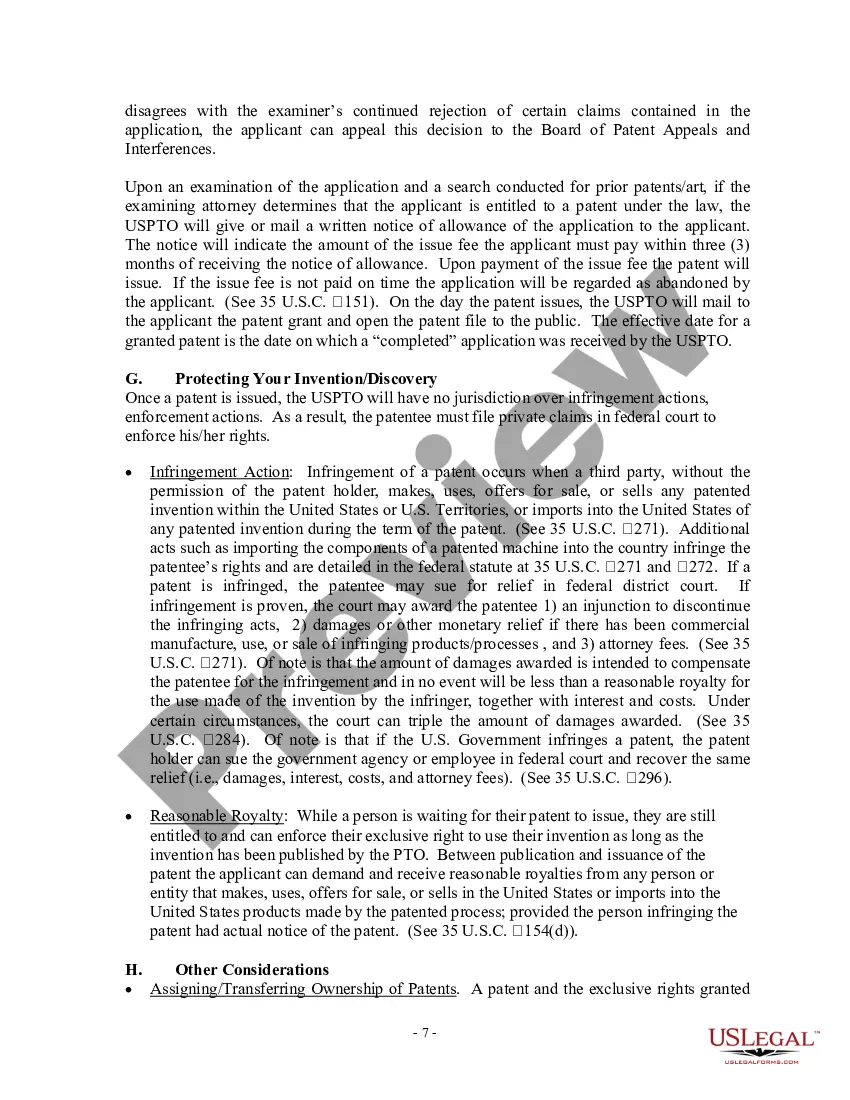
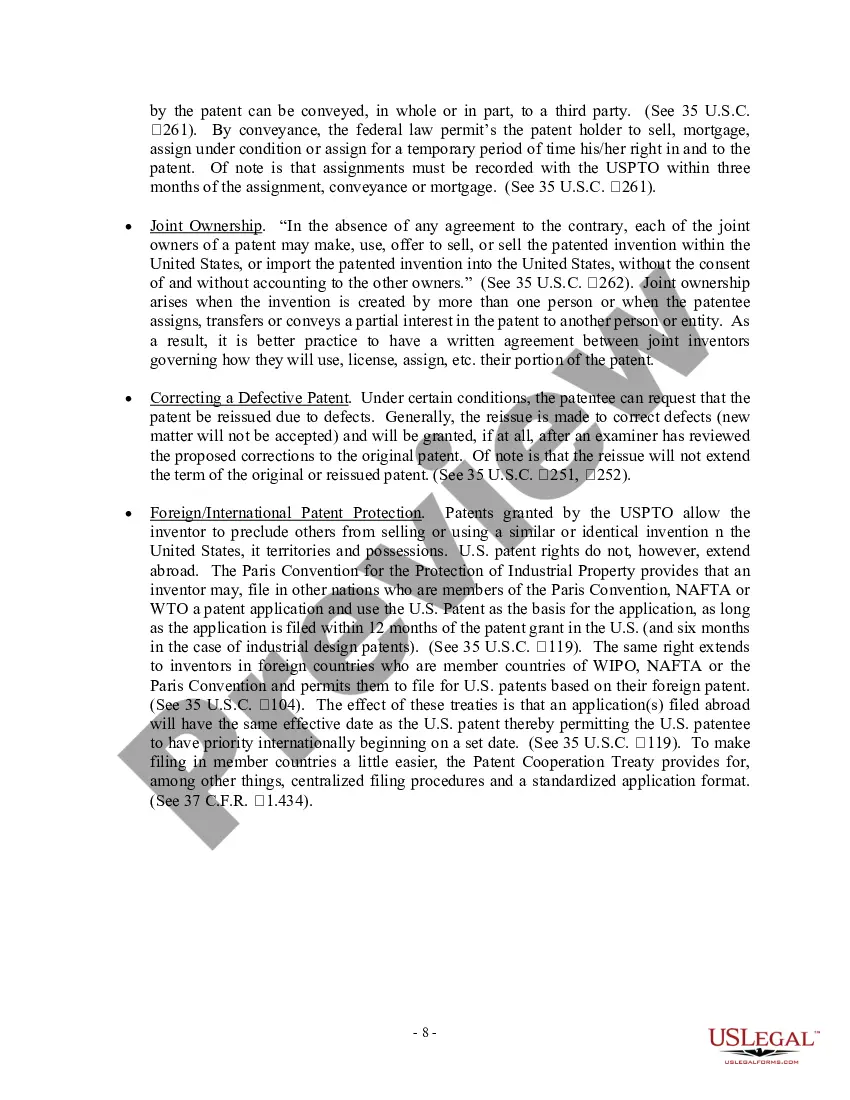
The Patent Process Determine the type of intellectual property you need. Determine if your invention is patentable. Determine what kind of patent you need. Get ready to apply. Submit your application. Work with your examiner. Receive your approval. Maintain your patent.
The patent law provides for the granting of design patents to whomever invents any new, original and ornamental design for an article of manufacture. A copy of these laws and rules is included at the end of this guide.
The Poor Man's Patent Is Obsolete Being the first to invent will no longer save you is someone else filed first. So even if you did write out the idea for your invention and mailed it to yourself, that date would not matter.
The five primary requirements for patentability are: (1) patentable subject matter; (2) utility; (3) novelty; (4) non-obviousness; and (5) enablement. Like trademarks, patents are territorial, meaning they are enforceable in a specific geographic area.
