Patent Drafting For Patent Agent Exam In Ohio
Description

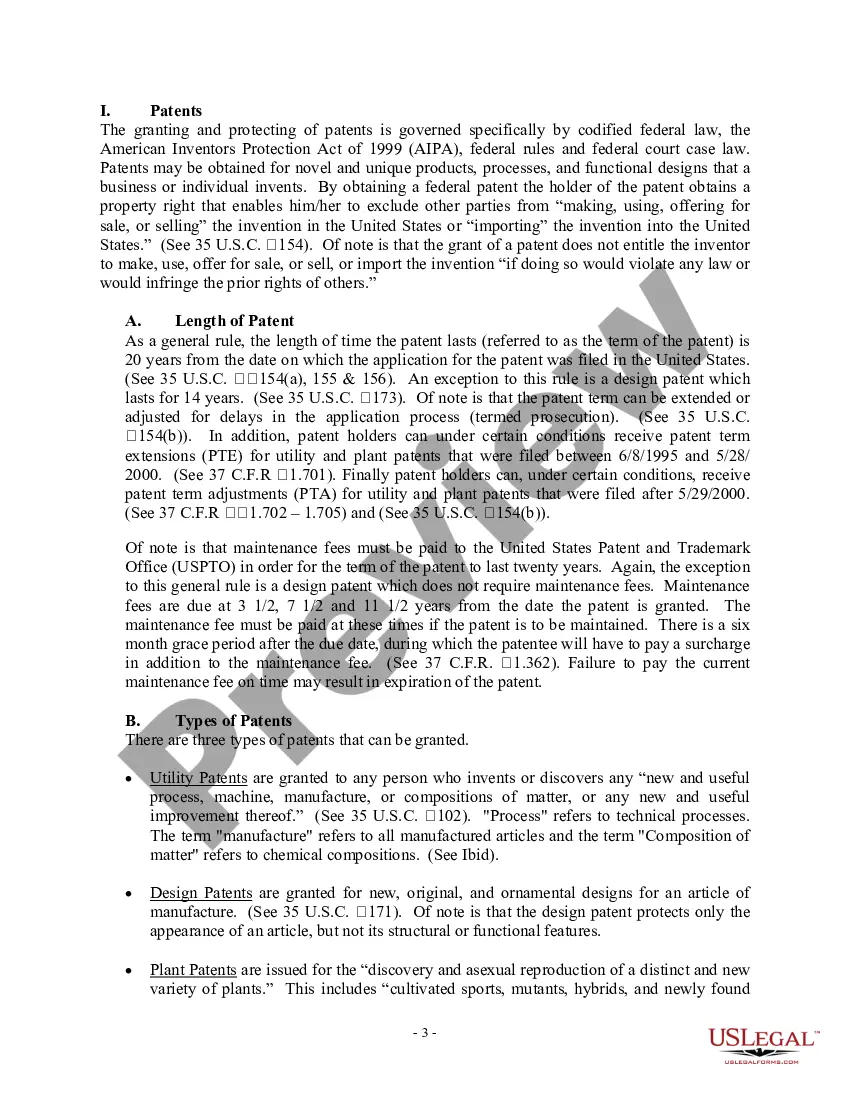


Get your form ready online
Our built-in tools help you complete, sign, share, and store your documents in one place.
Make edits, fill in missing information, and update formatting in US Legal Forms—just like you would in MS Word.
Download a copy, print it, send it by email, or mail it via USPS—whatever works best for your next step.
Sign and collect signatures with our SignNow integration. Send to multiple recipients, set reminders, and more. Go Premium to unlock E-Sign.
If this form requires notarization, complete it online through a secure video call—no need to meet a notary in person or wait for an appointment.
We protect your documents and personal data by following strict security and privacy standards.

Make edits, fill in missing information, and update formatting in US Legal Forms—just like you would in MS Word.

Download a copy, print it, send it by email, or mail it via USPS—whatever works best for your next step.

Sign and collect signatures with our SignNow integration. Send to multiple recipients, set reminders, and more. Go Premium to unlock E-Sign.

If this form requires notarization, complete it online through a secure video call—no need to meet a notary in person or wait for an appointment.

We protect your documents and personal data by following strict security and privacy standards.
Looking for another form?





Form popularity
FAQ
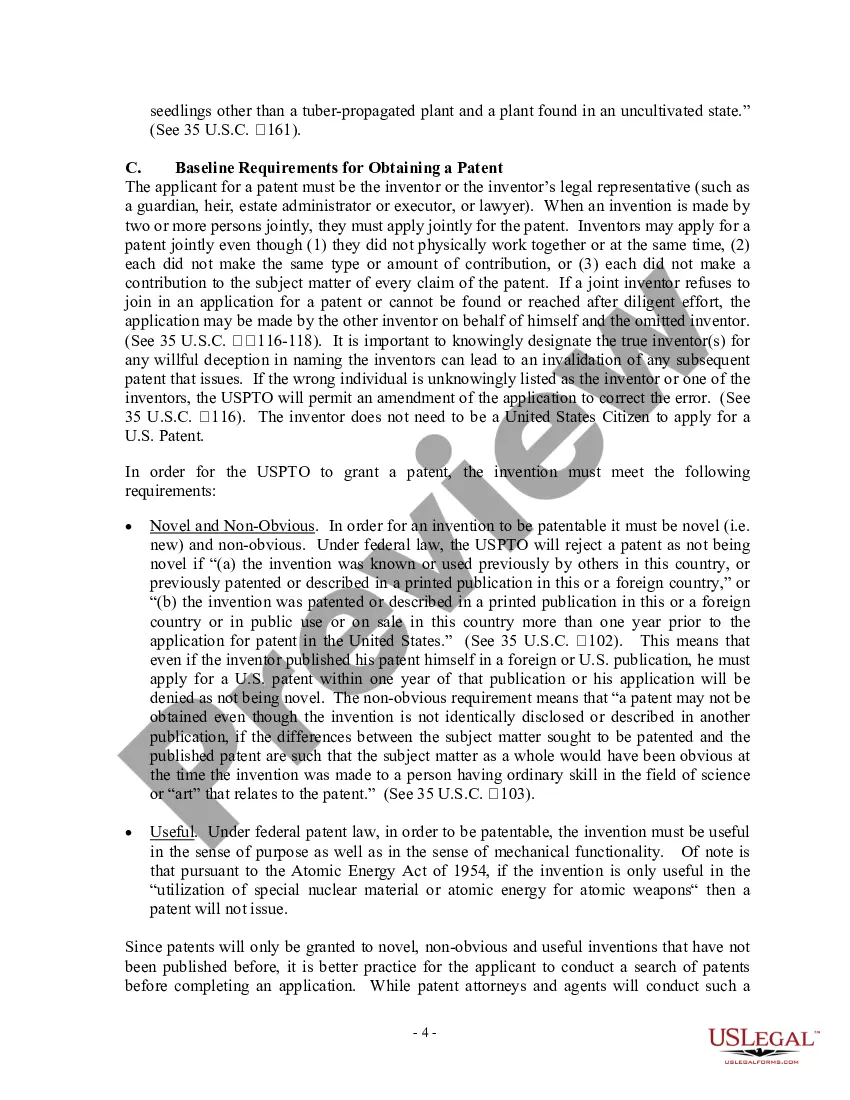
A. The patent laws of the United States permit any inventor, regardless of his/her citizenship, to apply for a U.S. patent. There are, however, a number of rules of special interest to applicants located in foreign countries.
Minimum of a Bachelor's degree in engineering or science. Successful completion of a full 4-year course at an accred- ited college or university leading to a bachelor's degree, or higher, that included a major field of study, or specific course requirements, in a variety of engineering and science disciplines.
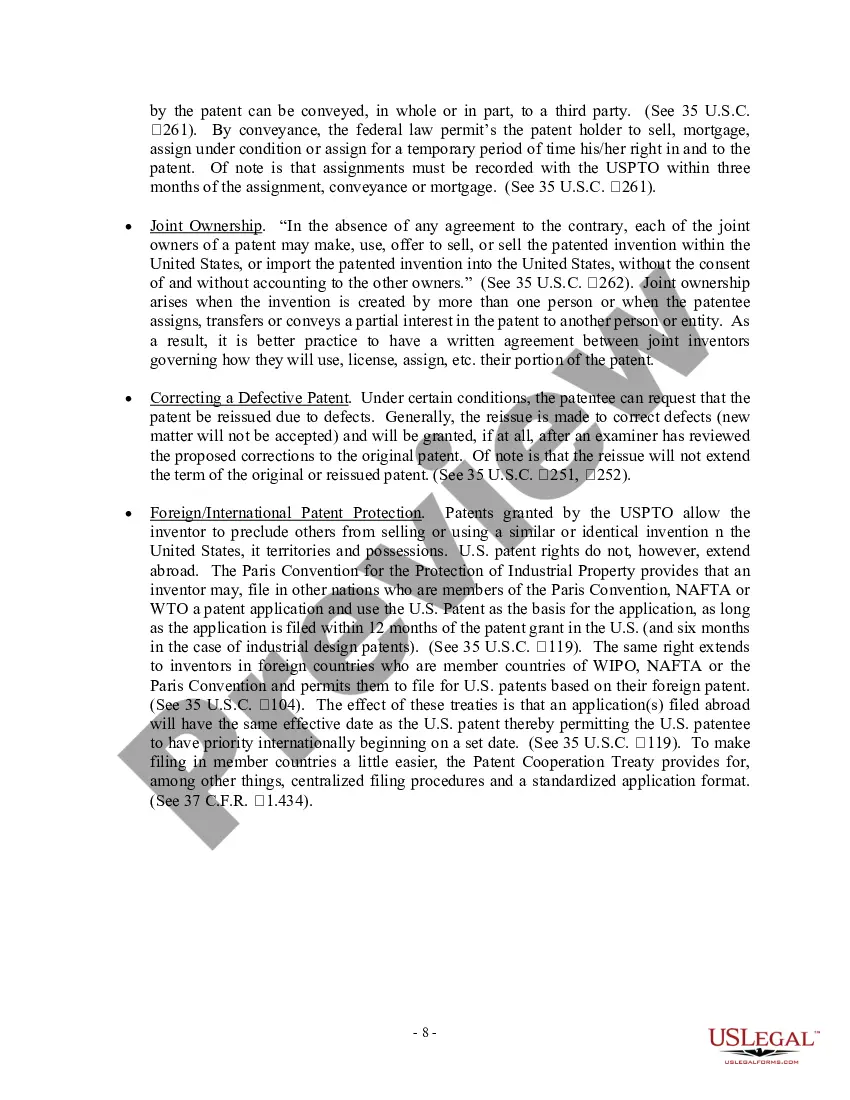
Drafting a Patent Specification: An Illustration Background of the Invention. Problems to be Solved. Prior Arts. Summary of the Invention. Brief Description of the Drawings. Detailed Description of the Invention. Claims. Abstract.
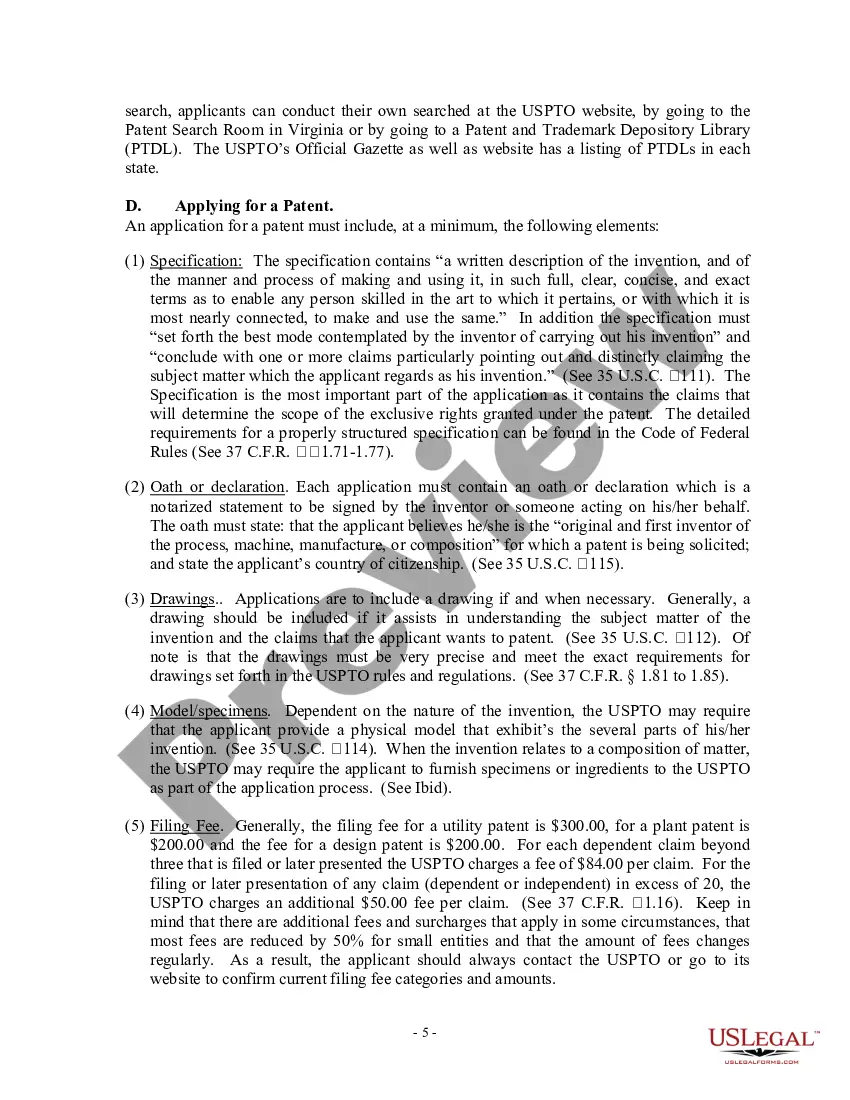
1 Step 1: Meet the education requirement. 2 Step 2: Apply for the patent bar exam. 3 Step 3: Prepare for the patent bar exam. 4 Step 4: Take the patent bar exam. 5 Step 5: Register as a patent agent. 6 Step 6: Maintain your registration. 7 Here's what else to consider.
However, most patent applications take about 30 to 40 hours to draft.
Qualifications of a US patent agent The USPTO requires that a prospective patent agent have a technical background, usually though possessing a degree in science or engineering. The prospective patent agent must also pass the Patent Bar Exam.
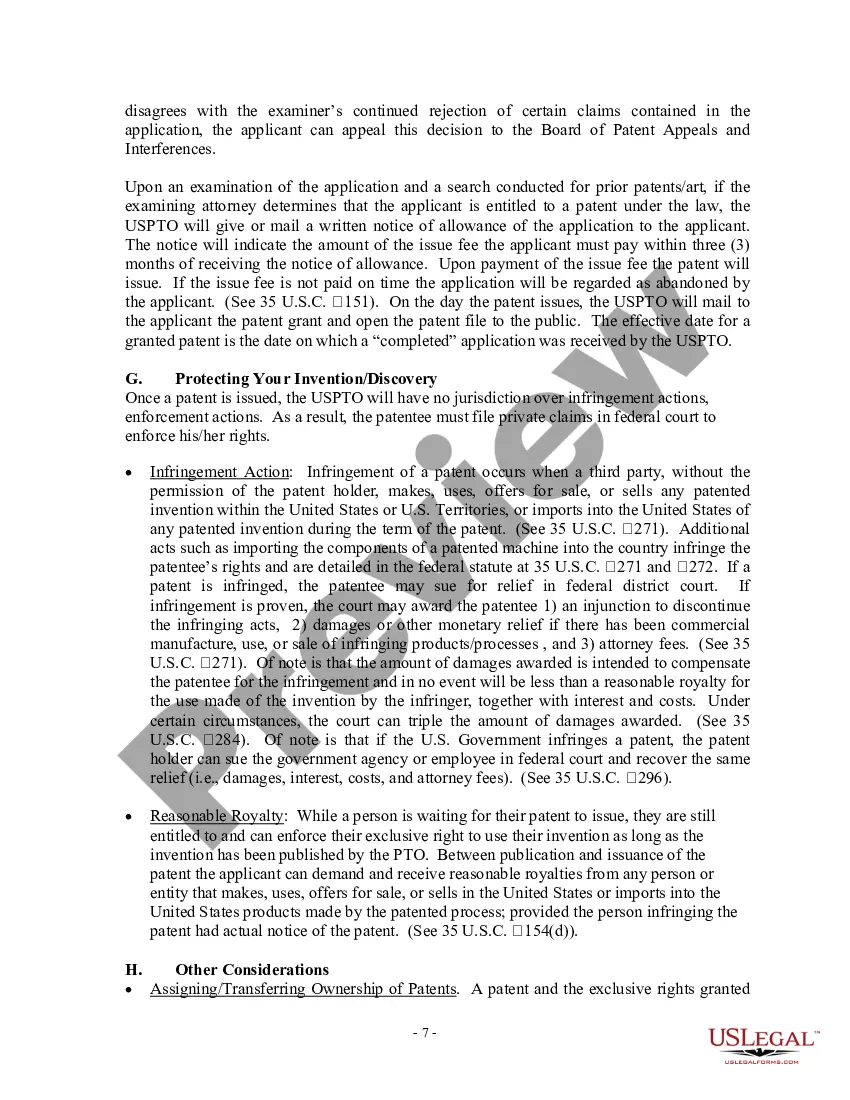
The majority of the patent applications which we handle take 4 to 6 years to be granted from their earliest date (filing date, or priority date when priority is claimed), although some are granted much more quickly, when an applicant is particularly trying to obtain prompt grant.
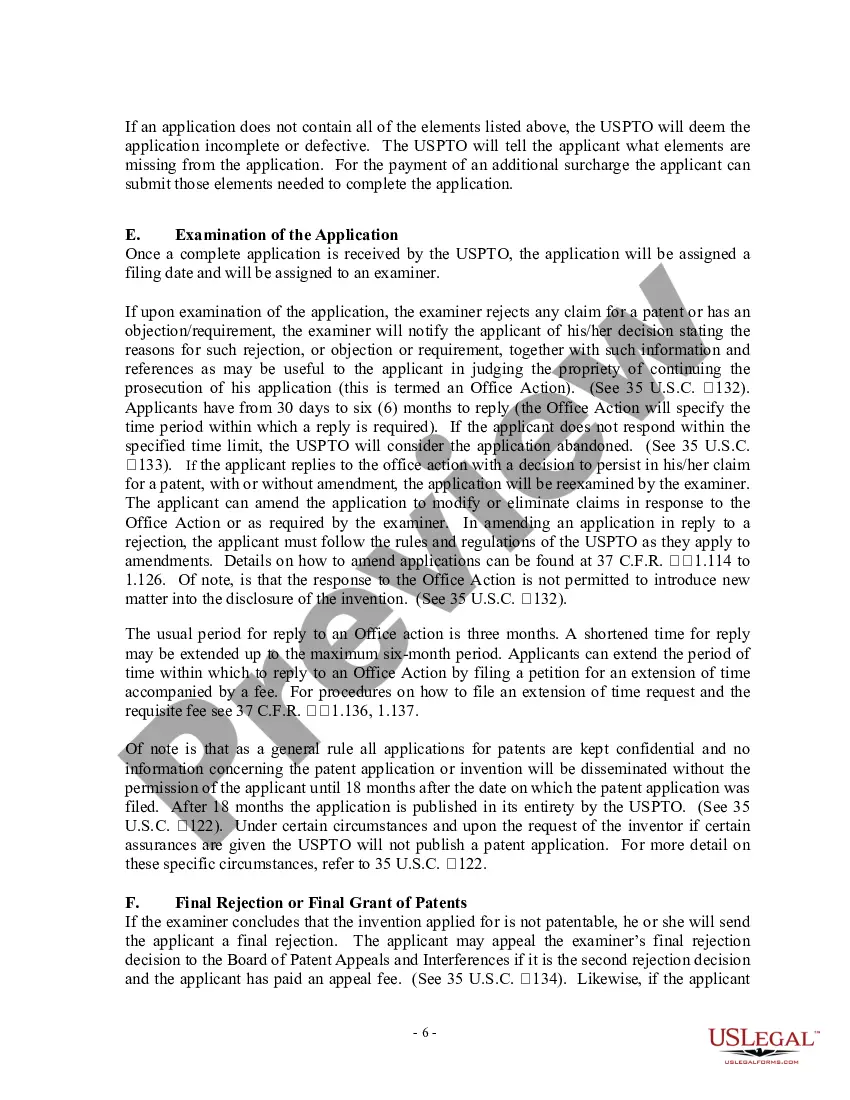
Prior to drafting the patent application, it is advisable to focus on the following points: Understand the given invention disclosure completely. Identify the field of invention and the other possible applications for the invention. Identify the problem, which is solved by the invention.
It should be brief, but must clearly indicate the matter to which the invention relates. The same title should appear both on the specification and the request for grant form. The description immediately follows the title. It is a detailed explanation of the invention.
