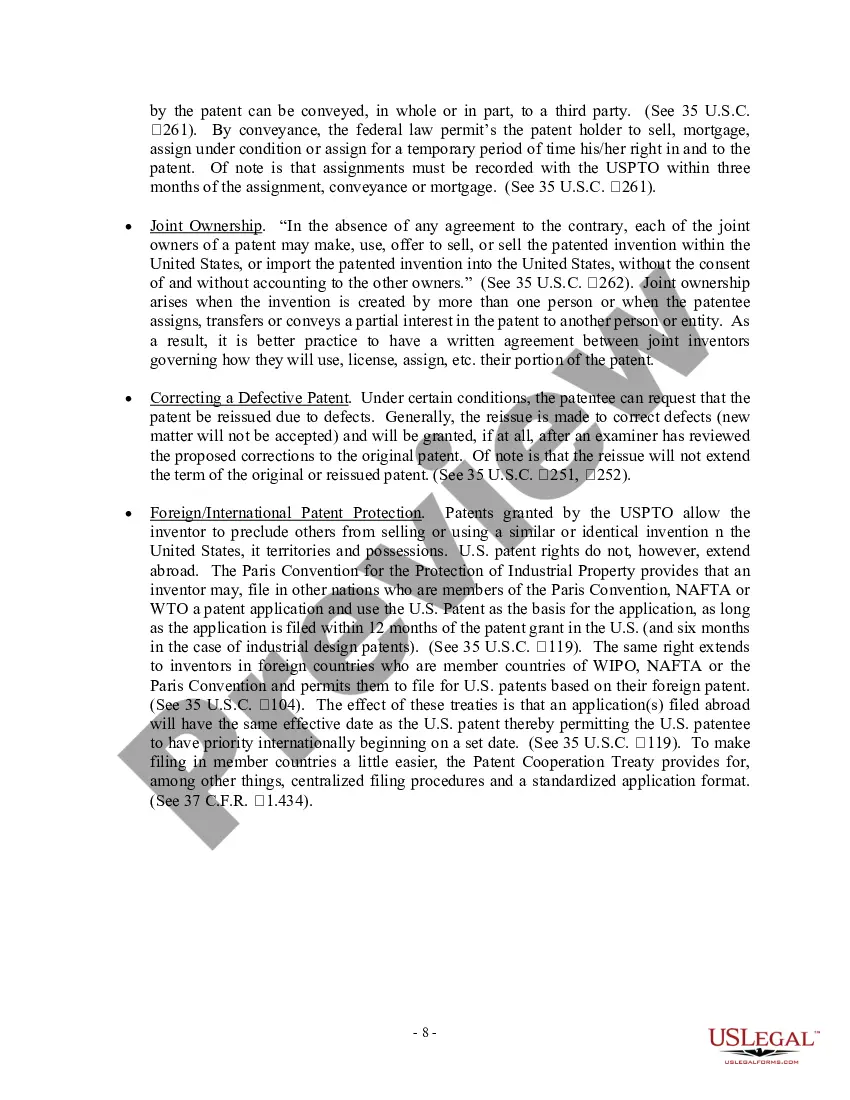
Patent Use Can For New In Oakland
Description




Get your form ready online
Our built-in tools help you complete, sign, share, and store your documents in one place.
Make edits, fill in missing information, and update formatting in US Legal Forms—just like you would in MS Word.
Download a copy, print it, send it by email, or mail it via USPS—whatever works best for your next step.
Sign and collect signatures with our SignNow integration. Send to multiple recipients, set reminders, and more. Go Premium to unlock E-Sign.
If this form requires notarization, complete it online through a secure video call—no need to meet a notary in person or wait for an appointment.
We protect your documents and personal data by following strict security and privacy standards.

Make edits, fill in missing information, and update formatting in US Legal Forms—just like you would in MS Word.

Download a copy, print it, send it by email, or mail it via USPS—whatever works best for your next step.

Sign and collect signatures with our SignNow integration. Send to multiple recipients, set reminders, and more. Go Premium to unlock E-Sign.

If this form requires notarization, complete it online through a secure video call—no need to meet a notary in person or wait for an appointment.

We protect your documents and personal data by following strict security and privacy standards.
Looking for another form?


Form popularity
FAQ
It involves documenting and mailing yourself a description or drawing of your invention in a sealed envelope, to use the postmarked date as the date of invention. Unfortunately, a poor man's patent has limitations because it is not legally recognized and will not hold up in court should a dispute arise.
To get a Patent, you need to file a patent application under the USPTO Patents Act. The USPTO looks after patent filing services in California like any other part of the country. USPTO has a Silicon Valley Regional Office. It is the USPTO West Coast regional office.
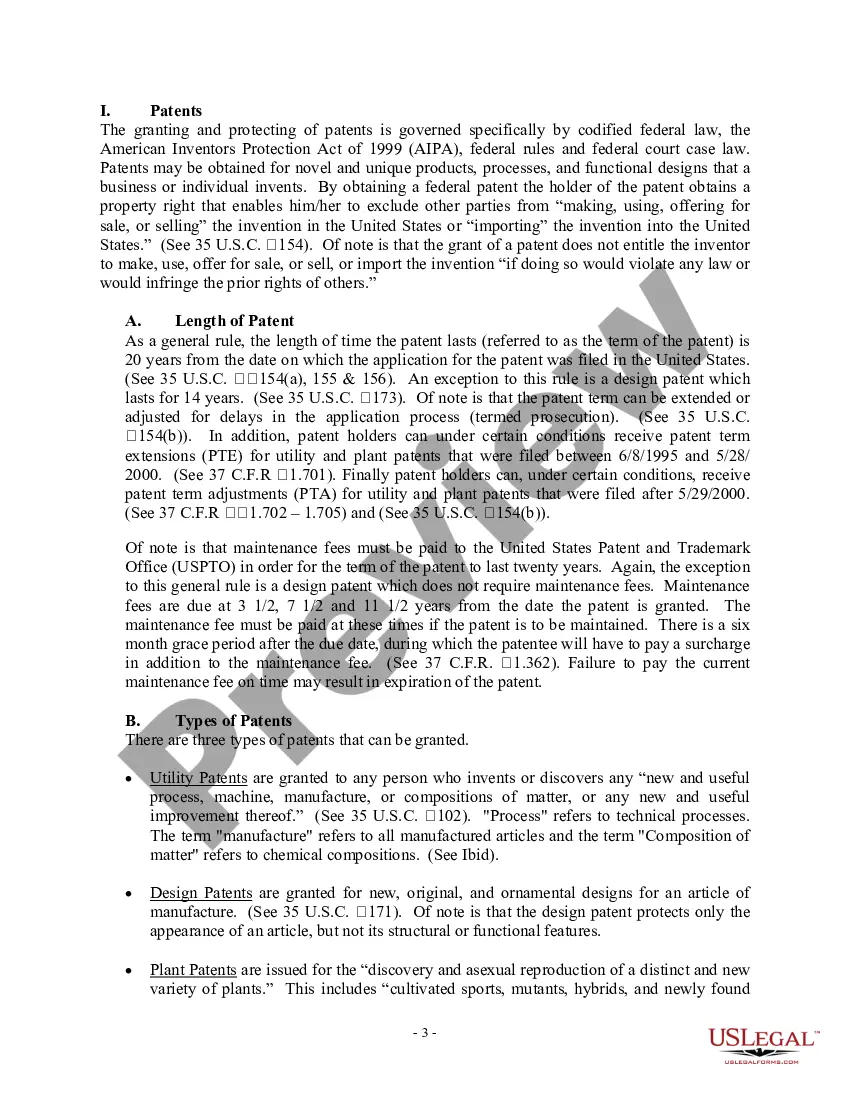
A patent is an exclusive right that prevents anyone else from making, using, selling, distributing, importing, or selling your invention without permission for a set period of time. This timeline can extend up to 20 years, depending on the type of patent.
The five primary requirements for patentability are: (1) patentable subject matter; (2) utility; (3) novelty; (4) non-obviousness; and (5) enablement. Like trademarks, patents are territorial, meaning they are enforceable in a specific geographic area.
While ideas alone cannot be patented, you can obtain a patent on an invention that was developed from an idea. Note this: if you pursue a patent, an invention must be actually produced, or at minimum, a detailed description of the invention has to be included with the patent application.
Patent law defines the limits of what can be patented. For example, the laws of nature, physical phenomena, and abstract ideas cannot be patented, nor can only an idea or suggestion.
The European Patent Convention (EPC) states that, for an invention to qualify for patent protection, it must be novel, have an inventive step and be industrially applicable.
In general, patent law only allows for the protection of new, useful, and non-obvious inventions. Thus, if your new use for an existing product is not novel or obvious, it may not be eligible for patent protection.
Patent. IPOPHL. An invention patent is a government-issued grant, bestowing an exclusive right to an inventor over a product or process that provides any technical solution to a problem in any field of human activity which is new, inventive, and industrially applicable.
