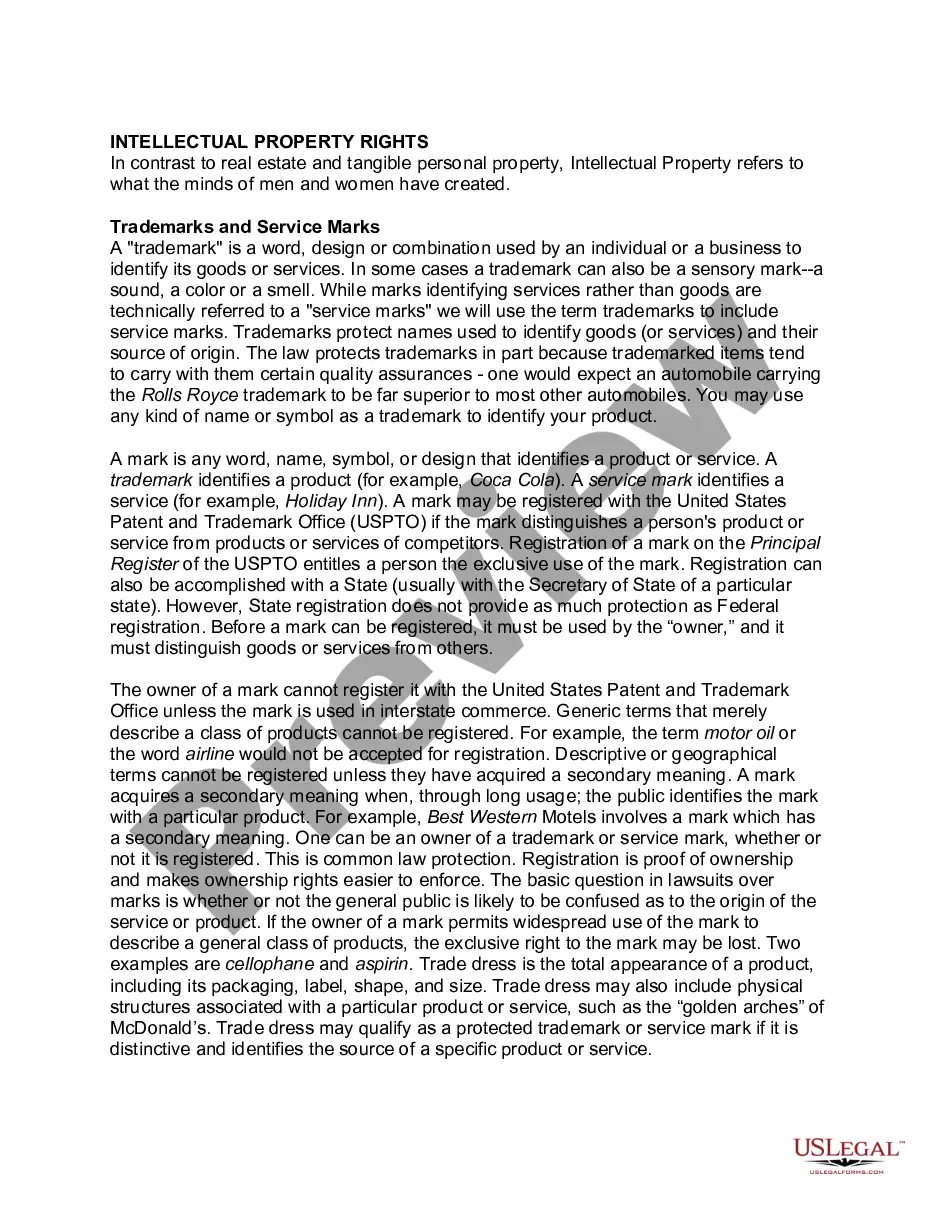
Trademark Laws For Business Names In Minnesota
Description




Get your form ready online
Our built-in tools help you complete, sign, share, and store your documents in one place.
Make edits, fill in missing information, and update formatting in US Legal Forms—just like you would in MS Word.
Download a copy, print it, send it by email, or mail it via USPS—whatever works best for your next step.
Sign and collect signatures with our SignNow integration. Send to multiple recipients, set reminders, and more. Go Premium to unlock E-Sign.
If this form requires notarization, complete it online through a secure video call—no need to meet a notary in person or wait for an appointment.
We protect your documents and personal data by following strict security and privacy standards.

Make edits, fill in missing information, and update formatting in US Legal Forms—just like you would in MS Word.

Download a copy, print it, send it by email, or mail it via USPS—whatever works best for your next step.

Sign and collect signatures with our SignNow integration. Send to multiple recipients, set reminders, and more. Go Premium to unlock E-Sign.

If this form requires notarization, complete it online through a secure video call—no need to meet a notary in person or wait for an appointment.

We protect your documents and personal data by following strict security and privacy standards.
Looking for another form?

Form popularity
FAQ
One is not better than the other, as each has its own distinct purpose. In short, copyrights are for creative works, while trademarks are for names, slogans, and symbols associated with a brand. Therefore, in some cases, you may need both to protect your business and its creations.
Should you trademark your business name before forming an LLC? No, you should form an LLC BEFORE trademarking your business name because the trademark application must list the LLC as the trademark owner. So, your LLC must exist before you file your trademark application.
Trademark process Step 1: Is a trademark application right for you? ... Step 2: Get ready to apply. Step 3: Prepare and submit your application. Step 4: Work with the assigned USPTO examining attorney. Step 5: Receive approval/denial of your application. Step 6: Maintain your registration.
You will need to register it as a trademark with the United States Patent and Trademark Office. The name that you select for your company must be distinctive to receive trademark protection. Common words or phrases that are not inherently distinctive are not offered trademark protection.
A mark may qualify as a valid trademark only if it meets three separate requirements: it must be distinctive, nonfunctional, and used in commerce. Trademarks must be distinctive enough to serve their basic function of distinguishing one seller's goods from another's.
So, getting your Federal trademark comes down to meeting the same four trademark requirements: No conflicts with other trademarks. Trademark distinctiveness. Use in commerce. The capability to be a source identifier.
Trademarking your company name provides essential legal protection, which enhances brand recognition and increases your business's financial value. These benefits help safeguard your brand against infringement and competition.
4. Should you get an LLC first or trademark? Yes, you should get an LLC first before a trademark because the trademark application will need to identify the LLC as the trademark owner. You should create an LLC or business entity before you file a trademark application.
Generic terms and phrases cannot be trademarked because they are never recognized as a brand. Common surnames cannot be trademarked without a separate showing that the name has acquired distinctiveness through use.
