Patent In Trademark In Michigan
Description



Get your form ready online
Our built-in tools help you complete, sign, share, and store your documents in one place.
Make edits, fill in missing information, and update formatting in US Legal Forms—just like you would in MS Word.
Download a copy, print it, send it by email, or mail it via USPS—whatever works best for your next step.
Sign and collect signatures with our SignNow integration. Send to multiple recipients, set reminders, and more. Go Premium to unlock E-Sign.
If this form requires notarization, complete it online through a secure video call—no need to meet a notary in person or wait for an appointment.
We protect your documents and personal data by following strict security and privacy standards.

Make edits, fill in missing information, and update formatting in US Legal Forms—just like you would in MS Word.

Download a copy, print it, send it by email, or mail it via USPS—whatever works best for your next step.

Sign and collect signatures with our SignNow integration. Send to multiple recipients, set reminders, and more. Go Premium to unlock E-Sign.

If this form requires notarization, complete it online through a secure video call—no need to meet a notary in person or wait for an appointment.

We protect your documents and personal data by following strict security and privacy standards.
Looking for another form?






Form popularity
FAQ
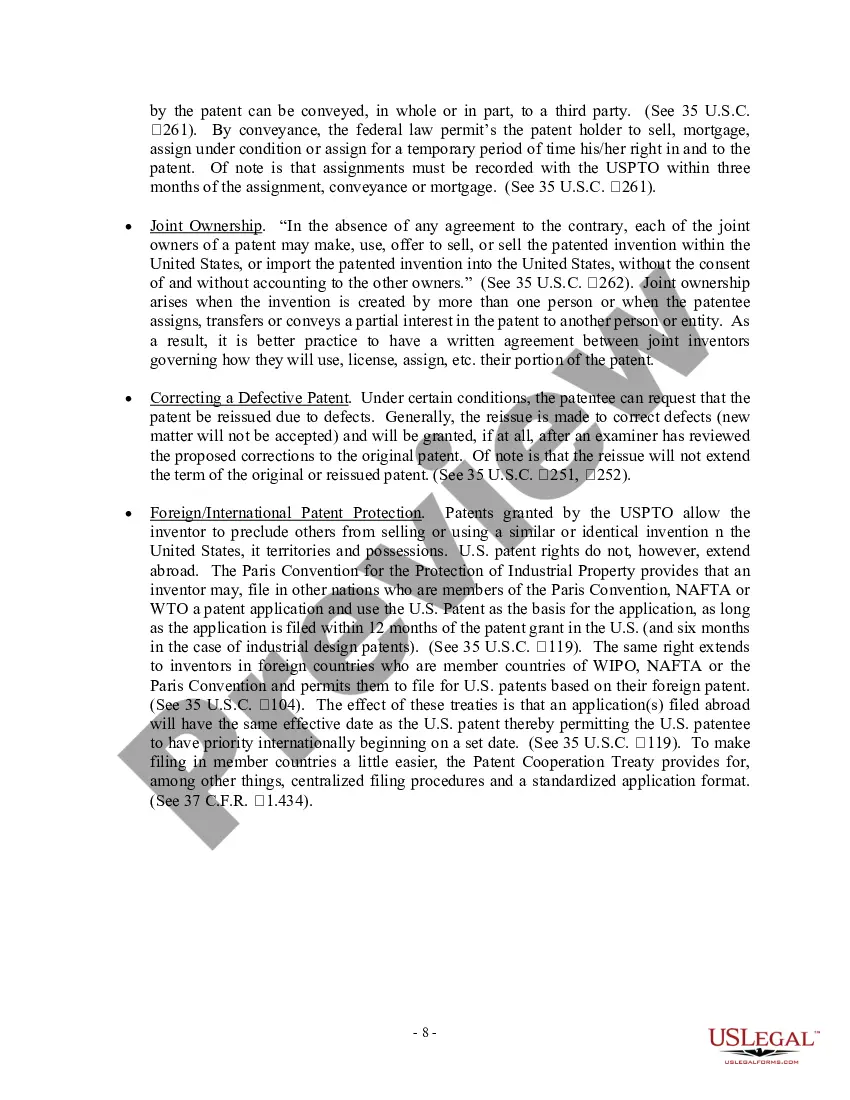
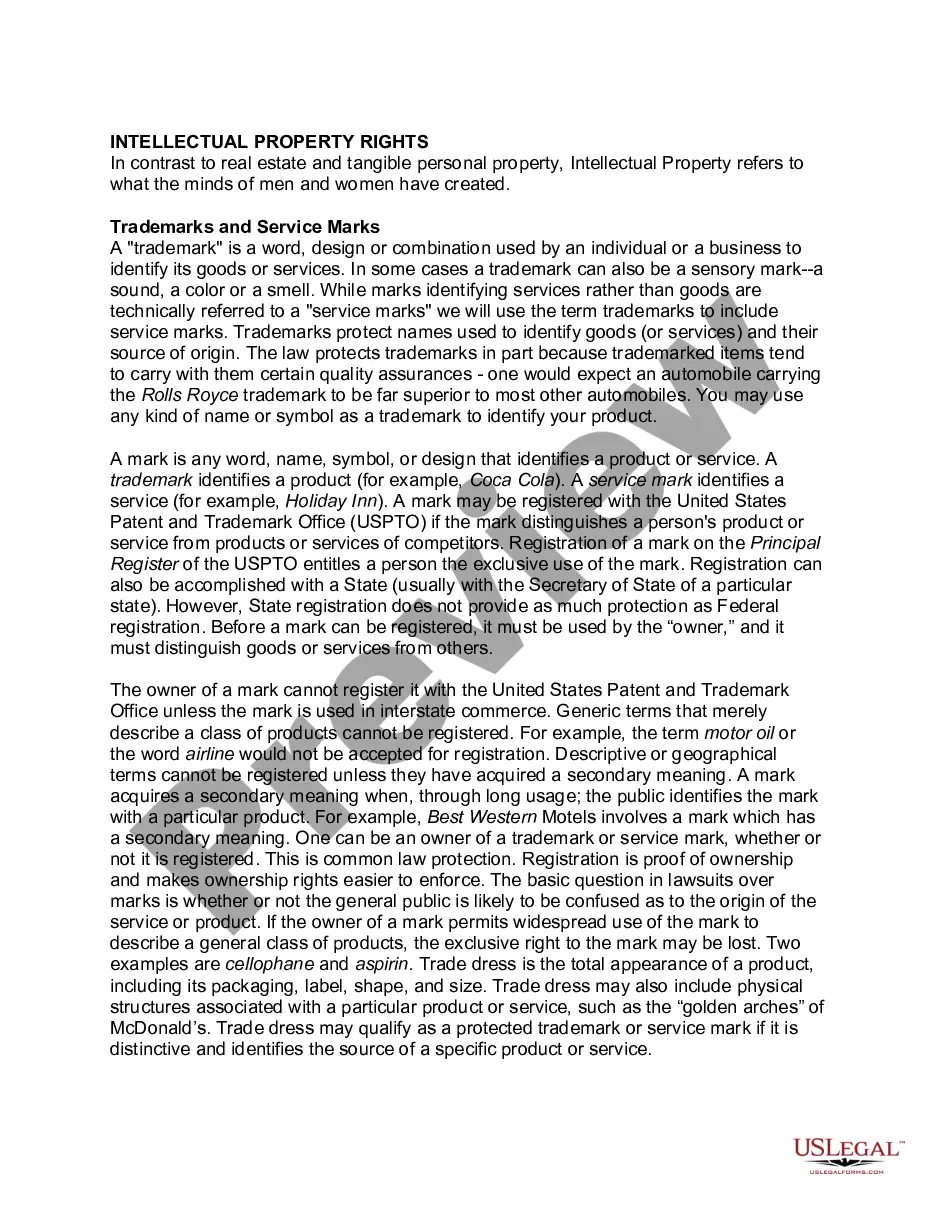
Differences Between Patents and Trademarks Patents prevent others from making or selling an invention. Trademarks give the owner exclusive use of certain images and phrases. You commonly see brand names trademarked with a ™ or ® if federally trademarked next to the name.
In Michigan, trademarks are registered with the Michigan Secretary of State's office. Start by searching the Michigan Secretary of State database (you can do this online) to see if a trademark like yours has been registered. If not, you can fill out your application and submit it online.
A patent is a legal document granted by a government, giving the owner exclusive rights to use, produce, and sell their intellectual property for a limited period, typically 20 years. It also grants the owner the legal right to exclude others from making, using, or selling the invention during this time.
But the main difference between copyright and trademark is that copyright protects original expressions in works whereas trademark protects the business reputation and goodwill associated with the word, phrase, symbol, and/or design.
Michigan law defines a trademark as “any word, name, symbol, or device, or any combination thereof, other than a trade name in its entirety, adopted and used by a person to identify their goods and distinguish them from similar goods made or sold by others”.
The presence of a trademark or trade name in a patent claim is not, per se, improper under U.S. patent law (specifically 35 U.S.C. §112(b) or pre- 35 U.S.C. §112, second paragraph).
Key Differences of Patents and Trademarks Purpose: Patents protect inventions, while trademarks protect brand names, logos, and other identifying factors. Granting Authority: The government grants patents to inventors, while businesses use trademarks to identify and distinguish their goods or services.
The Michigan Act is modeled after the federal law governing trademarks (The Lanham Act). The Michigan Act provides for the registration of trademarks and service marks, prescribes the powers and duties of certain officers and agencies, and the remedies for infringement.
Recommended Steps to Protect Your New Invention/Product Step One: Develop a Prototype if Possible. Step Two: Perform a Patent Novelty Search. Step Three: Complete an Invention Disclosure Form. Step Four: Have a Patent Attorney Prepare, File, and Prosecute a U.S. Patent Application Before the U.S. Patent & Trademark Office.
Distinct trademark types provide different levels of legal protection. The four types of trademarks are arbitrary or fanciful, suggestive, descriptive, and generic.
